

Read The Times Australia

Daily Bulletin

Most plastics are made from fossil fuels and end up in the ocean, but marine microbes can’t degrade them – new research

  • Written by: Victor Gambarini, PhD Student in Marine Science, University of Auckland, Waipapa Taumata Rau
Most plastics are made from fossil fuels and end up in the ocean, but marine microbes can’t degrade them – new research

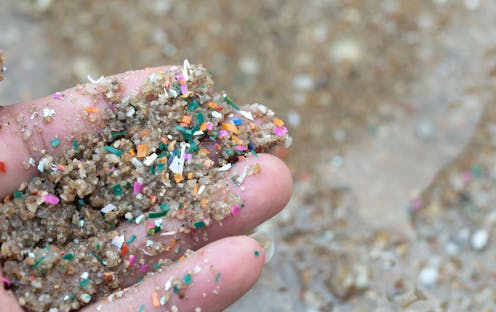
Marine plastic pollution is a massive environmental issue, with a plastic smog of an estimated 170 trillion particles afloat in the world’s oceans. This highlights how urgently we need to develop strategies to mitigate this environmental crisis.

We know some microbes can break down certain plastics, but our new study finds no clear correlation between plastic pollution levels and the production of plastic-degrading enzymes by marine microorganisms.

To address this issue, we need to understand the varying properties and environmental impacts of different types of plastic.

Most plastics are not degradable

There are four main types of plastics: biodegradable, bio-based, fossil-based and non-biodegradable. The terms can be confusing and lead to misunderstandings about their environmental impact.

Biodegradable plastics can break down naturally through the action of living organisms such as bacteria. They are made from renewable sources such as corn starch or sugar cane and don’t linger in the environment for long periods. Examples of biodegradable plastics are polycaprolactone (PCL), polylactic acid (PLA) and polyhydroxybutyrate (PHB).

Bio-based plastics are also derived from natural materials such as plants. These plastics include polyethylene terephthalate (PET), which is widely used for clothing and containers for liquids and food. However, while PET can be made from renewable sources, most of its production is derived from fossil fuels.

Fossil-based plastics are made from oil and gas. They include common types like polyethylene (PE), which is used for single-use food packaging, and polyvinyl chloride (PVC), commonly used for water pipes and wire insulation.

These plastics are generally not biodegradable. They do not decompose naturally and can persist in the environment for centuries, contributing significantly to pollution and global warming.

This Venn diagram shows plastic classifications and how different types of plastics overlap
Truly sustainable and degradable plastics are made from biological materials. Victor Gambarini, CC BY-SA

PE is the most manufactured plastic type in the world. It accounts for 103.9 million metric tonnes (mmt) per year, followed by PET (65.4 mmt) and PVC (50.5 mmt). However, globally only 9% of all plastic waste is recycled.

According to Plastics NZ, terms such as “bioplastic”, “biopolymer”, “bio-based” and “biodegradable” are being used interchangeably, even though they signify entirely different things.

Ocean microbes cannot break down plastics

Our study analysed genetic information from microorganisms in the ocean, using data from hundreds of water samples collected during expeditions.

This provided us with insights about the genes marine bacteria use to make enzymes, including the one they use to degrade some plastics. We can then track which enzymes these microbes use at any given time.

The idea is that if marine microorganisms are breaking down plastics, they have to produce the enzymes capable of doing it. Therefore, if microbes are biodegrading plastics in our oceans, locations with more plastic pollution should have higher levels of enzymes for plastic degradation.

This map shows the distribution of plastic pollution across the ocean.
This map shows the distribution of plastic pollution across the ocean, with higher concentrations in the main oceanic gyres. Victor Gambarini, CC BY-SA

Our study found no clear global connection between plastic pollution levels in the ocean and the enzymes produced by marine microbes to degrade plastics. This suggests the ocean microbiome hasn’t evolved efficient mechanisms to break down various types of plastic.

There are several reasons for this. Plastics are very different and complex. Each type of plastic has its own structure and properties, and microbes might not have had enough time or pressure to evolve special enzymes for each type.

Environmental conditions such as temperature, currents and nutrient availability could also play a role in influencing microbial plastic degradation.

This graph shows that locations with more plastic pollution do not necessarily have higher amounts of enzymes for plastic degradation.
This graph shows that locations with more plastic pollution do not necessarily have higher amounts of enzymes for plastic degradation. Victor Gambarini, CC BY-SA

Overall, our findings suggest the global ocean microbiome has not yet evolved to efficiently degrade the many types of plastic pollution plaguing marine ecosystems. This highlights the ongoing danger plastic pollution poses for marine environments.

Developing solutions will likely require dramatically reducing new plastic waste, recovering existing ocean plastic and shifting to biodegradable plastic types.

While disappointing from an environmental remediation perspective, the lack of widespread microbial plastic degradation confirms the durability of synthetic polymers and highlights the vast challenge we face to clean up the oceans.

Authors: Victor Gambarini, PhD Student in Marine Science, University of Auckland, Waipapa Taumata Rau

Read more https://theconversation.com/most-plastics-are-made-from-fossil-fuels-and-end-up-in-the-ocean-but-marine-microbes-cant-degrade-them-new-research-230530

Business News

Reducing Sales Friction Through Centralized Content Delivery

Sales friction appears whenever buyers or sales teams face unnecessary obstacles in the buying journey. It can happen when information is hard to find, when messaging feels inconsistent, when product ...

Daily Bulletin - avatar Daily Bulletin

Why Choosing the Right Bollard Supplier Matters for Australian Businesses and Public Spaces

From busy CBD streetscapes to sprawling warehouse loading docks, bollards have become one of the most essential safety and security fixtures across Australia. Whether protecting pedestrians from veh...

Daily Bulletin - avatar Daily Bulletin

Why Modular Content Is Transforming Modern Marketing Teams

Modern marketing teams are expected to produce more content than ever before. They need to support websites, landing pages, email campaigns, social channels, product pages, sales enablement material...

Daily Bulletin - avatar Daily Bulletin

Everything You Need to Know About Getting Support from Optus

Whether you've been an Optus customer for years or you've just switched over, at some point you'll probably need to contact their support team. Maybe your bill looks different from what you expected. ...

Daily Bulletin - avatar Daily Bulletin

The Marketing Strategy That’s Quietly Draining Sydney Business Owners’ Bank Accounts

Sydney businesses are investing more in digital marketing than ever before. The intention is clear. More visibility should mean more leads, more customers, and steady growth. However, many business ...

Daily Bulletin - avatar Daily Bulletin

Why Mining Hose Solutions Are Essential For High-Performance Industrial Operations

In environments where the ground itself is constantly shifting, breaking, and being reshaped, every component must be built to endure. Mining operations are among the most demanding in the industria...

Daily Bulletin - avatar Daily Bulletin

The Reason Talented Teams Underperform

If you’re in business, you might have seen it before. A team of capable and smart people just suddenly slows down, and things start spiraling out of control. On paper, everything looks perfect, but ...

Daily Bulletin - avatar Daily Bulletin

Why More Aussie Tradies Are Moving Away From Paid Ads

Across Australia, a lot of tradies are busy. There’s no shortage of demand in industries like plumbing, electrical, landscaping, and building. But being busy doesn’t always mean running a smooth or...

Daily Bulletin - avatar Daily Bulletin

Why Careers In The Defence Industry Are Growing Rapidly

The defence sector has evolved far beyond traditional roles, opening doors to a wide range of opportunities across technology, engineering, intelligence, and operations. This is where defense industry...

Daily Bulletin - avatar Daily Bulletin

The Daily Magazine

Australia’s Best Walking Trails and the Shoes You Need to Tackle Them

Australia is not short on spectacular walks. You can follow ocean cliffs in Victoria, cross ancien...

Why Pre-Purchase Building Inspections Are Essential Before Buying a Home in Australia

source Have you ever walked through an open home and started picturing your furniture, family d...

5 Signs Your Car Needs Immediate Attention Before It Breaks Down

Car problems rarely appear without warning. In most cases, your vehicle gives clear signals before...

Ensuring Safety and Efficiency with Professional Electrical Solutions

For businesses in Newcastle, a safe and fully functioning workplace remains a key part of day-to-d...

Choosing The Right Bin Hire Solution For Hassle-Free Waste Management

When it comes to managing waste efficiently, finding the right solution can save both time and eff...

Why Cleanliness Is Critical In Childcare Environments

Children explore the world with curiosity, often touching surfaces, sharing toys, and interacting ...

What to Look for in a Reliable Australian Engineering Partner

Choosing an engineering partner is rarely just about technical capability. Most businesses can fin...

How to Choose a Funeral Home That Supports Families with Care

Choosing a funeral home is rarely something families do under ideal circumstances. It often happen...

Why Premium Coffee Matters in Modern Hospitality Venues

In hospitality, details shape perception long before a guest consciously evaluates them.  Lightin...