

Older people’s risk of abuse is rising. Can an ad campaign protect them?
- Written by: Joseph Ibrahim, Professor, Aged Care Medical Research Australian Centre for Evidence Based Aged Care, La Trobe University
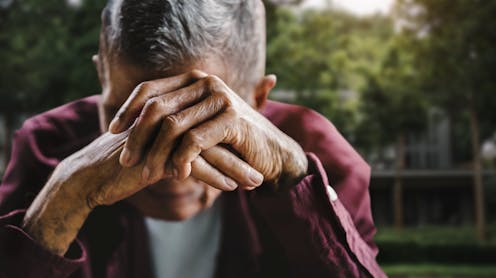
Elder abuse is an emerging public health and safety issue for communities of high-income countries.
The most recent data from Australia’s National Elder Abuse Prevalence Study, which surveyed 7,000 older people living in the community, found one in six self-reported being a victim of some form of abuse. But this did not include older people living in residential aged care or those with cognitive impairment, such as dementia – so is likely an underestimate.
This week the Australian government announced a multi-million dollar advertising campaign it hopes will address this serious and abhorrent abuse.
But is investing in community awareness of elder abuse the best use of scarce resources?
What is elder abuse?
The World Health Organization (WHO) defines elder abuse as
[…] a single, or repeated act, or lack of appropriate action, occurring within any relationship where there is an expectation of trust which causes harm or distress to an older person.
Australia usually defines older people as those over 65. The exact age varies between countries depending on the overall health status of a nation and its vulnerable population groups. The WHO definitions of an older adult for sub-Saharan Africa, for example, is over 50. And there are communities with poorer health status and shorter lifespans within country borders, including our First Nations people.
Elder abuse can take on many different forms including physical, sexual, psychological, emotional, or financial abuse and neglect.
Living longer and wealthier
The number of older people in our society is greater than it has ever been. Around 17% Australians are aged 65 and over. By 2071, older Australians will make up between 25% and 27% of the total population.
People are living longer, accumulating substantial wealth and are vulnerable to abuse due to cognitive, physical or functional limitations.
Longer lifespans increase the time of possible exposure to abuse. Australian men aged 65 can expect to live another 20.2 years, while women aged 65 are likely to live another 22.8 years. (Life expectancy for First Nations men and women remains significantly shorter.)
Australian men are now 143 times more likely to reach the age of 100 than they were in 1901. Women are 82 times more likely.
Older people hold a large proportion of our nation’s wealth, making them vulnerable to financial abuse. Recent research by the Australian Council of Social Service and UNSW Sydney reveals older households (with people over 65) are 25% wealthier than the average middle-aged household and almost four times as wealthy as the average under-35 household.
Finally, older people have higher levels of impairment in their thinking, reasoning and physical function. Cognitive impairment, especially dementia, increases from one in 67 Australians under 60 to almost one in two people aged over 90.
Over half of Australians aged 65 years and over have disability. A particularly vulnerable group are the 258,374 older Australians who receive government-funded home care.
Who perpetrates elder abuse?
Sadly, most of the perpetrators of elder abuse are known to their victims. They are usually a member of the family, such as a life partner, child or grandchild.
Elder abuse causes significant illness and even early death. Financial abuse (across all ages) costs the community billions of dollars. Specific data for financial elder abuse is limited but indicates massive costs to individual survivors and the community.
Despite this, the level of awareness of elder abuse is likely to be much lower than for family violence or child abuse. This is partly due to the comparatively recent concept of elder abuse, with global awareness campaigns only developed over the past two decades.
Is an advertising campaign the answer?
The federal government has allocated A$4.8 million to an advertising campaign on television, online and in health-care clinics to reach the broader community. For context, last year the government spent $131.4 million on all media campaigns, including $32.6 million on the COVID vaccination program, $2 million on Japanese encephalitis and $3.2 million on hearing health awareness.
The campaign will likely benefit a small number of people who may be victims and have the capacity to report their perpetrators to authorities. It will generate some heartbreaking anecdotes. But it is unlikely to achieve broad community or systemic change.
There is little research evidence to show media campaigns alter the behaviour of perpetrators of elder abuse. And suggesting the campaign raises awareness of the issue for older people who are survivors of abuse sounds more like blaming victims than empowering them.
We don’t know how the government will judge the success of the campaign, so taxpayers won’t know whether a reasonable return on this investment was achieved. There may also be opportunity costs associated with the initiative – that is, lost opportunities for other actions and strategies. It could be more effective and efficient to target high-risk subgroups or to allocate funding to policy, practice reform or research that has direct tangible benefits for survivors.
The Australian Human Rights Commission’s campaign from last year.But the campaign can’t hurt, right?
Actually, the dangers that could come with an advertising campaign are two-fold.
First it may well oversimplify a highly complex issue. Identifying and managing elder abuse requires an understanding of the person’s vulnerabilities, their decision-making capacity and ability to consent, the will and preferences of victim and the role of perpetrator in the older person’s life. Abuse happens in the context of family and social networks. And reporting abuse can have consequences for the victim’s quality of life and care.
Consider the complexities of a case where an older person declines to have her grandson reported to police for stealing her money and medication because of her fear of becoming socially isolated. She might even feel responsible for the behaviour having raised the grandson and not want him to have a criminal record.
Secondly, a public campaign can create the illusion government and our institutions have the matter “in hand”. This might slow the opportunity for real change.
Ideally, the campaign will strengthen the argument for better policies, reporting procedures, policing, prosecution and judgements that are aligned. But these ends will also need investment in more research to build better communities that take good care of older people.
Authors: Joseph Ibrahim, Professor, Aged Care Medical Research Australian Centre for Evidence Based Aged Care, La Trobe University


 Daily Bulletin


