

The greatest poet who never lived – Ern Malley at 80
- Written by: Maggie Nolan, Director of AustLit, Associate Professor in Digital Cultural Heritage, The University of Queensland

Eighty years ago, an exciting new poet was published in the modernist literary journal Angry Penguins. Of course, we all know now that Ern Malley was a hoax, so it can be easy to overlook just how blindsided Max Harris, Angry Penguins’ precocious young editor, must have been.
I sometimes try to imagine how Harris felt that day in late October 1943, when he received a letter from Ethel Malley accompanied by two poems written by her recently and prematurely deceased brother, Ern. I imagine his exhilaration when he thought he had in his hands the works of a major new Australian poet – and a modernist poet: it was like nothing he had ever read before.
I imagine him writing straight back to Ethel, asking for more, and sending copies of the poems to the art patrons John and Sunday Reed and the painter Sidney Nolan to share his enthusiasm.

 But Malley was a hoax. He had been invented in one day (so they said) in October 1943 by two relatively unknown poets, James McAuley and Harold Stewart, while they were on duty at the Directorate of Research and Civil Affairs in Melbourne. Both had been students at Sydney University. The poems were assembled using random lines from books they had lying around, which they fashioned into parodic versions of modernist verse.
McAuley’s friend from his high school days John Kerr, who would later become governor-general of Australia, and the poet A.D. Hope were let in on the joke.
On June 18 1944, the Sunday Sun ran a teaser: “Ern Malley, the greatest poet or the greatest hoax?” Harris, who had hired a private detective to investigate the possibility of a hoax, was starting to clear up the mystery as well. It was becoming clear Ern Malley had never existed.
The June 25 issue of FACT, a supplement of the Sydney newspaper Sunday Sun and Guardian, ran an article that identified McAuley and Stewart as the hoaxers under the headline: “Ern Malley, Poet of Debunk: full story from the two authors”. The hoaxers had transformed their joke into what they called a “serious literary experiment”:
Mr Max Harris and other Angry Penguins represent an Australian outcrop of a literary fashion which has become prominent in England and America. The distinctive feature of the fashion, it seemed to us, was that it rendered its devotees insensible of absurdity and incapable of ordinary discrimination.
A cut-throat debate
As a nation, Australia was not even 50 years old at the time of the Ern Malley hoax. The hoax arrived at a time of anxiety and deep denial, as settler culture was attempting to build a literary culture that could give expression to an authentic Australian experience under the shadow of Britain’s dominance, Australia’s convict origins, and the scarcely acknowledged violence of colonial dispossession and assimilation.
In the 1940s, while war raged in Europe and the Pacific, a battle among the intelligentsia was under way in Australia about who had the authority and capacity to construct and define what it meant to be Australian, and how that might be embodied in literary form. Similar debates were taking place elsewhere, but as literary historian Brian Matthews observed in 1988, the “debate was much more cut-throat, more terminal so to speak, in Australia”.
But Malley was a hoax. He had been invented in one day (so they said) in October 1943 by two relatively unknown poets, James McAuley and Harold Stewart, while they were on duty at the Directorate of Research and Civil Affairs in Melbourne. Both had been students at Sydney University. The poems were assembled using random lines from books they had lying around, which they fashioned into parodic versions of modernist verse.
McAuley’s friend from his high school days John Kerr, who would later become governor-general of Australia, and the poet A.D. Hope were let in on the joke.
On June 18 1944, the Sunday Sun ran a teaser: “Ern Malley, the greatest poet or the greatest hoax?” Harris, who had hired a private detective to investigate the possibility of a hoax, was starting to clear up the mystery as well. It was becoming clear Ern Malley had never existed.
The June 25 issue of FACT, a supplement of the Sydney newspaper Sunday Sun and Guardian, ran an article that identified McAuley and Stewart as the hoaxers under the headline: “Ern Malley, Poet of Debunk: full story from the two authors”. The hoaxers had transformed their joke into what they called a “serious literary experiment”:
Mr Max Harris and other Angry Penguins represent an Australian outcrop of a literary fashion which has become prominent in England and America. The distinctive feature of the fashion, it seemed to us, was that it rendered its devotees insensible of absurdity and incapable of ordinary discrimination.
A cut-throat debate
As a nation, Australia was not even 50 years old at the time of the Ern Malley hoax. The hoax arrived at a time of anxiety and deep denial, as settler culture was attempting to build a literary culture that could give expression to an authentic Australian experience under the shadow of Britain’s dominance, Australia’s convict origins, and the scarcely acknowledged violence of colonial dispossession and assimilation.
In the 1940s, while war raged in Europe and the Pacific, a battle among the intelligentsia was under way in Australia about who had the authority and capacity to construct and define what it meant to be Australian, and how that might be embodied in literary form. Similar debates were taking place elsewhere, but as literary historian Brian Matthews observed in 1988, the “debate was much more cut-throat, more terminal so to speak, in Australia”.
 Harold Stewart c.1944.
Herald and Weekly Times, public domain, via Wikimedia Commons
The debate was surrounded by a flurry of intellectual activity. In August 1939, there were only two cultural journals operating in Australia. By the end of 1940, there were six more, all of which were preoccupied with the question, what is Australian culture? Meanjin devoted a whole issue to this question in 1942.
“So much talk about Australian Kulchewer,” Harris responded, “I have never read before.” The “kulchewer” that Harris was referring to was the Jindyworobak Club, a nationalist cultural movement that incorporated their vision of Aboriginality into their poetry, although this vision didn’t seem to include any actual Aboriginal people.
The Marxist school of social realism, meanwhile, advocated leveraging Australia’s convict history and Soviet notions of class struggle to build an authentic left-wing Australianness.
Both these groups were opposed by the traditional English classicist position espoused by people like Hope, McAuley and Stewart – a position generally accompanied by contempt for all things Australian. Harry Hooton wrote that they were “unquestionably the best three poets of our generation in contradistinction to the surreal, romantic, religious and of course utterly worthless poetry which was issuing from Adelaide and Melbourne at the time”.
The “utterly worthless poetry” Hooton was referring to was that of the emerging modernists, represented in Angry Penguins. The journal was established at Adelaide University Arts Faculty by Max Harris and D.B. Kerr in 1940. The designs in the journal were by Sidney Nolan and included reproductions by Martin Boyd and Albert Tucker.
One can only wonder what this dynamic group might have achieved for Australian letters if it weren’t for Ern Malley.
Harold Stewart c.1944.
Herald and Weekly Times, public domain, via Wikimedia Commons
The debate was surrounded by a flurry of intellectual activity. In August 1939, there were only two cultural journals operating in Australia. By the end of 1940, there were six more, all of which were preoccupied with the question, what is Australian culture? Meanjin devoted a whole issue to this question in 1942.
“So much talk about Australian Kulchewer,” Harris responded, “I have never read before.” The “kulchewer” that Harris was referring to was the Jindyworobak Club, a nationalist cultural movement that incorporated their vision of Aboriginality into their poetry, although this vision didn’t seem to include any actual Aboriginal people.
The Marxist school of social realism, meanwhile, advocated leveraging Australia’s convict history and Soviet notions of class struggle to build an authentic left-wing Australianness.
Both these groups were opposed by the traditional English classicist position espoused by people like Hope, McAuley and Stewart – a position generally accompanied by contempt for all things Australian. Harry Hooton wrote that they were “unquestionably the best three poets of our generation in contradistinction to the surreal, romantic, religious and of course utterly worthless poetry which was issuing from Adelaide and Melbourne at the time”.
The “utterly worthless poetry” Hooton was referring to was that of the emerging modernists, represented in Angry Penguins. The journal was established at Adelaide University Arts Faculty by Max Harris and D.B. Kerr in 1940. The designs in the journal were by Sidney Nolan and included reproductions by Martin Boyd and Albert Tucker.
One can only wonder what this dynamic group might have achieved for Australian letters if it weren’t for Ern Malley.
 James McAuley in 1944.
Australian War Memorial, public domain, via Wikimedia Commons
From the bizarre to the ridiculous
The eclectic Harris had been involved in the Jindyworobak movement, but had become disenchanted. He hoped to promote a poetry more open to international writing. He had also been a member of the Communist Party, but was averse to social realism’s adherence to “an exclusive and dogmatic line by those claiming to represent the only true art in Australia”.
The Angry Penguins were not averse to their own style of dogmatism, asserting themselves as “the authoritative statement of immediate Australian culture”.
Ern Malley was born out of this competitive and often vicious striving to see which vision of Australian national literature would emerge victorious. Responses to the scandal ranged from the bizarre to the ridiculous, with different groups using it to suit their own purposes.
James McAuley in 1944.
Australian War Memorial, public domain, via Wikimedia Commons
From the bizarre to the ridiculous
The eclectic Harris had been involved in the Jindyworobak movement, but had become disenchanted. He hoped to promote a poetry more open to international writing. He had also been a member of the Communist Party, but was averse to social realism’s adherence to “an exclusive and dogmatic line by those claiming to represent the only true art in Australia”.
The Angry Penguins were not averse to their own style of dogmatism, asserting themselves as “the authoritative statement of immediate Australian culture”.
Ern Malley was born out of this competitive and often vicious striving to see which vision of Australian national literature would emerge victorious. Responses to the scandal ranged from the bizarre to the ridiculous, with different groups using it to suit their own purposes.
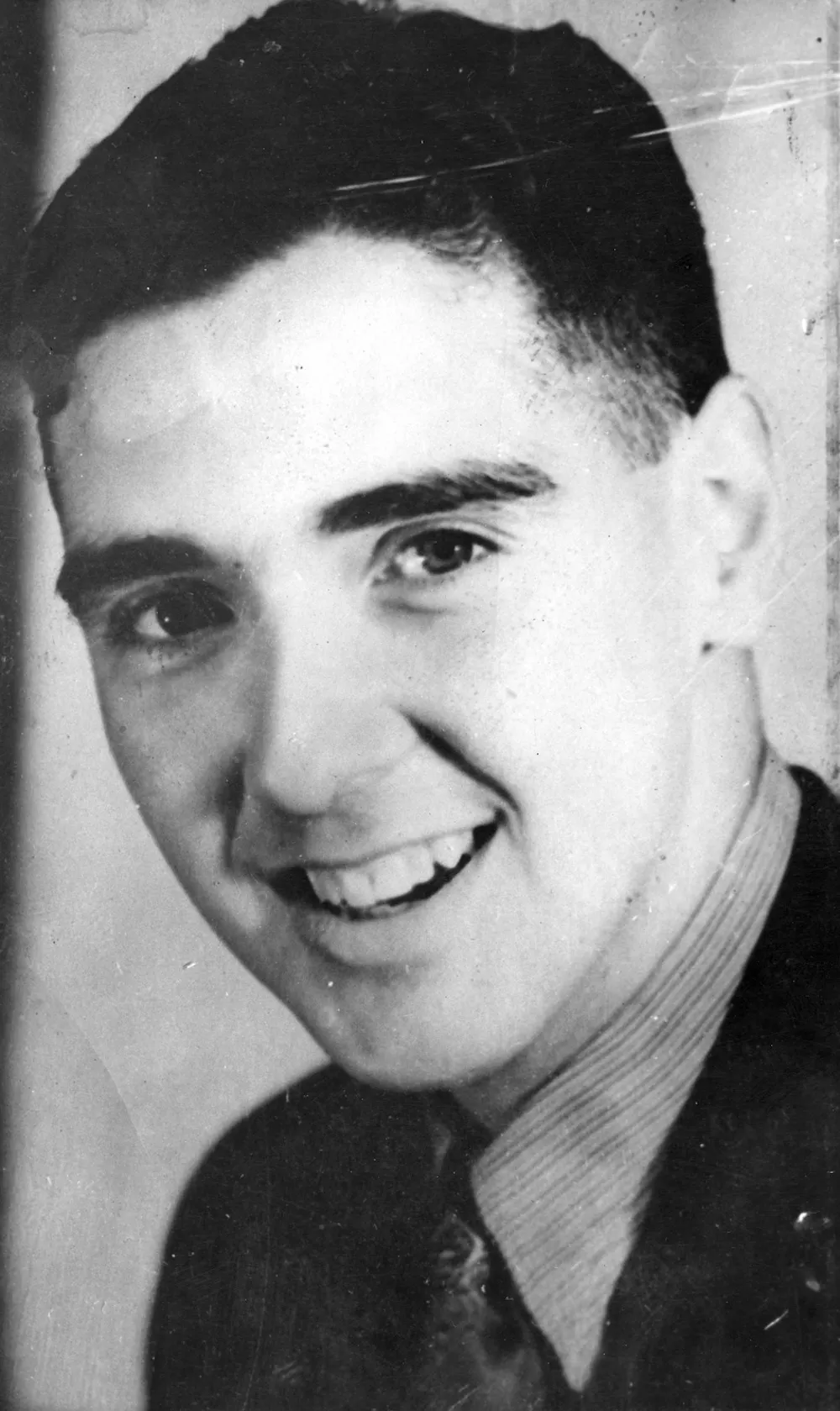 Max Harris c.1938.
State Library of Victoria, public domain
Harris, a young man of only 22 at the time, was widely ridiculed. Although he and his circle rigorously defended the artistic achievement in the poems, I wonder what effect it had on him and what he might have achieved had he not been an international laughing-stock at such a tender age.
McAuley and Stewart became not merely literary heroes, but national ones, as if Australia itself was at stake. Time magazine claimed that “Australian Army Lieut. James MacAuley (who fought in New Guinea) and Corporal Harold Stewart” were “out to kill more than an afternoon” when they concocted Malley’s poems. The Bulletin gave “earnest thanks” to the diggers who were described as “joint debunkers of Bosh and Blah and Blather”.
None of the press mentioned that D.B. Kerr, Harris’s co-founder of Angry Penguins, had been shot down over the Timor Sea during the war.
McAuley and Stewart implied that the Angry Penguins were motivated by a fascist agenda, suggesting that the movement:
resembles on a small scale, the progress of certain European political parties. An efficient publicity apparatus is switched on to beat the big drum and drown opposition. If anyone raises his voice in protest he is mobbed with shrill invective. The faithful, meanwhile, to keep their spirits up, shout encouragements and slogans, and gather in groups so as to have no time to think.
Given the fact that “shrill invective” characterised all sides of the debate, and that the Australian response to modernism was frequently laced with anti-Semitism, this implication seems a particularly low blow. Harris, moreover, was Jewish.
The left-wing Guardian believed the whole affair proved “the complete cultural bankruptcy of the decadent Right Wing of the Contemporary Arts Society”, asking pointedly: “Why is Lenin dragged in with a fictitious and absurd quote?” – a reference to one of my favourite Malley lines: “The emotions are not skilled workers.”
Even the Catholics got in on the act. Niall Brennan cautioned readers of the Catholic Advocate:
You cannot afford to ignore typhus, and we cannot afford to ignore Harris and his gaggle of penguins […] it is to be hoped that the counter attack of Messrs. Stewart and McAuley may well have fatal results for this mental disease.
Freedom, another Catholic publication, stretched the bow further, asserting that a
civilisation that has outlawed large families, and pities or insults maternity […] even when it clearly means national suicide, deserves only literature like Angry Penguins.
International newspapers had a field day. Time claimed the hoax was “as fantastic as a duck-billed platypus”. Newsweek’s headline – “Such Power! Such Feeling!” – saw it as the “epitome of Australia’s striving for culture”.
To add injury to insult, in August Harris was visited by a Detective Vogelsang, who questioned him in connection with immoral or indecent publications, the publication in question being the Ern Malley edition of Angry Penguins.
The matter went to trial in September 1944. Harris pleaded not guilty to the alleged offence of “indecent advertisements”. Although censorship was common at the time in Australia, this was the first official attempt to suppress Australian poetry. It was no ordinary indecency trial. The courtroom was crowded with the national press, and Detective Vogelsang was the only witness for the crown.
On the indecency of the Malley poem Night Piece, he claimed: “I have found that people who go into parks at night go there for immoral purposes.”
He considered the poem Egyptian Register to be indecent because it contained the word “incestuous”. He admitted to not knowing what the word meant, but said: “I think there is a suggestion of indecency about it.”
Harris was fined £5 for the publication of obscene poetry.
Repercussions and reverberations
In spite of all this, the poems continued to be taken seriously in some quarters. The esteemed English modernist poet Sir Herbert Read, who had been one of the intended targets of the hoax, supported Harris:
We have only to ask ourselves how the parodist or hoaxer goes about his business to realise that he must inevitably use processes akin to, if not identical with, the processes which produce the original work of art.
This was the irony of McAuley and Stewart’s “serious literary experiment”.
While the news that the poems were a hoax did, as intended, undermine the infatuation with modernism in Australia, it also served to undermine literary culture more broadly. Ern Malley was less an experiment than a tabloid story about the spuriousness of Australian literature and the pretensions of intellectual elites.
Malley came to exist as a part of the knocker tradition, the larrikin-like yarn-spinning domain of Australian popular culture, which resisted the imposition of cultural values by those who think they know better.
Max Harris c.1938.
State Library of Victoria, public domain
Harris, a young man of only 22 at the time, was widely ridiculed. Although he and his circle rigorously defended the artistic achievement in the poems, I wonder what effect it had on him and what he might have achieved had he not been an international laughing-stock at such a tender age.
McAuley and Stewart became not merely literary heroes, but national ones, as if Australia itself was at stake. Time magazine claimed that “Australian Army Lieut. James MacAuley (who fought in New Guinea) and Corporal Harold Stewart” were “out to kill more than an afternoon” when they concocted Malley’s poems. The Bulletin gave “earnest thanks” to the diggers who were described as “joint debunkers of Bosh and Blah and Blather”.
None of the press mentioned that D.B. Kerr, Harris’s co-founder of Angry Penguins, had been shot down over the Timor Sea during the war.
McAuley and Stewart implied that the Angry Penguins were motivated by a fascist agenda, suggesting that the movement:
resembles on a small scale, the progress of certain European political parties. An efficient publicity apparatus is switched on to beat the big drum and drown opposition. If anyone raises his voice in protest he is mobbed with shrill invective. The faithful, meanwhile, to keep their spirits up, shout encouragements and slogans, and gather in groups so as to have no time to think.
Given the fact that “shrill invective” characterised all sides of the debate, and that the Australian response to modernism was frequently laced with anti-Semitism, this implication seems a particularly low blow. Harris, moreover, was Jewish.
The left-wing Guardian believed the whole affair proved “the complete cultural bankruptcy of the decadent Right Wing of the Contemporary Arts Society”, asking pointedly: “Why is Lenin dragged in with a fictitious and absurd quote?” – a reference to one of my favourite Malley lines: “The emotions are not skilled workers.”
Even the Catholics got in on the act. Niall Brennan cautioned readers of the Catholic Advocate:
You cannot afford to ignore typhus, and we cannot afford to ignore Harris and his gaggle of penguins […] it is to be hoped that the counter attack of Messrs. Stewart and McAuley may well have fatal results for this mental disease.
Freedom, another Catholic publication, stretched the bow further, asserting that a
civilisation that has outlawed large families, and pities or insults maternity […] even when it clearly means national suicide, deserves only literature like Angry Penguins.
International newspapers had a field day. Time claimed the hoax was “as fantastic as a duck-billed platypus”. Newsweek’s headline – “Such Power! Such Feeling!” – saw it as the “epitome of Australia’s striving for culture”.
To add injury to insult, in August Harris was visited by a Detective Vogelsang, who questioned him in connection with immoral or indecent publications, the publication in question being the Ern Malley edition of Angry Penguins.
The matter went to trial in September 1944. Harris pleaded not guilty to the alleged offence of “indecent advertisements”. Although censorship was common at the time in Australia, this was the first official attempt to suppress Australian poetry. It was no ordinary indecency trial. The courtroom was crowded with the national press, and Detective Vogelsang was the only witness for the crown.
On the indecency of the Malley poem Night Piece, he claimed: “I have found that people who go into parks at night go there for immoral purposes.”
He considered the poem Egyptian Register to be indecent because it contained the word “incestuous”. He admitted to not knowing what the word meant, but said: “I think there is a suggestion of indecency about it.”
Harris was fined £5 for the publication of obscene poetry.
Repercussions and reverberations
In spite of all this, the poems continued to be taken seriously in some quarters. The esteemed English modernist poet Sir Herbert Read, who had been one of the intended targets of the hoax, supported Harris:
We have only to ask ourselves how the parodist or hoaxer goes about his business to realise that he must inevitably use processes akin to, if not identical with, the processes which produce the original work of art.
This was the irony of McAuley and Stewart’s “serious literary experiment”.
While the news that the poems were a hoax did, as intended, undermine the infatuation with modernism in Australia, it also served to undermine literary culture more broadly. Ern Malley was less an experiment than a tabloid story about the spuriousness of Australian literature and the pretensions of intellectual elites.
Malley came to exist as a part of the knocker tradition, the larrikin-like yarn-spinning domain of Australian popular culture, which resisted the imposition of cultural values by those who think they know better.
 John Kinsella has written multiple poems inspired by Malley. Poet and editor John Tranter remained an advocate until the end. The hoax inspired both Peter Carey’s novel My Life as a Fake (2003) and Stephen Orr’s Sincerely Ethel Malley (2021). In 2007, the composer Peter Tahourdin set ten Malley poems to music. To top it off, there are two book-length studies: Heyward’s The Ern Malley Affair and David Rainey’s Ern Malley: the Hoax and Beyond (2009).
In trying to eliminate cultural difference and assert cultural authority, the hoaxers ultimately generated an icon of cultural heterogeneity. Ern Malley resists any attempt to pin down his meaning. Perhaps this is why he retains his fascination for us. Perhaps he represents, both accurately and fictitiously, a sense of the ambivalent place some of us Australians feel we occupy as culturally constructed subjects on Indigenous country.
I have to confess to being beguiled by Ern Malley’s poems – all the more so because the poet doesn’t exist. I recommend reading the poems and deciding for yourself.
Authors: Maggie Nolan, Director of AustLit, Associate Professor in Digital Cultural Heritage, The University of Queensland
John Kinsella has written multiple poems inspired by Malley. Poet and editor John Tranter remained an advocate until the end. The hoax inspired both Peter Carey’s novel My Life as a Fake (2003) and Stephen Orr’s Sincerely Ethel Malley (2021). In 2007, the composer Peter Tahourdin set ten Malley poems to music. To top it off, there are two book-length studies: Heyward’s The Ern Malley Affair and David Rainey’s Ern Malley: the Hoax and Beyond (2009).
In trying to eliminate cultural difference and assert cultural authority, the hoaxers ultimately generated an icon of cultural heterogeneity. Ern Malley resists any attempt to pin down his meaning. Perhaps this is why he retains his fascination for us. Perhaps he represents, both accurately and fictitiously, a sense of the ambivalent place some of us Australians feel we occupy as culturally constructed subjects on Indigenous country.
I have to confess to being beguiled by Ern Malley’s poems – all the more so because the poet doesn’t exist. I recommend reading the poems and deciding for yourself.
Authors: Maggie Nolan, Director of AustLit, Associate Professor in Digital Cultural Heritage, The University of QueenslandRead more https://theconversation.com/the-greatest-poet-who-never-lived-ern-malley-at-80-234905


 Daily Bulletin


