

What is Australia looking for in its poet laureate? Literary and popular poetry don’t always intersect
- Written by: Peter Kirkpatrick, Honorary Associate Professor, University of Sydney
The inaugural Australian poet laureate will be appointed in 2025 as part of the federal Labor government’s new National Cultural Policy, Revive.
The intention to create the official position was announced, with some fanfare, at the beginning of 2023. But there is still no clear indication of how a suitable candidate will be selected, what criteria will be used, and the precise nature of the role. We still do not know what, exactly, an Australian poet laureate will be expected to do, or to achieve.
When the position was announced, academic Valentina Gosetti called it a “an unmissable opportunity” and hoped it would “reflect the call for diversity” embodied in Revive. One can only welcome any public initiative that acknowledges the greater diversity of contemporary Australian poetry, where Indigenous, non-Anglo, queer and all-abilities people are now represented.
But what about the diversity of poetry itself? I mean those genres that call themselves poetry, or might be deemed “poetry-adjacent” but pass under the radar of institutions such as the academy, the publishing industry and the literary awards system.
How would a poet laureate “speak” to the spoken word, slam or hip-hop communities, or to bush poets, or to songwriters?
Good bad poetry
The dominant intellectual model for poetry in the West remains the romantic-modernist version that emphasises its wow factor: its capacity to transform or estrange language in exciting, aesthetically challenging ways, often at the level of the individual image.
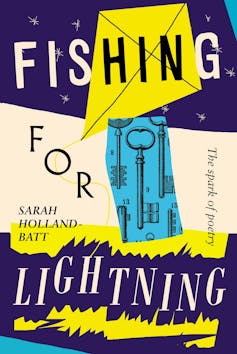
As Sarah Holland-Batt expresses it in her study of Australian poets, Fishing for Lightning: The Spark of Poetry (2021): “Poems are full of surprises: each line is a little detonation of language and imagery, each stanza a series of swift steps into the unknown.”

 Founder of the Bankstown Poetry Slam Sara Mansour and Prime Minister Anthony Albanese at the Western Sydney Leadership Dialogue group, Olympic Park Sydney, October 7, 2022.
Jane Dempster/AAP
Generating an audience
Consider Nielsen BookData figures for the top-ten bestselling titles under the category “Poetry Texts & Poetry Anthologies” for the period 2019–23.
Founder of the Bankstown Poetry Slam Sara Mansour and Prime Minister Anthony Albanese at the Western Sydney Leadership Dialogue group, Olympic Park Sydney, October 7, 2022.
Jane Dempster/AAP
Generating an audience
Consider Nielsen BookData figures for the top-ten bestselling titles under the category “Poetry Texts & Poetry Anthologies” for the period 2019–23.
 These figures highlight the importance of the internet in generating an audience for poetry. Five of the top ten bestselling books are by Instagram poets, an astonishing four of them by Punjabi-Canadian Rupi Kaur, and one by Australian Courtney Peppernell. “Instapoetry” speaks in many of the same ways slam does, in the language of self-help and positive affirmation.
Singer-songwriters are also represented, with Paul Kelly’s selection of his favourite poems, and the book of Lana Del Rey’s recent spoken-word album.
Notable, too, is the success of First Nations poet Evelyn Araluen’s Stella prize-winning debut collection Dropbear, which currently makes her the bestselling Australian poet. Indeed, she and Homer are the only two “literary” authors in this list. Homer is there almost certainly because the Penguin translation is commonly set on university courses.
In tenth place comes To My Country, by the US-based Australian actor Ben Lawson, a bush ballad in response to the Black Summer bushfires, illustrated by Bruce Whatley.
These figures highlight the importance of the internet in generating an audience for poetry. Five of the top ten bestselling books are by Instagram poets, an astonishing four of them by Punjabi-Canadian Rupi Kaur, and one by Australian Courtney Peppernell. “Instapoetry” speaks in many of the same ways slam does, in the language of self-help and positive affirmation.
Singer-songwriters are also represented, with Paul Kelly’s selection of his favourite poems, and the book of Lana Del Rey’s recent spoken-word album.
Notable, too, is the success of First Nations poet Evelyn Araluen’s Stella prize-winning debut collection Dropbear, which currently makes her the bestselling Australian poet. Indeed, she and Homer are the only two “literary” authors in this list. Homer is there almost certainly because the Penguin translation is commonly set on university courses.
In tenth place comes To My Country, by the US-based Australian actor Ben Lawson, a bush ballad in response to the Black Summer bushfires, illustrated by Bruce Whatley.
 Araluen has been mentioned in the media as a potential candidate for the Australian laureateship, along with more established poets like Judith Beveridge, Ali Cobby Eckermann, John Kinsella and David Malouf.
How might Indigenous poets like Araluen or Eckermann feel about a position intended to amplify the literary achievements of the colonial state? After all, the initial role of the British laureate was as an ornament to power. Though it is no longer expected, laureates up to and including the present incumbent, Simon Armitage, still write forgettable panegyrics on royal occasions.
When the planned laureateship was announced, Guy Rundle suggested in Crikey that “we’ve already got the words that move us collectively as a nation”: those of classic popular songs. Would those who advocate for an Australian poet laureate entertain one whose words are already carried on the voices of multitudes, such as Nick Cave, Paul Kelly, Sia, Courtney Barnett or The Kid Laroi?
It is unclear how a poet laureate appointed on the basis of their standing within the literary community might “elevate the status” of poetry that is already popular and which survives quite happily outside it. Will the appointee merely campaign for more readings, or for the posting of poems in public spaces or on social media? These are old ideas.
Might they advocate, as British poet laureate Simon Armitage did, for a poetry centre at a university somewhere – perhaps the same one that employs them? Or would they be more usefully involved in bringing about a national discussion about the many different ways in which poetry is now practised and understood, and develop better channels of communication between them?
Authors: Peter Kirkpatrick, Honorary Associate Professor, University of Sydney
Araluen has been mentioned in the media as a potential candidate for the Australian laureateship, along with more established poets like Judith Beveridge, Ali Cobby Eckermann, John Kinsella and David Malouf.
How might Indigenous poets like Araluen or Eckermann feel about a position intended to amplify the literary achievements of the colonial state? After all, the initial role of the British laureate was as an ornament to power. Though it is no longer expected, laureates up to and including the present incumbent, Simon Armitage, still write forgettable panegyrics on royal occasions.
When the planned laureateship was announced, Guy Rundle suggested in Crikey that “we’ve already got the words that move us collectively as a nation”: those of classic popular songs. Would those who advocate for an Australian poet laureate entertain one whose words are already carried on the voices of multitudes, such as Nick Cave, Paul Kelly, Sia, Courtney Barnett or The Kid Laroi?
It is unclear how a poet laureate appointed on the basis of their standing within the literary community might “elevate the status” of poetry that is already popular and which survives quite happily outside it. Will the appointee merely campaign for more readings, or for the posting of poems in public spaces or on social media? These are old ideas.
Might they advocate, as British poet laureate Simon Armitage did, for a poetry centre at a university somewhere – perhaps the same one that employs them? Or would they be more usefully involved in bringing about a national discussion about the many different ways in which poetry is now practised and understood, and develop better channels of communication between them?
Authors: Peter Kirkpatrick, Honorary Associate Professor, University of Sydney


 Daily Bulletin


