

10 years after the Lacrosse building cladding fire, the defects and disasters continue
- Written by: Trivess Moore, Associate Professor, School of Property, Construction and Project Management, RMIT University
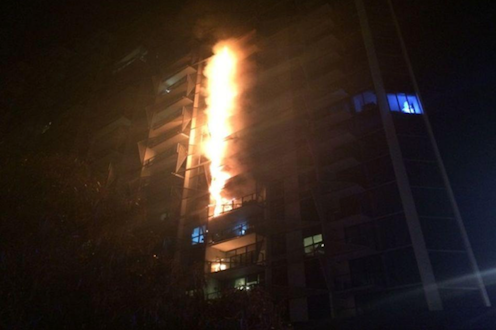
Ten years ago, a late-night cigarette started a fire that spread rapidly up 13 storeys on the Lacrosse apartment building in Melbourne. The November 24 fire caused more than A$5.7 million in damages, but thankfully no lives were lost.
Investigators found Lacrosse was covered in flammable cladding. It’s a building defect that increases serious fire risk.
Ten years on, has enough changed to reduce such defects, or is there more to do?
Our research finds progress is being made, but the construction industry has a long way to go. For example, even the basic work of identifying which buildings have flammable cladding is not complete in many locations. We have identified four key areas – design and construction, regulation and compliance, quality assurance and consumer protection – where changes are still needed.
What has happened since Lacrosse?
The Lacrosse fire prompted the Victorian Building Authority to investigate the use of flammable cladding in the CBD and inner city. Its findings revealed a high rate of non-compliance with building standards for external wall cladding materials. Yet it was deemed that, aside from one building, the safety of occupants was not at risk.
The following year (2017), 72 lives were lost in the Grenfell Tower disaster in the UK. The state government then formed the Victorian Cladding Taskforce. The taskforce found “significant public safety issues, which are symptomatic of broader non-compliance across a range of areas within the industry”.
Other reports followed in Australia and overseas. Among these were the 2018 Hackitt report (UK) and 2018 Shergold and Weir report (Australia) that identified systemic failings across the design and construction sectors. These reports found there were ongoing challenges, despite the earlier building fires, and a history of dangerous defects such as asbestos and structural building issues.
In Australia, changes to the National Construction Code have followed. Flammable aluminium composite panels and the use of rendered expanded polystyrene as external wall cladding were banned.
More than 3,000 residential buildings in Australia were identified as having flammable cladding. Making these buildings safe has been costly. It has had major impacts on the finances, health and wellbeing of apartment owners.
A decade on from the Lacrosse fire, it is time to reflect on what we have learned. Beyond creating fire-safe buildings, we need to think about how to avoid the next deadly housing defect.
What needs to change?
Our research finds change is needed in four key areas.
1. Design and construction
The construction industry has systemic issues that stand in the way of ensuring it designs and constructs buildings that are liveable, defect-free, high-quality and sustainable.
The focus on costs over quality means limited consideration is given to what happens to buildings once they have been handed over to owners. The industry must take greater responsibility for delivering buildings that meet the needs of occupants now and into the future. If we build right to begin with, we can avoid many defect issues.
2. Regulation and compliance
Regulation is typically slow to change. The construction industry often resists reforms. There have also been too many grey areas and “gaps” in regulation that have been open to interpretation.
Stronger regulations need to be enforced. There must be significant consequences for non-compliance. This will better protect consumers and ensure the industry, at the very least, is meeting minimum standards.
Construction companies should strive to go beyond these standards and demonstrate corporate social responsibility, especially towards the people who occupy their buildings. Corporate greed and unethical practices, such as falsifying fire tests, have contributed to the loss of life.
3. Quality assurance systems
Cladding fires and other defects exposed gaps in building material safety checks.
Materials used in construction need to be recorded in a central and accessible repository. The work of finding where flammable cladding is located is still not complete in many locations because we do not know what materials are in which buildings.
Building material passports offer an example of how materials could be located efficiently and in a transparent way. This is where information of the materials and technologies used in a development (including their location and other relevant information such as maintenance requirements) are stored in one place - typically an online platform. This solution is being explored in other countries.
More than four years after the Lacrosse fire, another cladding fire broke out in Melbourne at the Neo200 apartment building.4. Consumer protection and support
Building warranties have not protected consumers from defects, unlike other industries. Consumers have often found that, even within the warranty period, they cannot get remedial work done as builders and others know how to “play the system”.
Stronger and enforceable warranties are essential. Companies must also not be allowed to “phoenix” – closing one company and starting up another – to escape their responsibilities.
Also needed are clearer processes for households, industry and government to follow when dangerous defects emerge. These should include providing safe temporary housing and other support after a fire or other disaster.
Ten years on from Lacrosse, we still see flammable cladding fires around the world. Progress on recommendations from key reports on the construction industry’s issues has been limited. We remain at risk of another deadly defect emerging.
And, importantly, design and construction still do not adequately consider the protection of the building’s future occupants. We can do much more to improve residential construction. It will require further systemic changes, beyond banning flammable cladding.
Authors: Trivess Moore, Associate Professor, School of Property, Construction and Project Management, RMIT University


 Daily Bulletin


