

As livestock numbers grow, wild animal populations plummet. Giving all creatures a better future will take a major rethink
- Written by: Clive Phillips, Adjunct Professor in Animal Welfare, Curtin University
As a teenager in the 1970s, I worked on a typical dairy farm in England. Fifty cows grazed on lush pastures for most of their long lives, each producing about 12 litres of milk daily. They were loved and cared for by two herdsmen.
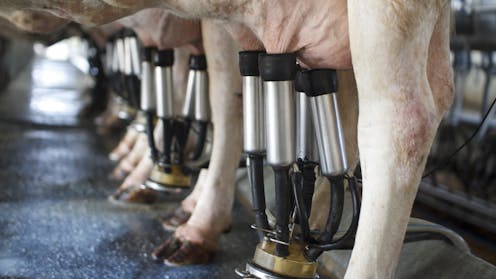
About 50 years later, I visited a dairy farm in China. There, 30,000 cows lived indoors. Most of these selectively bred animals wore out after two or three years of producing 30–40 litres of milk every day, after which they were unceremoniously killed. The workers rarely had contact with the cows. Instead, they sat in offices, programming machines which managed them.
This speaks to a huge and very recent shift in how we treat animals. Over the last half century, the human population has soared – and so too our demand for meat, milk and many other animal products. As a result livestock populations have ballooned while living conditions for animals permanently kept inside have drastically worsened.
Even as farmed animals have multiplied, populations of wild animals have crashed. The two trends are deeply connected. Humans convert wildlife habitat into pastures and farms, expanding living space for farm animals at the expense of many other animals.
This cannot continue. Humans must reckon with how we treat the myriad other species on the planet, whether we rely on them or not. As I argue in my new open access book, the growing scarcity of animal species should make us grasp our responsibility towards the welfare of all animal species on the planet, not just those in farms.
Efforts to enshrine rights for animals is not enough. The focus has to be on our responsibilities to them, ensuring they lead good lives if in our care – or are left well alone if they are not.
Should we care?
In the last 50 years, two-thirds of all wild animal populations have been lost.
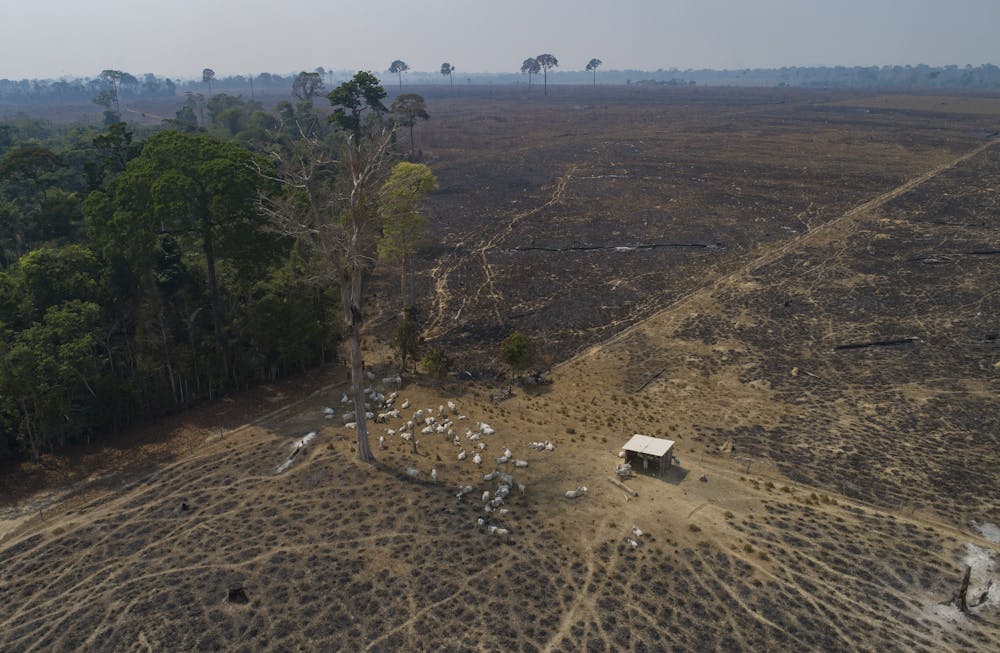
The main cause is habitat loss, as native forest is felled to grow grass for cattle or corn and soya for livestock.
By weight, the world’s farm animals and humans now dwarf the remaining wild animals. Farm animals weigh 630 million tonnes and humans 390 million tonnes, while wild land mammals now weigh just 20 million tonnes and marine mammals 40 million tonnes.
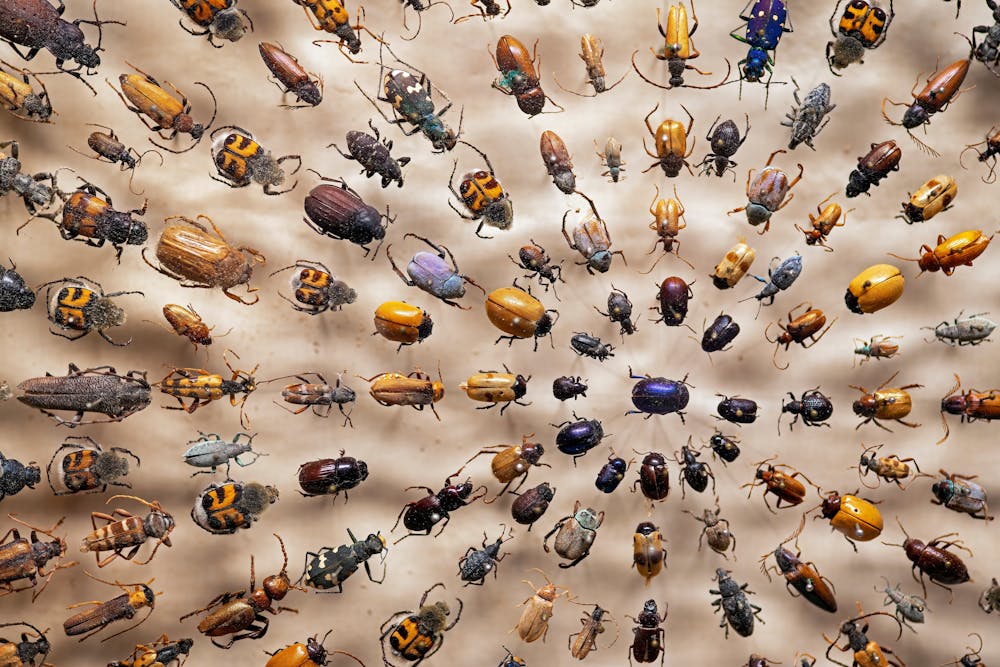
Wildlife numbers have fallen off a cliff across many kingdoms of life. Three quarters of flying insects are gone from monitored areas of Western Europe. One in eight bird species is threatened with extinction worldwide.
On animal welfare, philosophers have long argued one of two positions. The first is known as “utilitarianism”. This approach argues for minimising the bad things in the world and maximising the good things, regardless of who benefits from them, humans or other animals. This theory-heavy approach does little to restore our relationship with wild animals because of the difficulties in deciding what is good and bad for animals.
The second has more to recommend it. This is the view that animals have the right to be looked after well. This approach has also been used to give rights to rivers, nature and even the atmosphere.
But this doesn’t recognise the fact that only humans can attribute such rights to animals, who themselves do not have any concept of “rights”. It also doesn’t tackle the issue that most humans would not accord the same rights to a blue whale and an insect.
A better approach might be to recognise our responsibilities to animals, rather than attribute rights to them.
This would acknowledge the increasing rarity of animal species on Earth and the fact that – as far as we know – they’re unique in the universe. So far, no reliable signs have been found indicating life evolved on any other planets.
Earth formed just over 4.5 billion years ago. Some evidence suggests simple animal life began just 400 million years later.
The evolution of complex multicellular life on earth probably only happened once when a single celled organism – one of the ancient archaea, perhaps – engulfed a bacterium without digesting it. Instead, it found something better: putting it to work as an internal energy factory as the first mitochondrion. After that came life’s great flowering.
But now we’re currently losing between 0.01–0.1% of all species each year. If we use an average species loss rate of 0.05% and assuming human pressures remain similar, life on Earth could have only 2,000 years left.
Do we have responsibility to care for something just because it’s rare? Not always. But life is beautiful. We marvel when we are able to connect with wildlife. Other social animals also appear to derive pleasure from such relationships.
If we destroy wild animal life, we could undermine the natural systems humans depend on. Pollinators are essential for orchards, forests protect topsoil and produce clean drinking water and predators prevent herbivore populations from soaring out of control and destroying crops. As wilder areas shrink, the chance of another animal virus spillover into humans increases.
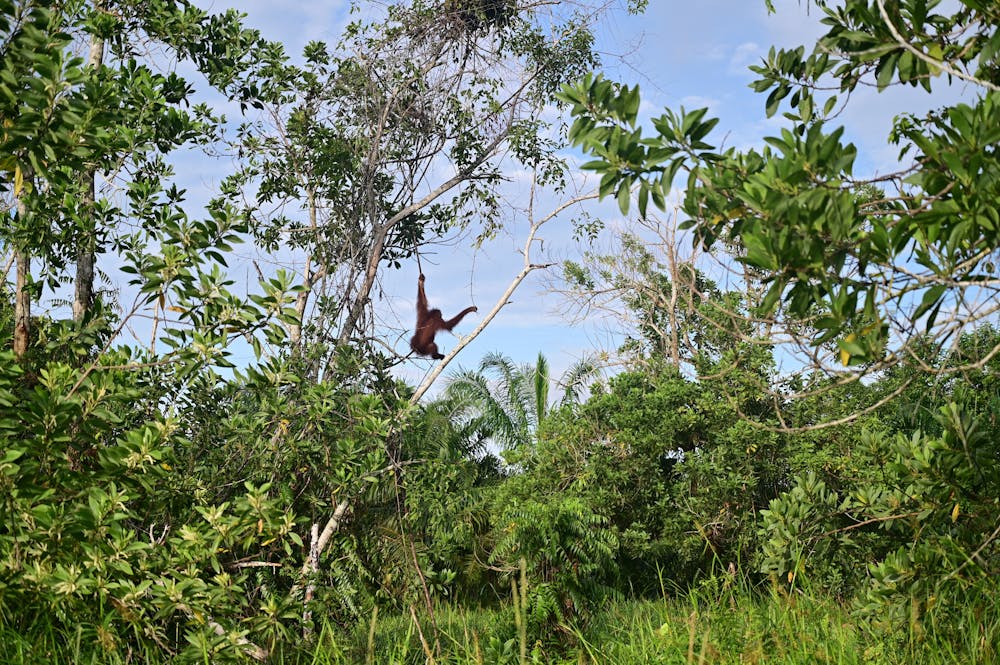 The habitat available for many wild animals has shrunk rapidly in recent decades.
MohdFadhli_83/Shutterstock
The habitat available for many wild animals has shrunk rapidly in recent decades.
MohdFadhli_83/Shutterstock
From small scale to industrial
For almost all of human history, livestock herds were small enough that people could build relationships with the animals they depended on.
But in only a couple of human generations, we’ve turned farm animal production into a factory process with billions of animals.
For centuries, farm animals were walked to market. That, too, has changed. In 2005, I was undertaking research on a livestock ship alongside 80,000 sheep being transported from Australia to the Middle East. Hundreds of sheep die from the stress of these journeys, while many survivors arrive exhausted and terrified.
These changes have made it possible for humans all around the globe to eat meat or dairy products at every meal. But it has come at a real cost to livestock and wild animals.
Correcting this will not be easy. We have to learn to eat fewer animals or preferably none at all, restore habitat for wildlife and curb our consumption of the world’s natural resources.
It’s not too late to restore animal habitat. Rewilding efforts are drawing back long-missing wild animals. There are hopeful signs for farm animal welfare too. The live export of Australian sheep will end in 2028. Battery cage production of eggs is dying out.
These are big issues. But to paraphrase a quote reputedly by Confucius:
The man who asks big questions is a fool for a minute. The man who does not ask, is a fool for life.
Authors: Clive Phillips, Adjunct Professor in Animal Welfare, Curtin University


 Daily Bulletin


