

Joh: Last King of Queensland captures Bjelke-Petersen’s political persona – but omits key details of the story
- Written by: John Mickel, Adjunct Associate Professor, School of Justice, Queensland University of Technology
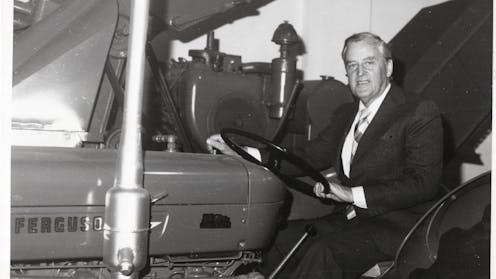
The new documentary film Joh: Last King of Queensland offers a dramatised account of Sir Joh Bjelke-Petersen’s premiership from 1968 to 1987.
Directed by Kriv Stenders, using reenactments (Bjelke-Petersen is played by Richard Roxburgh), archival footage and contemporary interviews, the film portrays him as a complex and polarising figure.
We are given a man who is socially conservative, economically ambitious and politically divisive. A man who profoundly shaped Queensland’s governance and development.
But while the film effectively captures his popular appeal and role in the state’s economic transformation, it simplifies key aspects of his political ascent.
In particular, it doesn’t capture the complexities of electoral mechanics, internal party maneuvering and the influence of the public service.
National Party dominance
We start with Bjelke-Petersen’s rural upbringing. Stenders emphasises the formative impact of his Lutheran faith, personal abstinence, strong work ethic and family values. These would be foundational to his leadership style.
Roxburgh highlights Bjelke-Petersen’s rhetorical simplicity. He presented himself as an advocate for “ordinary” Queenslanders, especially in rural and conservative communities.
A central critique of Bjelke-Petersen was his manipulation of Queensland’s electoral system.
The film illustrates how electoral malapportionment advantaged rural constituencies, fuelling the National Party’s dominance. But this treatment lacks nuance.

Former MP David Byrne’s claim that Bjelke-Petersen remained premier solely due to the electoral system is presented uncritically.
The National Party outpolled the Liberals from 1977 on. Labor failed to win a statewide majority until 1989, under boundaries drawn by Bjelke-Petersen’s administration in 1986.
The narrative also omits the fact that electoral bias originated under earlier Labor governments.
While Roxburgh’s character mentions this legacy, his claim that there was “not a peep” of dissent overlooks sustained criticism from opposition leader Frank Nicklin throughout the 1950s.
The party apparatus
The film omits several key figures whose contributions were instrumental to the success of the Bjelke-Petersen era.
The organisational acumen of National Party president Robert Sparkes and state secretary Mike Evans played a critical role in constructing a highly efficient party apparatus.
Through the coordination of financial resources and the strategic mobilisation of grassroots support, Sparkes and Evans substantially reinforced Bjelke-Petersen’s leadership and electoral resilience.
Also excluded are prominent members of the premier’s personal staff, such as media advisor Allen Callaghan and policy researcher Wendy Armstrong. Both contributed significantly to shaping public messaging and policy development.

We do not hear about the contributions of senior public servants such as Sydney Schubert, coordinator-general, and Leo Hielscher, under-treasurer.
Schubert was instrumental in expediting infrastructure development across the state. Hielscher ensured Queensland maintained its AAA credit rating and successfully attracted international investment.
These administrative achievements were central to the state’s economic growth.
Bjelke-Petersen was frequently detached from the formal processes of cabinet and Westminster governance. But his reliance on a capable and loyal bureaucracy underscores a distinct, if unconventional, mode of operation.
This model, characterised by strong administrative delegation, contributed to the longevity and effectiveness of his premiership.
Winning seats, suppressing rights
The film addresses his opposition to the Whitlam government and his promotion of states’ rights. Both cemented his popularity. It highlights his decision to abolish death duties – a move that allowed him to present a low-tax, pro-development agenda.
Bjelke-Petersen’s authoritarian style is explored through archival footage of the 1971 protests during South Africa’s rugby tour of Australia. But the film fails to contextualise electoral reaction.
The government won seats, including central Brisbane and Maryborough, in by-elections held at the height of the protest activity.
His later suppression of civil liberties, particularly against students, unions and Indigenous activists, is acknowledged.
 Corruption flourished under Bjelke-Petersen’s administration due to insufficient oversight and a permissive political culture.
Stan
Corruption flourished under Bjelke-Petersen’s administration due to insufficient oversight and a permissive political culture.
Stan
The depiction of the “Joh for PM” campaign presents it as a significant strategic miscalculation. Stenders illustrates the limits of Bjelke-Petersen’s political judgement beyond the state level.
Investigative journalist Chris Masters is interviewed about his role in creating the Four Corners exposé which served as a catalyst for the Fitzgerald Inquiry (1987–89).
This inquiry uncovered extensive political and police corruption. It exposed entrenched institutional malpractice, and contributed decisively to the erosion of Bjelke-Petersen’s political legitimacy.
Such corruption was longstanding and predated Bjelke-Petersen’s tenure. It flourished under his administration due to insufficient oversight and a permissive political culture.
Emotional resonance, but not fully nuanced
While the film suggests that Bjelke-Petersen was never personally corrupt (and he was never convicted of any criminal offence) it omits a pivotal episode in his political downfall.
According to journalist Matthew Condon, Springwood MP Huan Fraser publicly accused the Premier of corruption during a 1987 National Party meeting.
Fraser’s confrontation, reportedly triggered by Bjelke-Petersen’s push to approve what was then the world’s tallest building, marked a significant rupture within the party.
The proposed project symbolised growing concerns about impropriety and unchecked executive power during his premiership.
Joh: Last King of Queensland succeeds in capturing the emotional resonance of Bjelke-Petersen’s political persona. But it stops short of delivering a fully nuanced account.
His legacy continues to polarise. To supporters, he remains a visionary who championed economic growth and conservative values. To critics, he presided over an era of democratic erosion, civil rights suppression and entrenched corruption.
His story reflects the enduring tension between executive authority and democratic accountability in modern Australian political history.
Joh: Last King of Queensland is on Stan now.
Authors: John Mickel, Adjunct Associate Professor, School of Justice, Queensland University of Technology


 Daily Bulletin


