

Australia’s rat uprising: footage provides first evidence of native rakali attacking introduced black rat
- Written by: Peter Banks, Professor of Conservation Biology, School of Life and Environmental Sciences, University of Sydney
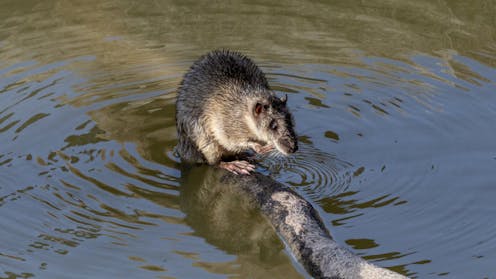
An introduced black rat scratches through leaf litter, looking for food. Nearby, a native water rat watches on, its beady eyes shining. The native rat pounces out from the shadows, sending the invader fleeing.
The encounter in Sydney bushland, captured on video, is the first documented evidence of an aggressive interaction in nature between a native water rat, also known as rakali, and a black rat.
The footage, discussed in our new research, provides proof that rakali (Hydromys chrysogaster) actively hunt introduced black rats (Rattus rattus). This behaviour may offer a promising natural form of pest control.
Rakali are carnivorous rodents, and the largest of Australia’s 60 native rat species. Our findings suggest efforts to conserve the rakali should include Australia’s urban environments, where introduced rats cause a host of problems.
The problem of black rats
Rats have lived with humans for about 4,000 years. In Australia, invasive rats are an ongoing concern.
Anecdotal reports suggest Sydney, for example, has a growing vermin problem. Public concern was fuelled late last year when footage emerged of rats scurrying through a food court at a popular Sydney shopping centre (see video below).
Black rats and brown rats are the two main pest rat species in Australia. Both were introduced by Europeans. They compete aggressively against other species for food and can breed quickly.
Black rats are particularly abundant in urban areas and nearby bushland. They may prefer natural vegetation to urban environments, if there are no competitors around.
Their ecological impact is significant. Black rats prey on bird nests, skinks and invertebrates and also eat seeds.
Black rats also pose serious health risks to humans, pets and wildlife.
They are the primary host of rat lungworm, a parasite on the rise in Australian cities. Rats also spread leptospirosis, a bacterial infection that has killed several dogs in Sydney in recent years, and infected scores of humans.
Managing introduced rats is becoming increasingly difficult. Some rodenticides have become less effective as rats developed genetic resistance. And rat poisons have been known to harm native species.
Clearly, better ways of managing introduced rats are needed. That’s where our new paper comes in.
Enter the rakali
The rakali, or water rat, is found across much of Australia. It is semi-aquatic and usually lives near fresh or brackish (slightly salty) water such as creeks and estuaries. It is often described as Australia’s “otter”.
The rakali weighs up to 1 kilogram – far greater than an adult black rat which typically weighs up to 200 grams.
While surveying rakali around Sydney Harbour in June 2011, we captured footage of one lying in wait before ambushing a black rat.
The observation took place in bushland on the foreshore of Sydney Harbour, near Collins Beach at North Head. We had set up a motion-sensing wildlife camera as part of a pilot study to understand relationships between rakali and black rats.
At 10.22pm, the camera recorded a rakali next to a rock and hidden by vegetation. A black rat approached, and the rakali leapt out and chased it off.
But do rakali kill black rats, or just chase them? Captive rakali have been known to kill and eat other rat species in captivity. And given the larger size and carnivorous diet of the rakali, they may in fact prey on black rats in the wild.
Or rakali may reduce black rat numbers the same way dingoes reduce fox activity – by both preying on some and scaring others away.
Our paper also canvasses growing evidence that native rodents can resist and suppress their invasive counterparts.
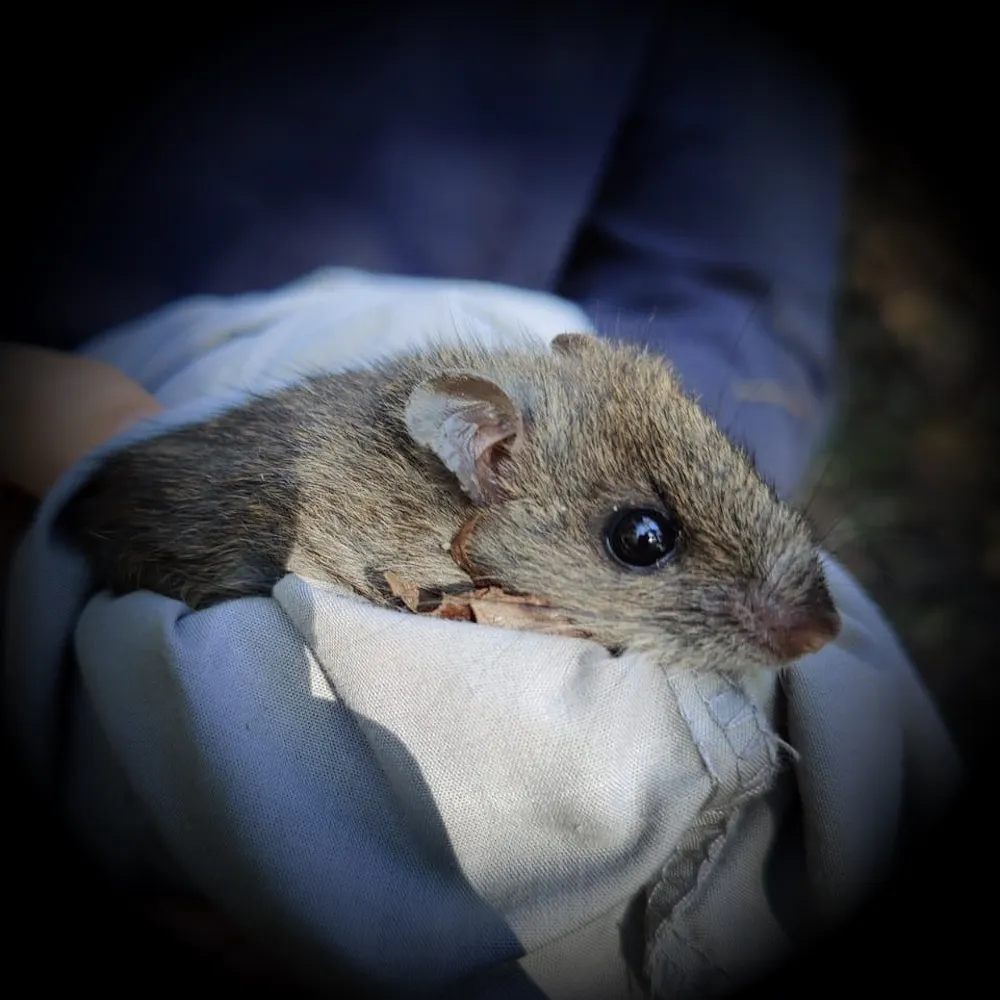
For example, native bush rats (Rattus fuscipes) were presumed to be outcompeted by black rats. But an experiment at Jervis Bay in New South Wales removed black rats, allowing bush rats to reclaim their territory. After the experiment ended, black rats did not return.
At North Head on Sydney Harbour, reintroducing bush rats to areas where they once lived led to a dramatic decline in black rat numbers.
Recent research reported on footage captured in a Perth backyard of black rats attacking a native quenda, a small marsupial species found only in southwest Australia. However, the quenda appeared to fend off the attack. This means it’s possible rakali, which are much larger than quenda, would be even more aggressive towards black rats.
Native rats to the rescue?
Evidence is growing that native rodents can help control pest rodents.
This is especially true of rakali, which live in all major Australian cities where black rats are common. More research is needed to better understand the potential of rakali to manage invasive black rat populations.
Troublingly, however, native rats are vulnerable to rodenticides. To support their role in pest management, the use of poisons to control pest rats should be reconsidered.
By allowing native rodents to thrive, we may be able to harness their natural behaviours to control invasive pests safely, sustainably and effectively.
Authors: Peter Banks, Professor of Conservation Biology, School of Life and Environmental Sciences, University of Sydney


 Daily Bulletin


