

Some patients wait 6 years to see a public hospital specialist. Here’s how to fix this
- Written by: Katherine Harding, Professor of Allied Health and Implementation Science, La Trobe University
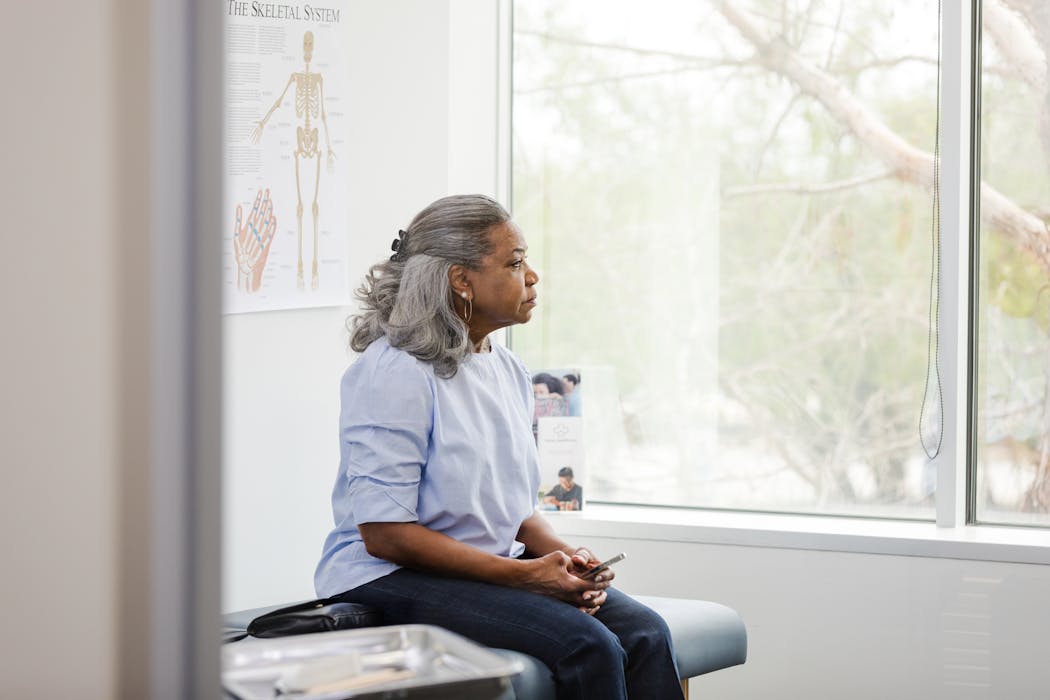
ABC analysis shows some patients wait six years or more for outpatient medical appointments in Australia’s public hospital system.
According to the ABC, the delays are longest in parts of South Australia, where some patients waited more than six years to see a neurologist and 5.5 years to see ear, nose and throat (ENT) specialists and gastroenterologists.
In parts of Tasmania, waits for ENT specialists, neurologists and urologists were almost five years. Some families needing their child assessed for allergies waited more than five years.
Some patients find their condition deteriorates as they wait. Others live with chronic pain. All live with uncertainty. In our past interviews patients described “becoming more anxious”, and feeling “forgotten” and “alone […] like no one cares”.
Health Minister Mark Butler says the government is working to bolster the medical workforce. But while training more specialist doctors is an important part of a long-term plan, it’s not the only thing needed to reduce outpatient wait times.
Our research spanning more than a decade shows there are ways to reduce waiting lists that can be implemented now.
What’s going wrong?
When a patient needs to see a specialist but doesn’t require hospitalisation, a GP or emergency department can refer them to a public outpatient clinic. In a public outpatient clinic, they can see a specialist or allied health provider – or receive a test or treatment – for free.
Some patients may go on to have elective surgery, but they must first wait for an outpatient appointment.
There are around 41 million public hospital outpatient visits each year. But data isn’t routinely collected on how long patients wait for outpatient appointments, so it’s often referred to as the “hidden waiting list”.
Outpatient services typically manage their demand using a triaged waiting list. Referrals are received, given a triage category based on urgency and placed on a waiting list, to be contacted when a place eventually becomes available.
There are several problems with this approach.
First, it’s difficult to come up with systems to make fair decisions about who should be seen first, which can turn access into a lottery.
Second, triage systems weigh up the needs of patients as they arrive but don’t reassess the priority of those already in the system.
Third, managing long waiting lists diverts resources from patient care, but poorly maintained lists create inefficiencies and are demoralising for health providers, contributing to burnout.
Finally, the unlucky patients at the lowest triage level are constantly overtaken by those entering at higher priority.
First, clean up the list
Our research shows investing in short-term, targeted strategies can reduce outpatient backlogs.
We tackled a waiting list of 600 patients in a neurology outpatient clinic. We found the list was full of errors, patients who no longer wanted or needed the service, and patients who had previously been offered appointments but never attended.
In the end, only 11% of patients still required an appointment.
Then consider supply and demand
These strategies work in the short term but waiting lists will soon grow back if underlying imbalances between supply and demand are not addressed.
We created a new approach to address this issue. It starts with an analysis of supply and demand, followed by protecting sufficient capacity in clinic schedules to see all new patients at the rate they arrive.
These changes are coupled with short-term, targeted strategies to reduce existing waiting lists, enabling services to “catch up” while underlying service changes allow them to “keep up”.
On referral, all patients get rapid access to a first appointment but are then triaged for ongoing care according to need – anything from a brief assessment and advice to intensive ongoing treatment.
Using more of each health workers’ skills
Thinking creatively about models of care can then help to maximise the value of specialised clinicians. Empowering allied health professionals or nurses to see less straightforward cases or conduct preparatory assessments can free up specialists’ time to provide complex assessment and treatment.
Some care can be delivered by different types of health-care providers without compromising quality.
Physiotherapists, for example, have been shown to be very effective at assessing some patients waiting for hip and knee joint replacements and identifying those who might benefit from exercise-based treatment, allowing orthopaedic surgeons to focus on those who require surgery.
Investing in clerical staff can ensure patients have the information they need to get to their appointments at the right time, with the right test results in hand.
Testing this approach
In a trial involving more than 3,000 patients, we tested the model across eight allied health and community services in Victoria. These services provide care from professionals such as physiotherapists and occupational therapists, as well as team-based services such as memory clinics, in the community.
Each participating service received a small grant to support targeted strategies to address the existing backlog, such as waiting lists audits, but no ongoing additional funding. Changes were made by reorganising existing resources, not adding new ones.
This multi-pronged approach reduced waiting time by 34% with minimal extra resources. Median waiting times reduced from 42 to 24 days, with bigger reductions for the longest waiters. This model is now being widely used in Victorian Community Health Services.
We are now testing this way of managing demand in a group of outpatient medical specialist clinics with waiting lists of 13,000 patients to see if it can work at the scale required in specialist clinics at public hospitals.
It’s still early days but initial signs are promising, suggesting that waiting lists can be reduced by better understanding supply and demand, cleaning up long waiting lists, and using more of each health-care workers’ skills.
Nicholas Taylor (Professor of Allied Health at La Trobe University and Eastern Health) and Annie Lewis (Post-Doctoral Researcher at La Trobe University and Eastern Health) co-authored the research on which this article is based.
Authors: Katherine Harding, Professor of Allied Health and Implementation Science, La Trobe University


 Daily Bulletin


