

Roads can become more dangerous on hot days – especially for pedestrians, cyclists and motorcyclists
- Written by: Milad Haghani, Associate Professor and Principal Fellow in Urban Risk and Resilience, The University of Melbourne
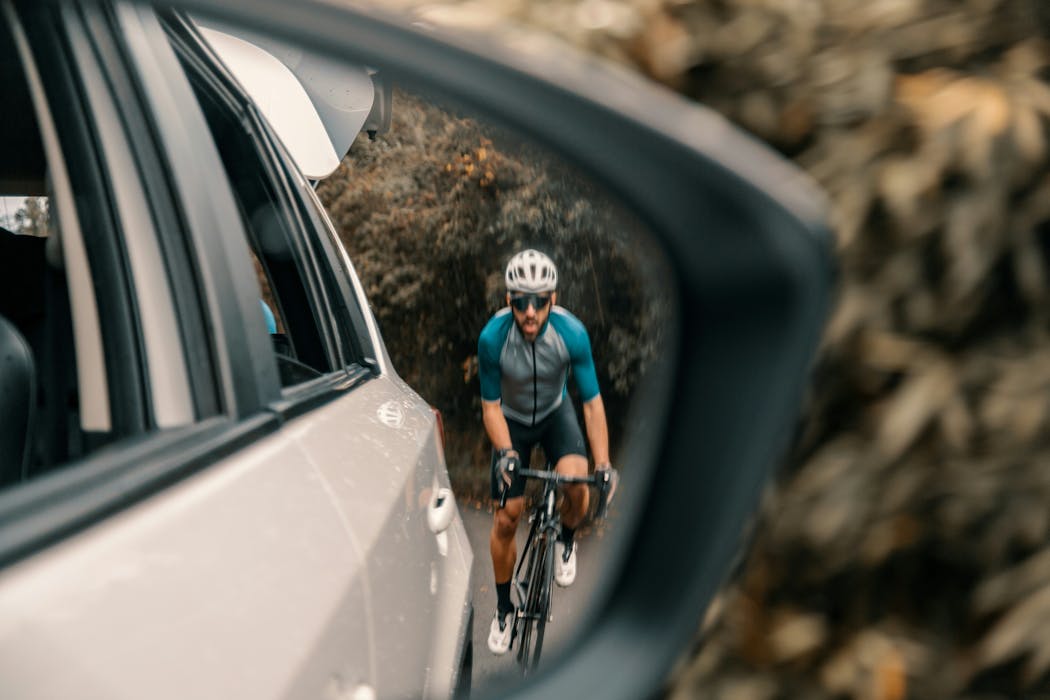
During heatwaves, everyday life tends to feel more difficult than on an average day. Travel and daily movement are no exception.
But while most of us know rain, fog and storms can make driving conditions challenging, not many people realise heat also changes transport risk.
In particular, research evidence consistently suggests roads, trips and daily commutes can become more dangerous on very hot days compared with an average day.
The key questions are how much more dangerous, who is most affected, whether the risk is short-lived or lingers and how this information can be used to better manage road safety during extreme heat.
Who is most at risk?
The clearest picture comes from a recent multi-city study in tropical and subtropical Taiwan.
Using injury data across six large cities, researchers examined how road injury risk changes as temperatures rise, and how this differs by mode of travel.
The results show what researchers call a sharp, non-linear increase in risk on very hot days.
It’s non-linear because road injury risk rises much more steeply once temperatures move into the 30–40°C range.
It is also within this range that different travel modes begin to clearly separate in terms of their susceptibility to heat-related risk.
This Taiwan study found injury risk for pedestrians more than doubled during extreme heat. Cyclist injuries soared by around 80%, and motorcyclist injuries by about 50%. In contrast, the increase for car drivers is much smaller.
The pattern is clear: the more exposed the road user, the bigger the heat-related risk.
The pattern is also not exclusive to a single geographical region and has been observed in other countries too.
A long-running national study from Spain drew on two decades of crash data covering nearly 2 million incidents and showed crash risk increases steadily as temperatures rise.
At very high temperatures, overall crash risk is about 15% higher than on cool days.
Importantly, the increase is even larger for crashes linked to driver fatigue, distraction or illness.
A nationwide study in the United States found a 3.4% increase in fatal traffic crashes on heatwave days versus non-heatwave days.
The increase is not evenly distributed. Fatal crash risk rises more strongly:
- on rural roads
- among middle-aged and older drivers, and
- on hot, dry days with high UV radiation.
This shows extreme heat does not just increase crash likelihood, but also the chance that crashes result in death. That’s particularly true in settings with higher speeds and less forgiving road environments.
Taken together, the international evidence base is consistent: the likelihood of crashes, injury risk and fatal outcomes all increase during hot days.
Why heat increases road risk, and why the effects can linger
Across the three studies, the evidence points to a combination of exposure and human performance effects.
The Taiwan study shows that risk increases most sharply for pedestrians, cyclists and motorcyclists. These are groups that are physically exposed to ambient heat and, in some cases, exertion. In contrast, occupants of enclosed vehicles show smaller increases in risk.
This suggests that direct exposure to heat plays a role in shaping who is most affected.
The Spanish study suggests that the largest heat-related increases occur in crashes involving driver fatigue, distraction, sleepiness or illness.
This indicates that heat affects road safety not only through environmental conditions, but through changes in human performance that make errors more likely.
Importantly, the Spanish data also show that these effects are not always confined to the hottest day itself. They can persist for several days following extreme heat, consistent with cumulative impacts such as sleep disruption and prolonged fatigue.
High solar radiation refers to days with intense, direct sunlight and little cloud cover. In the US study, heat-related increases in fatal crashes were strongest under these conditions.
Although visibility was not directly examined, these are also conditions associated with greater glare, which may make things even less safe.
How can the extra risk be managed?
The empirical evidence does not point to a single solution, but it does indicate where risk is elevated and where things become less safe. That knowledge alone can be used to manage risk.
First, reducing exposure matters. Fewer trips mean less risk, and flexible work arrangements during heatwaves can indirectly reduce road exposure altogether.
Second, risk awareness matters. Simply recognising that heatwaves are higher-risk travel days can help us be more cautious, especially for those travelling without the protection of an enclosed vehicle.
We tend to adapt quickly to rain. As soon as the first drops hit the windscreen, we reduce speed almost subconsciously and increase distance to other vehicles. This, in fact, is a key reason traffic jams often start to develop shortly after roads become wet.
But a growing body of research shows we also need to be more careful when it comes to travel and commuting during extreme heat.
Authors: Milad Haghani, Associate Professor and Principal Fellow in Urban Risk and Resilience, The University of Melbourne


 Daily Bulletin


