

Australia’s Baby Food Aisle Faces Questions Over Iron Content
Australian research showing widespread inadequate iron intake among infants has prompted questions about whether foods marketed specifically for babies are delivering enough of the nutrients they need.
The Australian Feeding Infants and Toddlers Study, known as OzFITS, found approximately 75 per cent of babies aged six to 12 months had inadequate iron intakes. Among children aged 12 to 24 months, around one in four were still not consuming enough.
The findings concern dietary intake, rather than diagnosed iron deficiency. However, they highlight a nutritional gap during a period of rapid growth and development.
Australian nutrient reference values recommend 11mg of iron daily for babies aged seven to 12 months, higher than the 8mg recommended for adult men.
Clinical nutritionist, former nurse and Odi Nutrition founder Gina Urlich says that requirement deserves greater attention in the commercial baby food category.
According to Urlich, commercial baby purée pouches sold in Australia are not required to contain a minimum amount of iron, despite being marketed for an age group with substantial nutritional needs.
“We have very clear guidance around how much iron babies need, but that doesn’t necessarily translate to the food being marketed specifically for them,” she says.
“You have this tiny human eating tiny portions, but their nutrient requirements relative to the amount of food they can physically consume are extraordinary.”
Urlich argues that scrutiny of baby food often centres on what products should exclude, particularly added sugar, rather than what they should provide.
She also points to the absence of an overarching maximum sugar limit across the baby purée pouch category, saying parents can mistake words such as “organic” and “natural” for evidence of nutritional completeness.
“We’ve spent years telling parents what babies shouldn’t be eating, particularly when it comes to sugar, but we’re not applying the same scrutiny to whether these foods actually deliver the nutrients babies need,” she says.
The issue has commercial significance as packaged foods become a routine part of family life. Research cited in Odi’s release indicates eight in 10 toddlers consume packaged toddler foods.
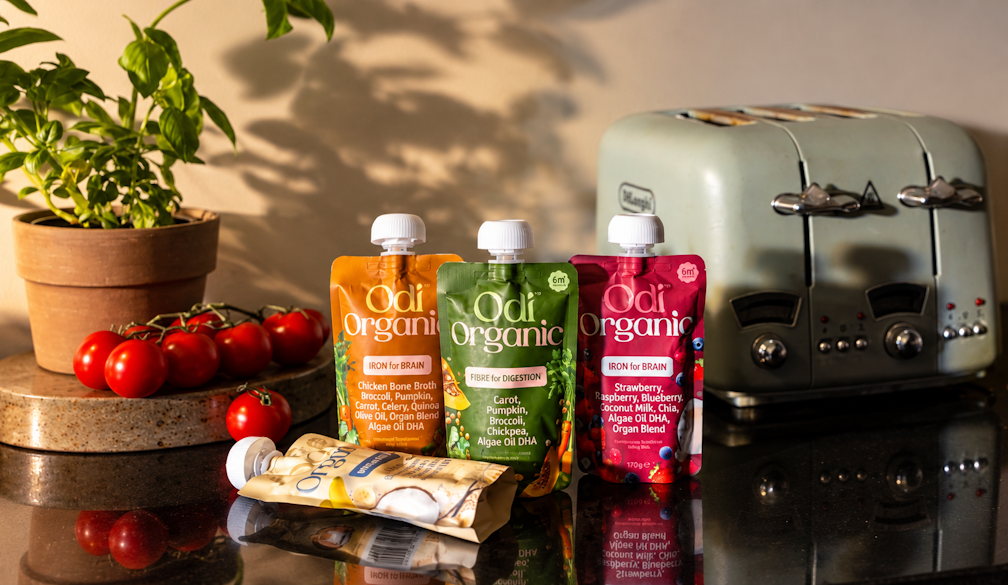
Urlich, a mother of four, says convenience should remain part of the solution. Her brand recently entered Australia with a range spanning baby purée pouches, powders, bars, bites and other children’s snack formats.
According to Odi, its baby purée pouches provide approximately 30 per cent of a baby’s recommended daily iron intake per serve. Its Organic Chicken & Vegetable pouch combines organic chicken bone broth and vegetables with an organ blend and algal DHA omega-3.
The brand’s broader approach considers nutrients including iron, protein, omega-3 and iodine when developing products for different stages of childhood.
For Urlich, the ambition is also to raise expectations across the category.
“If we’re making food specifically for babies and children, parents should be able to expect it to contribute meaningfully to what those children actually need,” she says.
Her call is for parents to look beyond front-of-pack marketing and for the industry to give greater attention to the nutritional contribution of foods made for its youngest consumers.


 Daily Bulletin


