

Distracted Driving Study Proposes a Promising Way Forward
- Written by: Maddison Mulvany
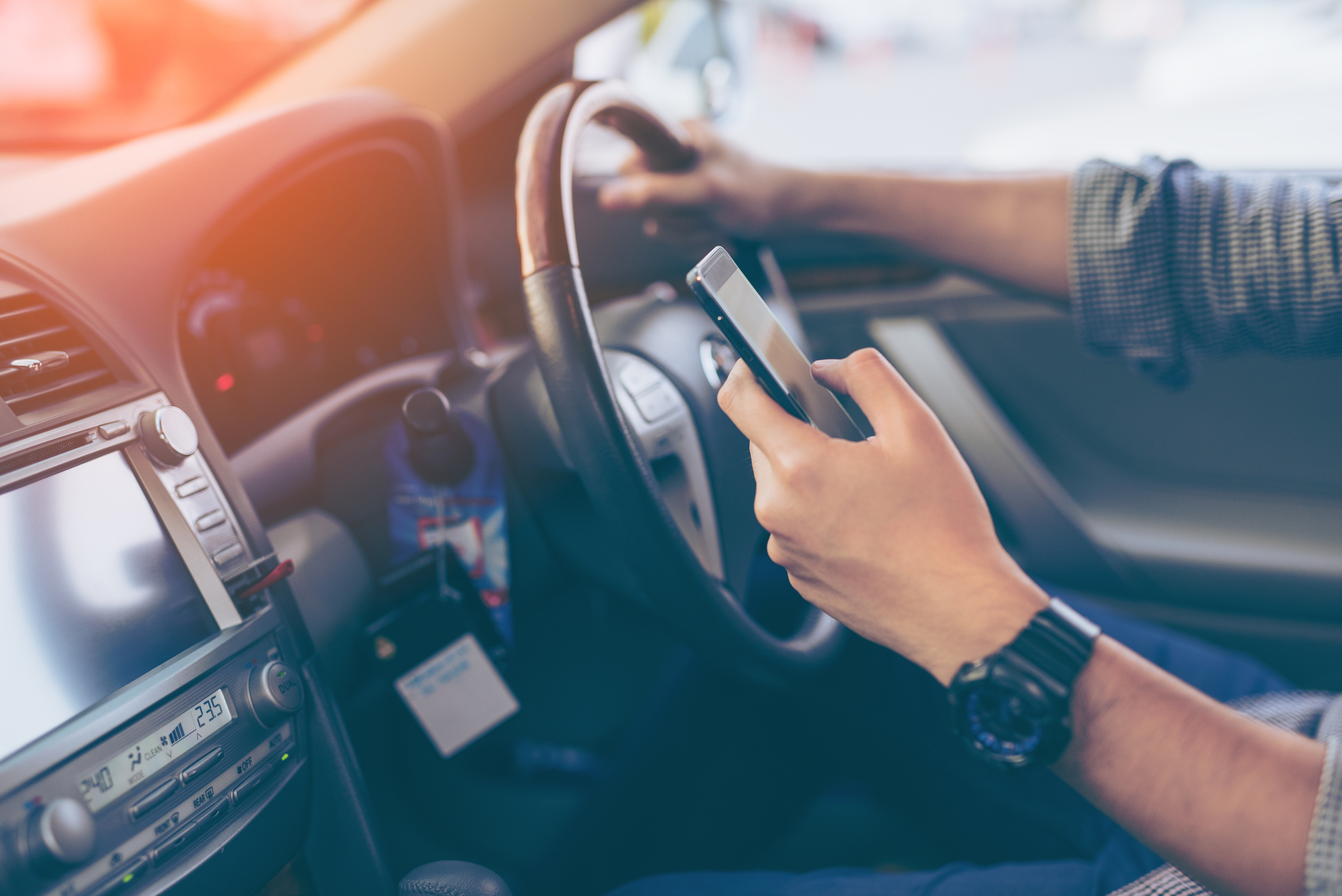
Mobile phone use while driving is a global epidemic, with the World Health Organisation estimating that up to 11% of drivers worldwide are using their phones any given moment. Unfortunately, Australia hasn’t been immune to this trend. Although operating a hand-held mobile phone while driving is illegal in all Australian states and territories, distracted driving is one of the top five causes of car crashes in Australia, along with speeding, alcohol consumption, not wearing a seatbelt, and driver fatigue.
With this in mind, a new study commissioned by Budget Direct Car Insurance, with research undertaken by The Centre for Accident Research and Road Safety - Queensland (CARRS-Q), provides valuable insight into the nature, extent, and causes of this issue, while also suggesting promising ways to address distracted driving in Australia.
The study measured 5 types of mobile phone while driving behaviours: checking your mobile phone for missed calls, answering a phone call in hand-held mode, reading a text message (or another form of communication such as a Facebook message, Snapchat, an email, or a Tweet), answering a text message (or another form of communication such as a Facebook message, Snapchat, an email, or a Tweet), and changing music (using Spotify, iTunes etc.).
Summarised Key Findings
Bad News
-
62% (N=163) reported using a mobile phone to change music while driving at least 1-2 times in the past week.
-
44% used a mobile phone to change music while driving at least once per day, more than double the second most common daily behaviour of reading a text message (21.5%).
-
16.5% reported answering a call in hand-held mode at least 1-2 times in the past week - the least common past behaviour.
-
45% had never answered a call in hand-held mode - the highest ‘never’ percentage.
-
16.6% had ‘never’ read a text message or other form of communication while driving - the lowest ‘never’ response.
-
Every behaviour was done by a minimum of 32% of participants at least 1-2 times per month.
-
Younger drivers (17-24 years) were “significantly more likely to report greater intentions to use their mobile phone in the next week to change music” than slightly older drivers (25-45 years).
-
Participants ‘somewhat agreed’ that their friends were likely to approve of them changing music using a mobile phone while driving (a mean score of 4 out of 6).
Good News
-
From pre-task to immediate post-task, participants had less favourable attitudes and intentions towards all behaviours, regardless of whether they were shown images of people using their mobile phone while driving followed by negative consequence images (the intervention group), or just images of people using their mobile phone while driving (the control group).
-
From pre-task to the one-week follow-up, participants had less favourable attitudes and lower intentions to use a mobile phone while driving in the next week to check for missed calls, read or answer a text message, and change music, regardless of whether they were assigned to the intervention or control group.
-
There were no significant statistical differences between the intervention and control groups, meaning merely participating in the study led to safer attitudes and lower intentions to use a hand-held mobile phone while driving.
Further Findings
-
No significant statistical differences between younger (17-24 years) and slightly older (25-45 years) drivers, nor male and female drivers for using a hand-held mobile phone while driving in the past week.
-
Open licence holders were ‘significantly more likely’ to report checking their phone for missed calls in the past week than P1 and P2 licence holders.
-
P1 and P2 licence holders were ‘significantly more likely’ to report using their phone to change music in the past week than open licence holders.
-
Participants who reported high school as their highest level of completed education were ‘significantly more likely’ to report using their phone to change music in the past week than participants who had completed undergraduate or postgraduate studies.
Plan Ahead
79% of participants said road safety was either extremely important or quite important to them. Yet, many had used their phone in some capacity while driving in the past week. This disparity between intentions and behaviour was evident throughout. According to the study, “while people do not intend to use a hand-held mobile phone while driving, they still end up using their phones.”
Prior research by Gollwitzer shows the relationship between intentions and behaviour is “modest”, accounting for only 20-30% of variances in behaviour. Instead, past behaviour is a more accurate predictor of future behaviour.14 Since many participants had used their mobile phones while driving at least 1-2 times in the last week, Gollwitzer would suggest this is likely to have a greater impact on participants’ future actions than their reported intentions.
Gollwitzer also claims goal achievement is more likely through “promotion goals (focusing on the presence or absence of positive outcomes)” rather than “prevention goals (focusing on the presence or absence of negative outcomes).” The study reiterates this, stating, “interventions to prevent this behaviour may benefit from encouraging individuals to plan ahead and identify essentially ‘if-then’ statements as to what actions they may use to prevent their phone use while driving in any given scenario.”
These ‘if-then’ statements are known as ‘implementation intentions’ and follow the format ‘when situation x arises, I will perform response y!’
Advertising the Way Forward
The study concludes that advertising could play a central role in addressing distracted driving in Australia. They recommend advertisements could challenge drivers’ “favourable attitudes” to mobile phone use while driving by showing people that they’re not as safe using a mobile phone while driving as they think they are.
Such adverts could demonstrate the dangers of taking your eyes off the road for even a few seconds, and show that reading a text message while driving captures the driver’s attention more than they realise. Further, potential ads could reiterate the heightened crash risk associated with distracted driving.
They also suggest that adverts could target passengers, encouraging them to point out drivers’ dangerous behaviours. By focussing on educational messaging that raises awareness of smartphone use while driving, rather than negative messaging or scare tactics, it is hoped that drivers will become aware of their dangerous behaviours and implement positive strategies to rectify them.


 Daily Bulletin


