

How to extend your ethernet and what to watch out for
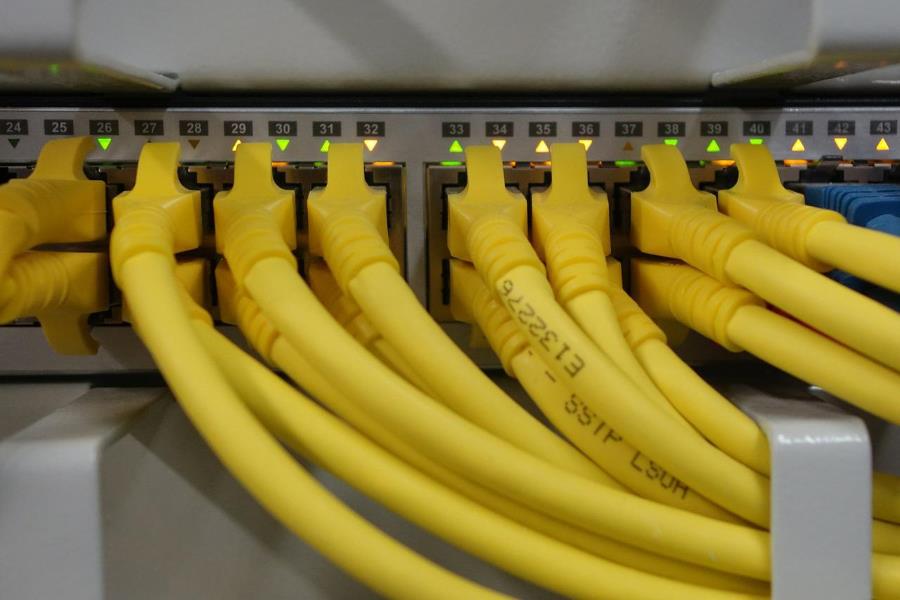
The standard copper ethernet cable range limit of 100 meters can become a real crick in the neck for a whole lot of IP/TCP networking, assuming you take your business out of your office cubicle or cozy living room. Fortunately, though, if you get creative with your extending and conversion tactics, you can beef it up all the way to several kilometers of distance.
We have put together this handy, dandy, little guide of the five best ways to extend your ethernet, and we collected some things you should be careful about in the process, too.
Using the ethernet extender
If you are looking to extend your ethernet connection range, then an ethernet extender is the obvious first choice. Its DSL technology can boost your range to as far as 1,900 meters, so nearly two whole kilometers (that means 6,200 ft for your fans of the Imperial System).
This is a notably cost-effective solution, as extenders will readily work with all kinds of copper wires, so you can use whatever legacy cable you have to cut down on your installation expenses. Heck, even an old telephone cable can do the trick!
Do keep in mind, though, that you will need two: these devices have to work in pairs. One will convert your ethernet data so that it can be transmitted over DSL, and the other will convert it back. Depending on your range, you can achieve a throughput of about 50 Mbps, though at the maximum stretch of 1900 meters, this will come down to a mere 1 Mbps. To get the best results, make sure there are no splitters, load coils, or filters on your extender’s wire.
One particularly nifty use of these gadgets is that some of them can provide PoE (Power over Ethernet). Using this, you can power remote devices directly from the extended ethernet port. To learn more about this application, you can get started at this link.
Using radio waves
It may sound ironic but let Wi-Fi do the job for you. It is the economically most sensible solution when it comes to crossing your connection over highways, rivers, and similar obstacles. This solution relies on circumventing a phenomenon called multipath propagation, and this is how it works, in a nutshell:
Transmitting signals via radio connection over great distances is tricky, because radio waves get absorbed (or worse, reflected) by pretty much everything: vehicles in a nearby parking lot, the walls of surrounding buildings, and everything in between. In other words, you transmit a batch of signals, and they arrive to the intended receiver all at different times and all completely out of sequence.
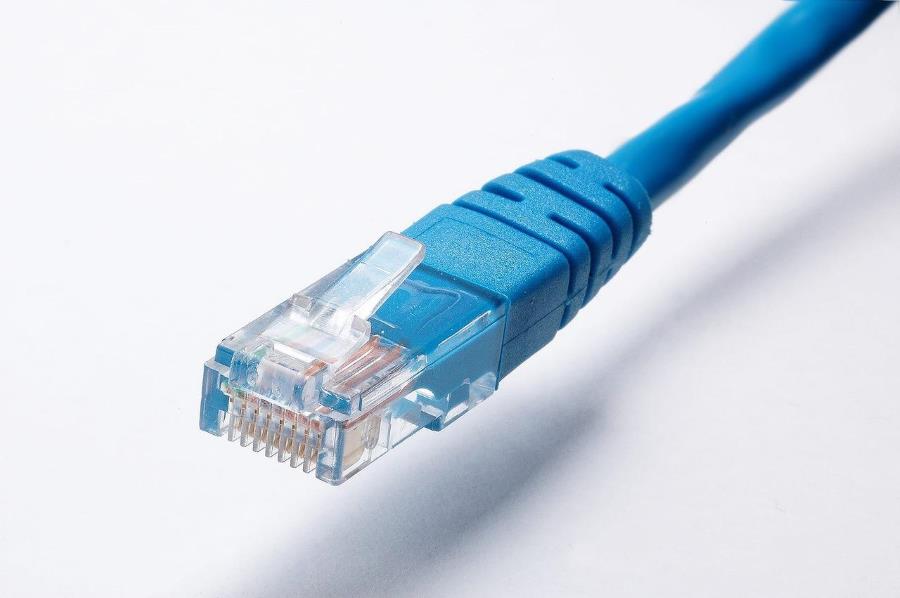
The higher your frequency is, the bigger your problem will be – but on the other hand, low frequencies mean less bandwidth, greater power expense, and large, clunky antennas if you want to get any use out of them. If you try the middle road, like the 2.4 GHz band, you will stumble into a traffic jam nightmare of everything from phones to microwaves.
The new 802.11n wifi standard seeks to resolve these issues. You can read about it in greater detail at https://www.electronics-notes.com/articles/connectivity/wifi-ieee-802-11/802-11n.php, but here is a crash course. It relies on MIMO technology (which stands for “multiple-input multiple-output”) and uses multiple antennas at both the transmission and reception points. Your data gets broken up into several spatial streams which travel independently, and then get interpreted collectively by onboard software, which uses signal processing algorithms make sense of the data and correcting whatever might need to be corrected.
Installing single- and multi-mode fiber optics
When you need gargantuan bandwidth, or the 1900 meters of the extender just doesn’t cut it, fiber optic cables are the go-to solutions for large networks. The multi-mode fiber optics cable relies on LED light to transfer data over several kilometers and is the cheaper of the two options. You will typically find it as the central solution in factory networks or office buildings.
The more expensive single-mode fiber optic cable is the option of choice for cable companies and telephone service providers. It uses laser instead of LED light, which enables these companies to transmit their data across entire continents, rather than just a measly few kilometers. This, in turn, ensure that they will not need to replace significantly upgrade their setup in any foreseeable future.
Some risks of an ethernet extension
Copper wires set you at a higher risk of electrical mishaps, and a greater distance between the connected devices means a greater chance of ground loops. You will also be facing a higher chance of EMI (electromagnetic interference) if your cables are set in an industrial environment – especially if they pass by any machinery along the way. Always take the time to make sure that your copper wire installations are properly protected with appropriate isolation and surge suppression.
Fiber optic cables are, thankfully, immune to EMI issues, as well as ground loops, surges, and spikes, since a beam of light does not depend on a strand of copper to travel through the world. This makes them an immensely valuable tool in an industrial context, where motors of various machinery tend to generate powerful magnetic fields. A wifi-based solution has similar benefits. The most significant downsides to these two options would be the potential cost of installation or maintenance and danger of signal interruption.


 Daily Bulletin


