America's mayors are taking on the big problems, but they can't escape partisan divide
- Written by: The Conversation
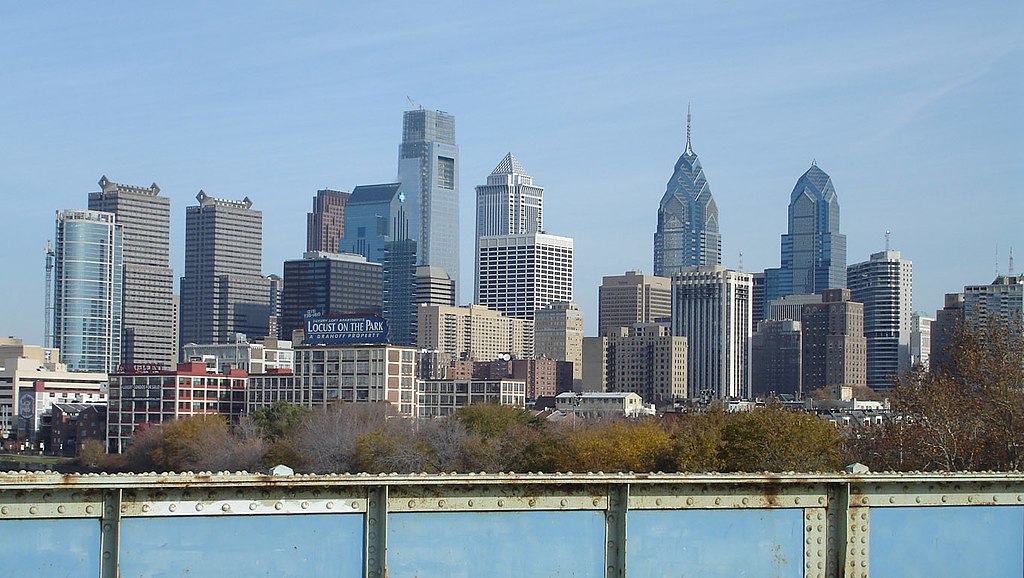
 Making things happen in Philadelphia Bmoredlj
Paralysis, gridlock, dysfunction: these are just three of the words commonly used to describe federal politics. Making things happen is no easy task in a polarized Washington, DC. But move a couple of levels down – to our cities – and a different picture emerges.
Novel evidence we have collected suggests that in the face of an intransigent federal government, it is the cities that are tackling the big issues traditionally associated with higher levels of government.
A case in point: the ‘Cities of Opportunity’ Task Force
At the 2014 summer meeting of the US Conference of Mayors, Sacramento Mayor Kevin Johnson and New York Mayor Bill de Blasio announced a “Cities of Opportunity” task force whose goal is to tackle issues of economic opportunity and inequality at the local level.
Philadelphia Mayor Michael Nutter’s optimism about the inequality task force is representative:
“Cities are incubators of change and innovation, and mayors are at the forefront of it all – we get things done."
Bill de Blasio was even more explicit on the same subject:
“Mayors are starting to respond to this crisis, and this task force is going to organize and focus the progressive ideas coming out of cities across the US, and put city issues back on the national agenda."
So far, members of the task force have met and exchanged ideas on income inequality, early childhood education, and broadband (August 2014) and housing and transportation (March 2015).
What mayors think
In June 2014, we conducted in-depth survey-interviews with 72 mayors of American cities, including many of the nation’s largest.
Our nationally representative sample of mayors cited a wide array of important national issues as their chief concerns and priorities.
For example, almost one-fifth of mayors named socioeconomic equality as one of their top two policy priorities.
What’s more, just under one-third of mayors believed that cities should try to reduce income inequality, even if such policy efforts came at the expense of businesses and/or wealthy residents.
Mayors Nutter and de Blasio, in other words, appear to be in good company in expressing priorities counter to traditional views of local governments’ agendas.
Mayors’ concerns about ostensibly national issues stretch beyond questions of economic redistribution.
When we asked about climate change, 60% agreed that cities should play a strong role in reducing the effects of climate change, even though doing so requires sacrificing revenues and/or expending financial resources.
As with income inequality, a significant portion of mayors are willing to back their policy preferences on national issues with financial outlays. This is especially striking given the current fiscal constraints affecting them.
However, given the sharp partisan divide that these issues elicit at the national level, it is unsurprising that mayoral views on these topics are similarly split along partisan lines.
Urban politics are partisan too
Republican mayors were 15 percentage points less likely to list issues pertaining to socioeconomic equality as one of their top two policy priorities. Similarly, they were 40 percentage points less likely to agree that cities should work to reduce income inequality regardless of whether these efforts had negative effects on businesses and/or wealthy residents.
The partisan story is the same for climate change: 90% of Democratic mayors believe that cities should play an active role in addressing climate change even if those policies come with fiscal drawbacks. By comparison, only 20% of Republican mayors agree – a 70 percentage point gap.
In fact, the partisan divide among mayors was also evident in areas beyond the big national issues.
Partisanship also bleeds over into how mayors rate or evaluate information sources and potential partners. Indeed, Democratic mayors were comparatively less likely to look to business organizations as cooperative partners and sources for policy information than their Republican counterparts. And when it comes to considering the policy experiences of other cities, Democrats look to one group of cities and Republicans another.
Moreover, these partisan ratings cannot be explained by other factors. When we used statistical models that accounted for a variety of demographic characteristics, including city size, racial composition and property values, partisanship still was a powerful predictor of mayoral preferences.
While partisanship affecting policy in the US is hardly ever surprising, strong partisan effects in cities have been seen as unusual. Our results challenge traditional views of cities as technocratic service providers focused on economic development.
Cities, of course, are still enormously constrained in what they can do.
They are buffeted by fiscal and legal constraints from the federal and (especially) state governments. For example, state tax and expenditure limits (TELs) restrict growth in government revenues/spending.
Moreover, in recent months, states – especially those with right-leaning state legislatures – have taken concrete steps to limit local autonomy through preemption laws that restrict the actions local governments can take on issues as varied as regulating landlords, raising the minimum wage and enacting plastic bag bans.
These intergovernmental tensions notwithstanding, a significant portion of mayors still appear eager and willing to tackle some of the most important contemporary political issues.
The sharp partisan divide suggests, however, that we will see substantial variation in the type of initiatives implemented nationwide.
Katherine Levine Einstein has received funding from the Russell Sage Foundation and the National Science Foundation.
David Glick does not work for, consult to, own shares in or receive funding from any company or organisation that would benefit from this article, and has no relevant affiliations.
Authors: The Conversation


 Daily Bulletin