Rising players in higher education: the countries to watch out for
- Written by: Catherine Gomes, Senior lecturer, RMIT University

A university education is a highly valued commodity in Asia. Australia has benefited from this in terms of the economic advantages international education has brought.
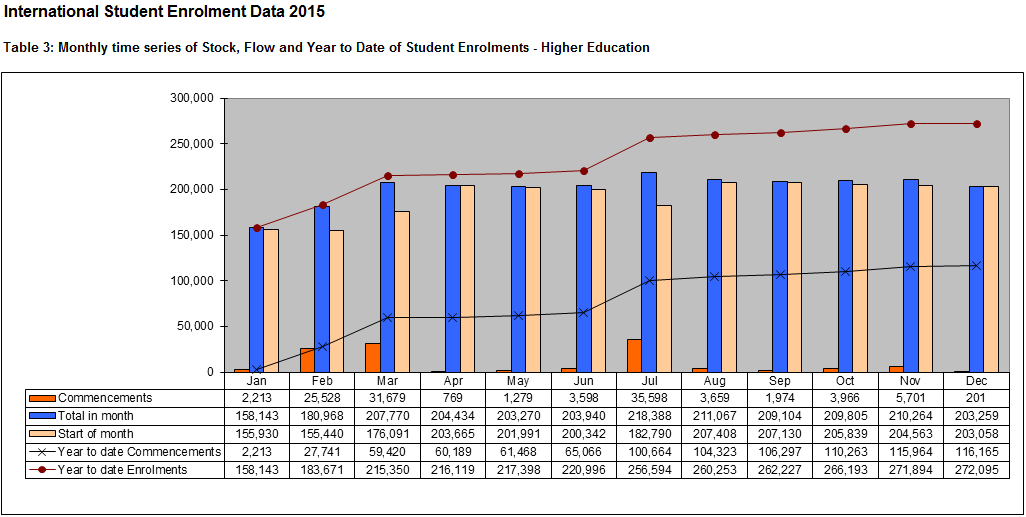
In 2015, there were 272,095 higher education international students in Australia who contributed almost A$12.5 billion to the economy. The vast majority were from Asia.
They also supported thousands of jobs and businesses across the property, hospitality and retail sectors in cities and regions.
However, developments in the higher education sector in a number of Asian countries may threaten Australia’s billion-dollar education industry.
Who are the rising Asian players?
The US and UK dominate the international education market in Asia, hosting 19% and 10% of the global share of international students.
More recently, however, China, Taiwan, South Korea, Japan, Indonesia, Singapore and Malaysia have become more attractive destinations for Asian and non-Asian students, including those from the Middle East.
The attraction is due to a variety of factors, such as scholarships, job opportunities in the region, cultural and geographical advantages, and governments investing in higher education.
In 2013 these countries combined hosted 7% of the global share of international students, edging out Australia, which has 6% of the market share.
Many are looking to reform and improve their higher education sectors. Some have plans to almost double their international student intakes over the next four years. China is seeking to grow numbers by 500,000, Japan by 300,000 and Malaysia by 200,000 by 2020.
While Australia also aims to almost double its intake to close to a million by 2025, the Asian countries' targets may well prove formidable competition.
Malaysia and Singapore are attractive because of the availability of local jobs after graduation. Regardless of where they are from, international students on Singapore government-funded tuition grants are contractually obligated to work for locally based companies in the republic for three years. The aim of the scheme is to meet labour shortages and harness the skills of the graduate workforce.
In Australia, however, international students have few scholarship opportunities, and no local jobs specifically waiting for them after graduation.
Having an Australian qualification does not necessarily mean an international student will be employed in Australia. Here any foreigner – which is how international students are regarded once they finish their studies – must possess the skills Australia needs and/or undergo a skills assessment by the relevant Australian authority before they will be granted permission to work.
The movement of international students from developing nations to developed nations is no longer the norm within the region.
In South Korea, for instance, students are studying in Indonesian universities with the prospect of gaining employment with South Korean-based companies in Indonesia.
Moving up the global rankings
Asian universities are also punching their way up university rankings.
In the Times Higher Education World University Rankings for 2015-2016, Asian universities outperformed Australian universities in the top 100 list.
Nine Asian universities in comparison to six Australian universities made the top 100.
The top Asian university, the National University of Singapore (NUS), ranked 26th, above Australia’s best performer, the University of Melbourne, which is 33rd.
And while there are more universities in Asia than in Australia, what is significant about such rankings is that key Asian universities are fast becoming globally recognised as premier research and teaching institutions. They are overtaking Australian institutions in the competitive higher education space.
The QS World University Rankings place Singapore’s Nanyang Technological University as the leading institution for universities under the age of 50 years.
Asian universities again dominated, with 16 institutions in the top 50 under 50. Australia had six universities in this category, with 14th-ranked University of Technology Sydney leading the pack.
Together with robust funding support from the government, NUS strategies for simply being the best include high calibre-recruitment, a commitment to innovation and collaborations with overseas partners such as the Singapore-based NUS-Yale College.
Asian education hubs have ambitions not only to maintain their positions but also to increase the number of their institutions at the high end of these rankings.
In 2013, Japan for instance launched its Top Global University Project to place ten or more of its universities in the global top 100. Like Singapore, the Japanese government has been providing generous funding to its premier universities to achieve this goal. The government invests millions of dollars in annual subsidies for its leading research and education institutions.
How can Australia stay competitive?
What can traditional players like Australia, the US and the UK do to maintain their competitive edge?
With Asian universities becoming some of the best in the world, it is vital that the traditional markets provide strong research funding support to their universities to build up their research and innovation strengths.
In 2013, according to the OECD, Australia invested 2.112% of its GDP in research and development. This is marginally more than the UK (1.664%), China (2.015%) and Singapore (2%), yet significantly less than Japan (3.482%), Korea (4.149%) and the US (2.742%).
Asian students and their families value quality education. Eventually they will look to universities that have globally recognised quality brands, which would help students with their own professional mobility.
A way for Australia to stay competitive would be through research collaborations and partnerships with Asian institutions.
If traditional and emerging markets are competing for students, it is imperative that strong research and teaching links be formed between universities from both sides of the divide.
One aspect of this discussion policymakers might want to consider is becoming host to satellite campuses from world-renowned universities.
So far only Carnegie Mellon has an offshore campus in Australia.
Having such satellite campuses creates not only diversity and internationalisation in the Australian higher education space, but also provides other benefits. These include more competitive choices of institutions on Australian soil, as well as greater opportunities for students to move between countries on exchange.
Having top Asian universities set up campuses in Australia promotes increased flows of top students and staff. This would help strengthen Australia’s position in the region as a high-quality education hub.
Authors: Catherine Gomes, Senior lecturer, RMIT University
Read more http://theconversation.com/rising-players-in-higher-education-the-countries-to-watch-out-for-62964


 Daily Bulletin