Companions of Earth: minimoons, quasi-satellites and horseshoes
- Written by: Tanya Hill, Honorary Fellow of the University of Melbourne and Senior Curator (Astronomy), Museum Victoria
The Earth has one steadfast companion – the moon has been locked in orbit around the Earth since its violent formation more than four billion years ago.
However, Earth’s gravity can also tug on small nearby objects – the near-earth asteroids – temporarily making them companions of Earth.
If captured into orbit, a near-earth asteroid becomes a minimoon. Computer simulations suggest that at any time Earth should have at least one minimoon with a diameter of one metre or more.
 The twisting path of a simulated minimoon. The size of the Earth and moon are not to scale but the size of the minimoon’s path is to scale in the Earth-moon system.
K Teramura
The twisting path of a simulated minimoon. The size of the Earth and moon are not to scale but the size of the minimoon’s path is to scale in the Earth-moon system.
K Teramura
The minimoon finds itself caught in a tug of war between the gravity of the Earth, our moon and the sun. Captured by Earth’s pull, it follows a twisting path that sees it loop around Earth a number of times before ultimately being ejected out of the Earth-moon system.
To date, only one minimoon has ever been observed. It was a small asteroid around three metres across and designated 2006 RH120. It made four looping orbits of Earth from April 2006 until it was ejected in September 2007.
When is a moon not a moon?
There are other near-earth asteroids that look like they are orbiting the Earth, but they really aren’t. Called quasi-satellites, the distinction is that these objects remain gravitationally bound to the sun, unlike a moon which should be bound to the Earth.
The deception arises because quasi-satellites follow elliptical orbits around the sun that are very similar to Earth’s, as shown in the video below (produced by Bad Astronomy’s Phil Plait). Alongside Earth’s orbit, is the orbit of 2016 HO3, an asteroid between 40-100 metres across. It is the most recent quasi-satellite to be discovered.
The Earth and 2016 HO3 are orbiting the sun in tandem. There are times when the asteroid speeds up and pulls ahead of the Earth but then its path moves outside of Earth’s orbit causing the asteroid to fall behind.
The clip also shows that the asteroid’s orbit is tilted by eight degrees relative to Earth so throughout an orbit it moves above and below our planet.
Now see what happens when the orbit of 2016 HO3 is plotted relative to the Earth as shown in the animation below. By keeping the Earth stationary, it seems as if the asteroid is circling our planet, bobbing up and down because of the relative tilt of its orbit.
At its most distant the asteroid is 40 million km from Earth (or 100 times more distant than the moon), while at its closest it is still 14 million km away (or 38 times further than the moon). It is much too far away for Earth’s gravity to capture it into orbit.
2016 HO3 has been a companion of Earth for almost a century and it’s set to continue as such for centuries to come. Earth provides just enough of a nudge to keep the asteroid in sync, never drifting too far away or coming too close.
But importantly, if the gravity of the Earth-moon system could somehow be turned off, the quasi-satellite would barely notice the difference. It would simply continue unhindered on its orbit around the sun.
Here today, gone tomorrow
Within the past decade or so, a handful of quasi-satellites have been detected. The asteroid 2003 YN107, which is 20 metres across, appeared to corkscrew around Earth for seven years from 1999.
On June 10, 2006, it moved slightly closer to Earth than usual and the nudge sent the asteroid on its way. But it won’t be gone forever. Fifty years from now, it’ll find its way back and will once again fall into sync with Earth.
The other known quasi-satellites are 2004 GU9, 2006 FV35, 2013 LX28 and 2014 OL339 and each one is larger than 100 metres in diameter. 2014 OL339 will be the first to have its orbit disturbed in about 165 years, while 2013 LX28 is set to hang around with the Earth for a few tens of thousands of years to come.
A game of tag
There are other asteroids that, like the quasi-satellites, are on similar orbits around the sun as the Earth, but rather than forming a fake moon, these asteroids manage to avoid Earth entirely.
 The asteroid corkscrews around Earth’s orbit but avoids the planet itself, creating a horseshoe pattern.
Paul Chodas and Ron Baalke
The asteroid corkscrews around Earth’s orbit but avoids the planet itself, creating a horseshoe pattern.
Paul Chodas and Ron Baalke
A classic example is the asteroid 2002 AA29. By plotting its orbit relative to Earth, the asteroid appears to loop around Earth’s orbit, but as it nears Earth itself, the asteroid changes direction and begins looping away.
Each loop takes one year to complete (after all, the asteroid is really orbiting the sun) and after a series of 95 loops 2002 AA29 has travelled from one end of the horseshoe to the other (as animated here).
So how does the Earth repel the asteroid? It plays out like a never-ending game of tag (or tiggy).
Let’s say the asteroid is a little closer to the sun than Earth, and therefore orbiting faster. As it begins to catch up to the Earth, it feels the tug of Earth’s gravity. The asteroid accelerates and (perhaps suprisingly) is pushed to a higher orbit.
This new orbit, which is slightly more distant than the Earth’s, causes the asteroid to slow down and fall behind. The Earth ‘gets away’ and avoids being ‘tagged’.
Many years later, the asteroid has fallen so far behind that Earth (which is now on the inside and faster orbit), begins to catch up.
This time, Earth pulls the asteroid back which decelerates it. The loss of energy moves the asteroid to a lower orbit, enabling it to speed away before the Earth can say “gotcha”.
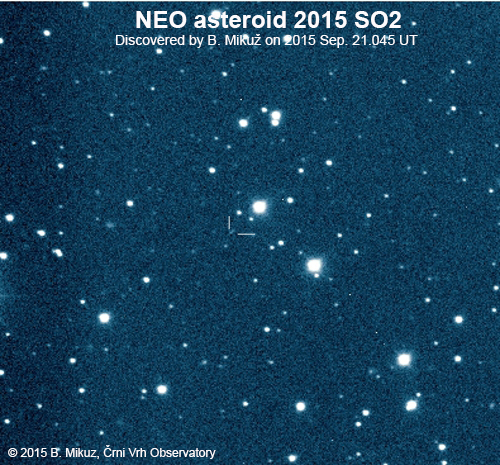
There are nine horseshoe objects known to be playing tag with Earth, including the near-earth asteroid 3753 Cruithne. The most recently discovered one, 2015 SO2, is very stable and has likely been Earth’s companion for hundreds of thousands of years.
It’s also possible for asteroids to transition between states. The quasi-satellites 2004 GU9 and 2014 OL339 were once on horseshoe orbits. Now they are looping around Earth, trapped in the horseshoe gap, but eventually they will be released to become horseshoe objects once again.
On the other hand, 2002 AA29 was a quasi-satellite over a thousand years ago and will fall back into that state 4,000 years from now.
Authors: Tanya Hill, Honorary Fellow of the University of Melbourne and Senior Curator (Astronomy), Museum Victoria
Read more http://theconversation.com/companions-of-earth-minimoons-quasi-satellites-and-horseshoes-62111


 Daily Bulletin