

How doctors are taught to deal with death
- Written by: Eleanor Flynn, Associate Professor in Medical Education, University of Melbourne
As a society we’re pretty removed from death. We don’t really talk about it. Yet when medical students start their training, it suddenly becomes something they’re intimately acquainted with. So how are young doctors taught to deal with death?
The teaching of medicine has traditionally been one of apprenticeship. A student is equipped with basic knowledge and then, through experience in “the clinic”, is guided by a trusted senior into a medical career. The teaching of students around one of the key skills they will require in their career, care of the dying, requires specific skills that the student may not encounter in their ordinary clinical teaching.
So it’s necessary to ensure all aspects of this vital topic are covered in the curriculum, and any extra clinical experience is a bonus to help cement the knowledge and understanding for the students.
What medical schools teach students about death
The most important skills medical schools need to teach students is to develop an understanding of the broad impact of chronic illness on patients and their communities; to understand patients’ (and their families’) responses and priorities; to understand their own emotions; and to be able to do all of this while ensuring the patient has all of the relevant medical information.
Most medical students, like many young Australians, have had no personal experience with death. They are part of a “death-free generation” that may not encounter the death of a close family member until later in life.
In many medical degrees, death is introduced in a theoretical way in the first year of study, with lectures on the ethics of body donation for anatomy dissection, and deaths of hypothetical patients. Some universities even have commemorative services to thank those who donated their bodies to be used in anatomy classes.
Read more: Medical schools are shaking off a dark past by honouring people who donate their bodies to science
Using these methods, the moral and social dimensions of dying and death are explicitly highlighted alongside the physical dimensions.
In addition to visiting patients on wards during clinical experience, students spend time following one patient through in-hospital care and to their follow-up appointments with different health care providers. This gives them unique insights into the patient experience, communication exchanges, decision-making, and the dynamics of receiving care in the setting of serious illness.
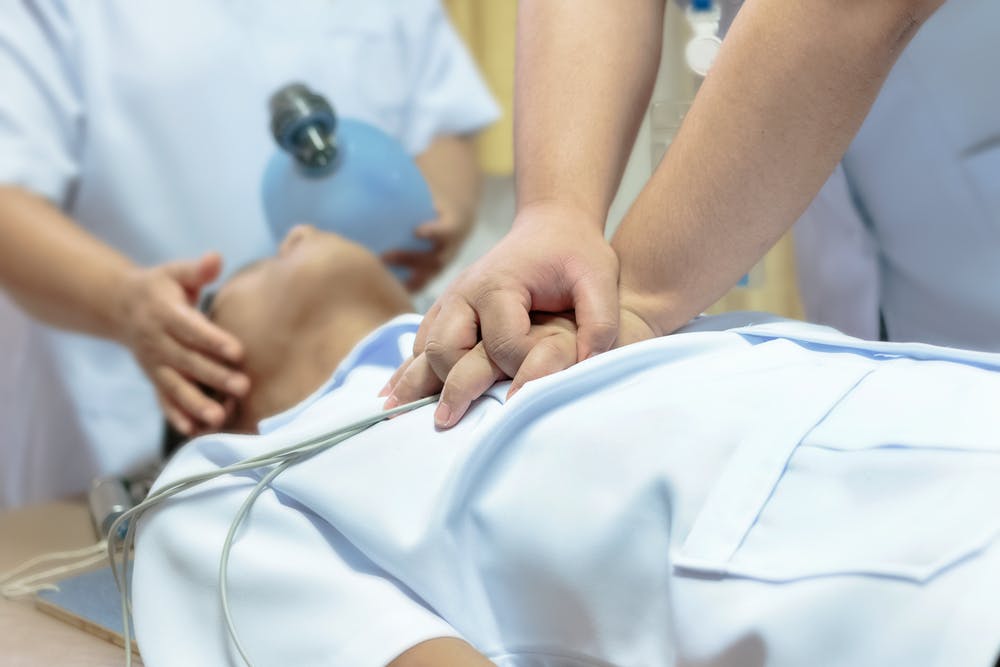 Students need to learn in practice and theory what dealing with death encompasses.
from www.shutterstock.com
Students need to learn in practice and theory what dealing with death encompasses.
from www.shutterstock.com
Student experiences of death
Most medical students will also have practical experience at a palliative care facility or acute hospital setting, caring for dying patients. The experience includes ward rounds, patient consultations, family meetings, home visits, discussions with social workers and pastoral care workers.
Teaching in this area covers pain and symptom management, with a focus on nausea and constipation, which are very common for patients at the end of life. This palliative care module allows them to cover the psychological, existential and spiritual issues, and discuss these with palliative and pastoral care staff.
Read more: Palliative care should be embraced, not feared
In reflecting on these experiences, students are helped by relationships with trusted senior doctors or counsellors to talk through dealing with uncertainty and end of life care issues.
All medical schools have staff whose role is to provide appropriate student support. Many medical schools also build a mentor role into the curriculum, providing a regular safe space for students to discuss concerns. Research shows students may, in turn, adopt the negative mindset of doctors who consider any patient death to be a personal failure. This issue is directly discussed in these individual or group support settings.
Junior doctor experiences of death
All Victorian hospitals with interns (first year medical graduates) have a designated senior doctor as the intern supervisor. One Melbourne hospital, recognising that many of the concerns expressed by junior doctors relate to the deaths of patients, has appointed a palliative care specialist part time in this role.
Junior doctors, informally and in formal teaching sessions, find it very helpful to have a doctor who is comfortable speaking about death, able to answer their questions and support them to accept that patients will die. A UK study found 90% of doctors considered they coped well with deaths by using available informal and formal supports.
Any student or junior doctor who is struggling with any aspect of the course or work is encouraged to seek help from their medical school, university or hospital support services. Other organisations such as Doctors’ Health Services, Medical Defence Organisations and the Australian Medical Association also offer support.
Many students and junior doctors find it difficult to ask for help. Collegiate support through information, mentoring, and guided experiential learning is an important part of improving the care of patients with advanced illness and their families, and at the same time, improving the health and professional satisfaction of the doctors providing such care.
If you or someone you know needs help contact Lifeline’s 24-hour helpline on 13 11 14, SANE Australia on 1800 18 7263 or the Beyondblue Info Line 1300 22 4636.
Authors: Eleanor Flynn, Associate Professor in Medical Education, University of Melbourne
Read more http://theconversation.com/how-doctors-are-taught-to-deal-with-death-84429


 Daily Bulletin


