

Senate crossbenchers take the first steps on lobbying reform – now to ensure it succeeds
- Written by: George Rennie, Lecturer in American Politics and Lobbying Strategies, University of Melbourne
The suite of codes, statements and laws governing lobbying are failing Australian voters. Yet, for decades, the two major parties have been unwilling to meaningfully improve them.
But, having recognised the seriousness of the problems with lobbying and corruption in Australia, the Senate crossbenchers – along with lower house independents – have finally begun the process of deciding how lobbying reform should occur.
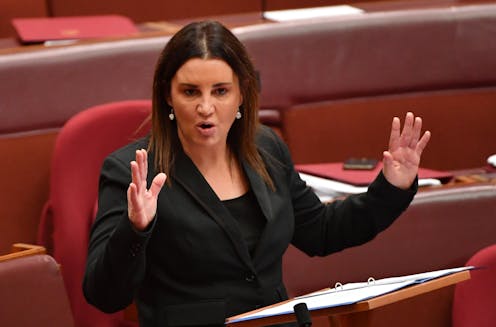
Into this space, the Jacqui Lambie Network has released a policy that has become the starting point for negotiations on one of Australia’s most important policy challenges.
A ‘federal ICAC’?
Labor and the trade unions have signalled a willingness to tackle lobbying at some point. However, there are meaningful obstacles to the crossbench’s current plan.
Given its control of the lower house, the Coalition would need to be brought on side for legislation to pass anytime soon. However, citing Australia’s performance on Transparency International’s corruption index, Attorney-General George Brandis is against a federal regulator to police anti-corruption.
Similarly, the Institute of Public Affairs – a Liberal Party ideological ally – rejects the idea because such an agency might abuse its power.
However, the crossbench has been more impressed by New South Wales’ Independent Commission Against Corruption (ICAC), where the true “abuses of power” have been those uncovered by the commission.
Enter the crossbench
Given the resistance from the Coalition, hope for changes to lobbying laws currently rest with the Senate crossbench and the lower house independents. They are negotiating a unified policy based on Lambie’s proposal.
The policy acknowledges that new lobbying laws need to be legislated; have meaningful enforcement provisions (including the possibility of fines or imprisonment for serious offences; and have an independent regulator to oversee them.
Having an independent regulator is critical. As it stands, when a minister leaves office, their eligibility to work as a lobbyist, and whether they have breached any lobbying regulations, is determined by those who directly work with – or for – the prime minister.
The problems of the revolving door are significant, and growing. It is now commonplace for former ministers to go on to work for companies directly related to their former portfolios – be it on their boards or as lobbyists.
Further reading: The revolving door: why politicians become lobbyists, and lobbyists become politicians
This creates a clear conflict of interest for those ministers when they are in power. Their decisions while in power have the potential to affect the possibility of a job when they leave office. It also allows them far greater access to, and creates conflicts of interest for, the government decision-makers they meet. These are people they often worked with, for, or above.
As a result, Lambie’s plan would ban ministers and senior public servants from taking up lobbying positions within five years of leaving office. This is increased from the current, poorly-enforced 18-month ban.
This move would bring Australia’s prohibition on post-separation employment in line with Canada and the US. Extending the exemption period of post-separation employment, and having an independent regulator to oversee it, would mean the potential for the aforementioned conflicts of interest and advantageous access are reduced.
Beyond the revolving door provisions, Lambie’s plan centres around the ideal of “levelling the playing field” for interest groups. This in turn is based on the problems that arise when some get better access than others.
As such, Lambie’s plan borrows heavily from the overseas examples. It calls for more transparency in lobbying, incentives to join a register of lobbyists, and expanding the definition of “lobbyists” to include those who operate in-house (Australia’s register currently only captures third-party lobbyists).
Further reading: Australia’s lobbying laws are inadequate, but other countries are getting it right
These goals may be in-part fulfilled by changing the access rules to the highly desired “orange passes” of Parliament House. Under Lambie’s plan, lobbyists are given incentives to join the register for better access to parliamentary offices.
This is an interesting idea, and is focused more on reward than punishment. If coupled with other monitoring conditions, it may improve the transparency of lobbying in Canberra – if only by increasing the likelihood that lobbyists will join the register.
The orange pass concept would be augmented by an expansion of the definition of “lobbyist” to include those who directly represent their organisation, regardless of what it does. This would mean the professional representatives of unions and not-for-profit organisations are treated the same as those from corporations.
At stake: our democracy
Ideally, a representative democracy supports “good lobbying”, where individuals and groups present their ideas, needs and wants on a level playing field. But the status quo in Australia acts to undermine this ideal.
While its benefits are clear, democracy is a fragile system. Its strength is fundamentally reliant on institutional and legal supports, as well as an engaged and informed electorate.
This is where “bad lobbying” presents a significant threat: it uses weak laws and institutions to create an unfair playing field for a few to the detriment of the many, and undermines trust in the system.
In turn, the electorate becomes cynical and disengaged. Democracy collapses when bad lobbying takes hold, and Australia’s bad lobbying has been steadily getting worse – and more pervasive.
In that critical sense, giving Australia’s lobbying laws teeth, and a sizeable regulatory jaw to occasionally brandish them, is a major step in the right direction.
Authors: George Rennie, Lecturer in American Politics and Lobbying Strategies, University of Melbourne


 Daily Bulletin


