

Beyond #MeToo, we need bystander action to prevent sexual violence
- Written by: Anastasia Powell, Associate Professor and ARC DECRA Fellow, Criminology and Justice Studies, RMIT University
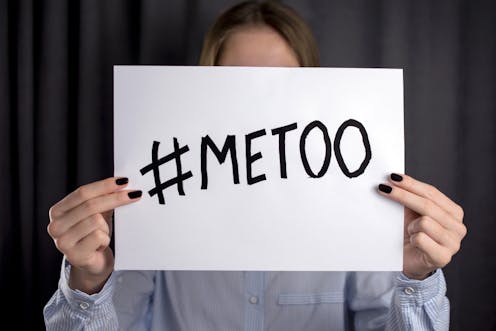
Something truly powerful happens when victims of sexual violence choose to publicly share their account of harassment and abuse. Some will continue to minimise the violence and blame victims. But movements such as #MeToo and #TimesUp make it difficult to ignore the nature of sexual violence in people’s everyday lives.
Read more: Rape culture: why our community attitudes to sexual violence matter
Approximately one in two Australian women and one in four men experience sexual harassment in their lifetime. One in five women and one in 20 men experience sexual assault. But when experiences are shared online it reveals much more about the everyday nature of the abuse.
One such common revelation is that some victims tried to report their experience to someone – a friend, a colleague, a manager – but they were either not believed or their report was dismissed.
Sometimes, in the cases of powerful men, people even responded by saying: “oh yes, he’s just like that”. While we could all use some advice on how to respond when someone discloses an experience of sexual violence, there’s a much larger issue at play when people have an opportunity to do something but instead choose to remain silent.
Read more: How to respond to an allegation of sexual assault
Hashtag activism alone won’t create change
The #MeToo movement started as a hashtag campaign on social media in response to revelations about Harvey Weinstein and other powerful men using their positions to sexually harass and abuse – primarily, though not always – women in the film industry. But a social media campaign alone is not enough to create lasting social change.
Read more: What the Harvey Weinstein case tells us about sexual assault disclosure
This is not the first time victims of sexual violence have raised their voices in a form of modern consciousness-raising. But increased awareness of the problem is not sufficient to challenge the abuse and stop it at its source.
Rather, what’s needed is ways to tackle the hidden causes of sexual harassment and abuse in workplaces, in institutions such as the media, and in society more broadly. Violence against women is more likely to occur in societies and settings where sexism, gender discrimination and gender inequality are excused or tolerated.
Australia’s National Plan to Reduce Violence against Women and their Children reflects this. It includes a commitment to change Australia’s attitudes to – and tolerance for – this kind of violence.
Federal, state and territory governments from both sides of politics have endorsed a policy framework for preventing violence before it occurs. But while governments – and indeed employers and other community leaders – have clear obligations to tackle sexual violence in all its forms, there’s something all of us can also do.
Bystanders need to take action
A recent survey of 1,204 Australians reveals how willing some are to take action when they see sexual harassment, sexism, and gender inequality.
The results show a majority of participants thought it was common for women to be treated unfairly and/or without respect in a range of settings. This indicates sexism, gender discrimination and gender inequality are widespread problems in Australia.
Participants thought it was more likely for women to be treated unfairly and/or without respect in male-dominated settings (70% thought common or very common); clubs, pubs and bars (67%); social media (65%); workplaces (65%); and on the street (57%).
A large majority of participants also thought sexism, gender discrimination and gender equality are concerning problems. More specifically, the survey found:
82% of people surveyed find “females being paid less than a male colleague for the same work” concerning or very concerning;
78% of people surveyed find “a male colleague interrupting and talking over a female colleague” concerning or very concerning;
77% of people surveyed find “a friend sharing a sexist joke about an ‘ugly, fat chick’ on social media” concerning or very concerning; and
70% of people surveyed find “a male colleague making a comment about one of your female colleague’s sexual attractiveness” concerning or very concerning.
But the good news is people also want advice on how to speak up against these types of situations. The survey showed that 79% want practical tips about ways to safely intervene when witnessing disrespect toward women and girls, and 75% want practical tips about how to respond to casual sexism in a social environment without being a party pooper.
Sexual assault and harassment often happens behind closed doors, where there is little opportunity for bystander intervention. But everyday sexism, disrespect, gender discrimination, and inequality toward women are issues many observe out in the open – in workplaces, in pubs and bars, on social media, and in the street.
If we really want to create lasting change beyond #MeToo, then we all need to start challenging the attitudes and beliefs that demean and disrespect women.
If you require support for sexual harassment or assault, contact details for national services are available here.
Authors: Anastasia Powell, Associate Professor and ARC DECRA Fellow, Criminology and Justice Studies, RMIT University
Read more http://theconversation.com/beyond-metoo-we-need-bystander-action-to-prevent-sexual-violence-91741


 Daily Bulletin


