

bandicoots live among us in Melbourne
- Written by: Euan Ritchie, Associate Professor in Wildlife Ecology and Conservation, Centre for Integrative Ecology, School of Life & Environmental Sciences, Deakin University
There are more and more of us on Earth, and increasingly we’re choosing to live in cities. This is a problem for wildlife: urbanisation is one of the greatest threats to biodiversity. Sprawling construction to accommodate people completely removes or modifies the homes of many other species.
But although we need to do all we can to mitigate these effects and their causes, cities are far from biodiversity wastelands. In fact, cities are home to large numbers of species, many of which are threatened.
Read more: Just ten MPs represent more than 600 threatened species in their electorates
One such example is the iconic but endangered southern brown bandicoot. New research has found these shy animals thriving in peri-urban areas (the interface between cities and more rural areas) on the outskirts of Melbourne.
Novel ecosystems
Through our effects on the environment, humans are increasingly creating “novel ecosystems”: areas composed of new combinations of species and/or new and modified environmental conditions. In these areas there are winners and losers. How we perceive and manage such ecosystems could have a big influence on conserving species more broadly, and helping to address Earth’s extinction crisis.
We studied these issues by examining the ecology of the endangered southern brown bandicoot in southeast Melbourne. Specifically, we compared bandicoot abundance and body condition between novel sites, made up of peri-urban areas, and more natural remnant sites at the Royal Botanic Gardens at Cranbourne and Quail Island Nature Conservation Reserve, which more closely resemble original bandicoot habitat.
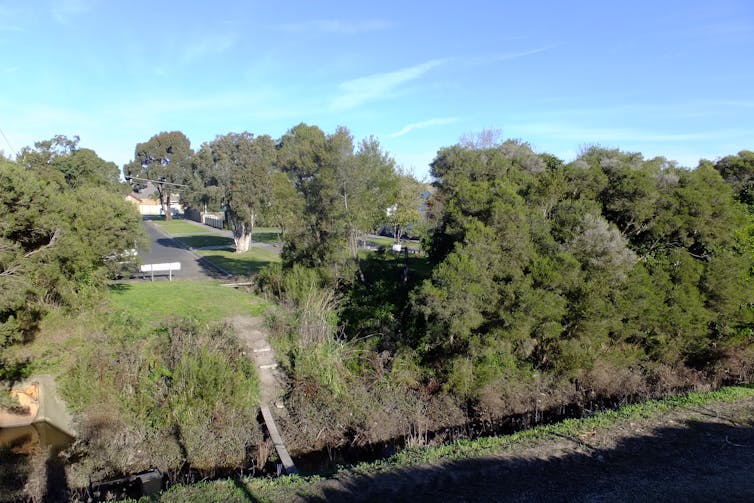 Peri-urban habitat of the southern brown bandicoot.
Sarah Maclagan
Peri-urban habitat of the southern brown bandicoot.
Sarah Maclagan
Our goal was to see whether novel sites could support resident bandicoots. Crucially, could peri-urban areas allow bandicoots to breed, recruit (attract new migrating individuals) and survive well enough for populations to persist?
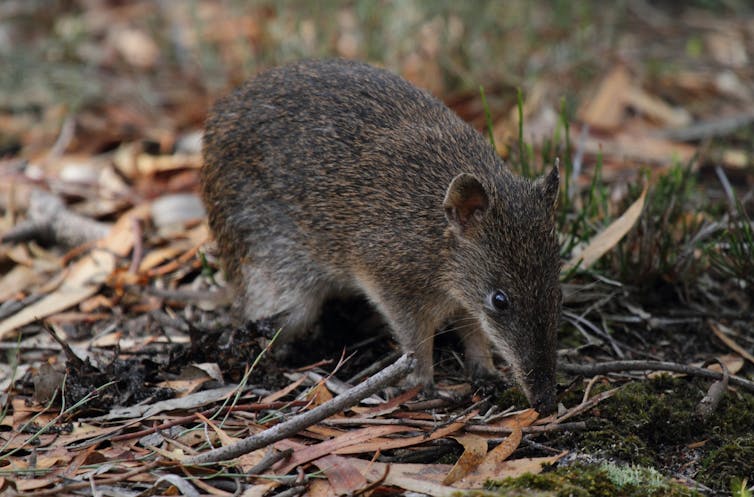 The endangered southern brown bandicoot (Isoodon obesulus obesulus)
Hayley Davis
The endangered southern brown bandicoot (Isoodon obesulus obesulus)
Hayley Davis
Don’t judge habitats by their appearance
Contrary to what the Human Threat Hypothesis (and logic) might predict, we found more bandicoots at novel sites (66 individuals recorded over 1722 trap-nights) than remnant sites (26 individuals recorded over 1384 trap-nights). And bandicoots were most abundant at the novel site with the most urbanised surroundings. The condition of females was similar between novel and remnant sites.
Most bandicoots at novel sites were resident (meaning they were observed at the same location multiple times thoughout the study). At these same sites we recorded successful breeding, recruitment of young adults, and survival of mature adults.
Our results challenge conventional conservation thinking. Where bandicoots did best is also where known predators such as foxes and feral cats are present and abundant, as opposed to the nature reserves from which they are largely absent. Remnant areas also have more intact native vegetation, whereas bandicoots in urban areas nested in roadsides full of invasive blackberry, a weed often targeted for removal.
Bandicoots like thick vegetation, but they appear not to care which plant species they use – as long as cover is sufficient. Blackberry bushes may protect bandicoots from predators, and also be a source of food through the insects they attract.
On the topic of food and just how adaptable bandicoots are, locals within our study region reported them dining on pet and domestic animal food from backyards.
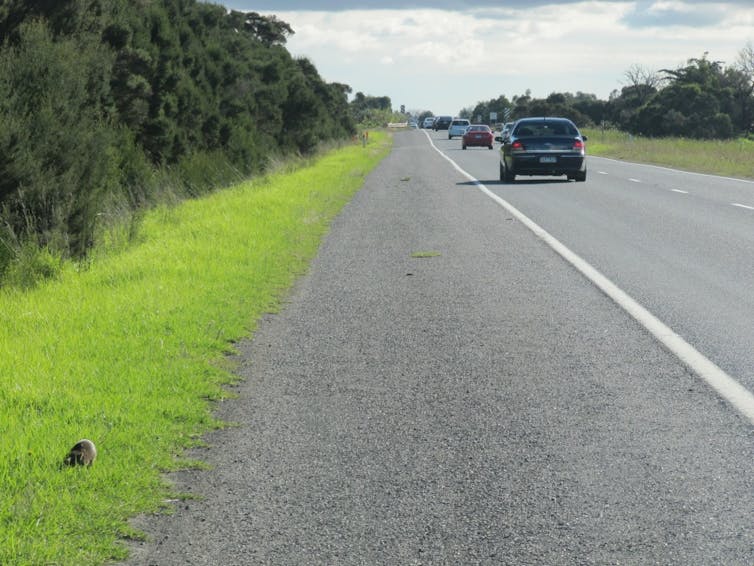 How we choose to live alongside native wildlife in our cities, such as this bandicoot, could have a big effect on biodiversity conservation globally.
Sarah Maclagan
How we choose to live alongside native wildlife in our cities, such as this bandicoot, could have a big effect on biodiversity conservation globally.
Sarah Maclagan
Conservation opportunities in cities
A growing body of evidence suggests that even heavily modified environments can support viable populations of native plants and animals, and we should endeavour to manage these areas more sympathetically for the benefit of more species. This does not mean that all species will thrive in cities and heavily modified environments – there will always be a need for conservation reserves – but it throws the wilderness-versus-city dichotomy into question.
Read more: Australia among the world's worst on biodiversity conservation
We need greater awareness of the nature we already share our cities with. Deliberate encouragement such as greener building and urban design that encourages wildlife to return and flourish would substantially benefit humans and other species alike. We are a part of and dependent upon nature, and as such should celebrate and seek to re-establish these vital connections.
Authors: Euan Ritchie, Associate Professor in Wildlife Ecology and Conservation, Centre for Integrative Ecology, School of Life & Environmental Sciences, Deakin University
Read more http://theconversation.com/rockin-the-suburbs-bandicoots-live-among-us-in-melbourne-95423


 Daily Bulletin


