

Read The Times Australia

Daily Bulletin

Why microfinance as aid isn't enough to empower women

  • Written by: Sara Niner, Lecturer and Researcher, School of Social Sciences, Monash University
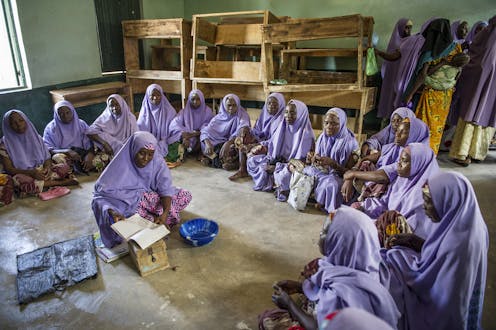
Why microfinance as aid isn't enough to empower women

Giving small loans to people for small household purchases or to invest in businesses has been an integral part of Australian, American and other aid programs for decades. This is called “microfinance”, and the aim is not only to alleviate poverty, but to empower women.

But simply improving a woman’s economic situation does not necessarily result in greater equality. Increasing women’s economic engagement often increases their work burden on top of all the unpaid labour they do. It can also challenge established gender roles and power hierarchies, causing conflict in the home and even domestic violence.

Empowering women needs to be about more than economics and requires changing the power dynamics and other cultural factors that repress women. So that they can make decisions about their life and mobility, control their money and have access to information, transport, tools and land.

Several studies have shown a link between women’s increased access to credit and increased domestic violence. Development agencies have been forced to develop “do no harm” procedures to try to prevent this.

Santi Rozario from Cardiff University found that after 25 years of microfinance programs in Bangladesh, “ingrained gender values are still essentially unchanged”.

And on top of all this, some microfinance programs only have a minimal impact on development outcomes like health and education.

Not tackling the problem

Microfinance programs do nothing to challenge or transform the structural conditions that create poverty in the first place. It is like putting a band-aid over a deep wound.

Indeed, microfinance shifts responsibility for poverty alleviation onto the poor and marginalised. This is particularly concerning in places such as Cambodia and Myanmar, where vulnerable post-conflict populations can become easily trapped in debt cycles, using one loan to repay another.

Read more: Challenge 11: How improving women's status helps us all

Empowerment requires addressing women’s lack of control over their own lives. Professor Naila Kabeer defines empowerment, as “the ability to exercise choice” where previously people could not.

This kind of empowerment requires structural change within both families and societies. This includes greater access to and control of resources, as well as new norms for women both individually and within families and society.

If development programs don’t challenge the structural causes of gender inequality, at best, microfinance will just continue to reinforce poverty and inequality.

A more considered approach

We shouldn’t write off microfinance entirely. It can work if returned to its grassroots, and run for the benefit of participants rather than to create profit.

There has been a trend toward profit-making microfinance institutions that charge higher interest rates, extracting the little surplus poor people are able to raise from their meagre livelihoods.

Microfinance must be culturally sensitive and driven by the community. If nothing else, we know that there is no such thing as a one-size-fits-all model, and results in one region don’t necessarily transfer across regions or cultures.

Read more: A healthy world starts with a healthy mother

There are some microfinance variations that appear to work better than others, such as Oxfam’s Saving for Change. This program operates in rural villages throughout 13 countries, with 680,000 members.

This model focuses on supporting small groups of women who save money together and then extend credit amongst themselves and then their communities.

But these alternatives to mainstream microfinance models require further investigation and support as to the impact on women’s empowerment. In the meantime the development sector needs to be more self-critical about the impact of their programs.

Authors: Sara Niner, Lecturer and Researcher, School of Social Sciences, Monash University

Read more http://theconversation.com/why-microfinance-as-aid-isnt-enough-to-empower-women-96632

Business News

The Rise of Digital Marketplaces in the Australian Trade Sector

For decades, the Australian trade and construction sector operated almost entirely on word-of-mouth recommendations and local community networks. Small business owners typically relied on local newspa...

Daily Bulletin - avatar Daily Bulletin

How Immigration Lawyers Can Help

Introduction Visa decisions can shape employment, family life, study plans, travel, and future residence. A small omission can lead to delay, added expense, or refusal. Immigration lawyers assess l...

Daily Bulletin - avatar Daily Bulletin

How Industrial Drying Equipment Supports Efficient Processing

Many industrial processes require moisture to be removed from compressed air, products or process materials before they move to the next stage. Excess moisture can affect equipment performance, produc...

Daily Bulletin - avatar Daily Bulletin

Practical Ways a Whiteboard Can Improve Workplace Communication

Effective communication helps teams stay organised, share ideas and keep track of important information. While digital tools are now common in many workplaces, a whiteboard continues to provide a simp...

Daily Bulletin - avatar Daily Bulletin

Designing Eco-Friendly Custom Water Bottles for Your Next Event

The Evolution of Sustainable Event Merchandise Event planning has undergone a massive transformation over the last decade. Gone are the days when organizers could hand out cheap, single use plastic...

Daily Bulletin - avatar Daily Bulletin

Why Choosing a Professional Florist Melbourne Makes Flower Delivery Impactful

Flowers have a great power to speak when humans cannot express their feelings with right words. Flowers are the best gifts when you are celebrating a birthday or welcoming a newborn child into your fa...

Daily Bulletin - avatar Daily Bulletin

The Business Case for Choosing Australian Fabricators Over Imported Alternatives

For a long time, you might have defaulted to overseas suppliers when sourcing fabricated metal components for a project. The unit price was lower on paper, and the maths seemed straightforward. That...

Daily Bulletin - avatar Daily Bulletin

Australian organisations are relying on business continuity plans built for a far more predictable world

Tariff escalations, supply chain fragility, geopolitical events, and the ongoing threat of cyber disruption have reshaped the risk environment facing Australian organisations. The problem is that ma...

Daily Bulletin - avatar Daily Bulletin

How to Rent a Car for Uber in Melbourne: What Every New Driver Needs to Know

Starting out as an Uber driver in Melbourne is not as complicated as it sounds but getting the vehicle right is where most new drivers get stuck. Uber has strict requirements around vehicle age, condi...

Daily Bulletin - avatar Daily Bulletin

The Daily Magazine

South African Consular Services Expand to Six Australian Cities

South Africans living in Adelaide, Brisbane and Canberra will now be able to access passport, identi...

How Long Does a Solar Home Battery Last? LFP Cycles and Warranty Explained

A battery does not usually reach its advertised cycle count and suddenly stop working. Capacity ch...

How to Hire a Nanny: A Complete Guide for Families

Finding the right childcare professional can make everyday family life easier and give parents gre...

The Blue-Collar Shortage Employers Can't Solve With More Applicants

Australia's hiring market has cooled considerably since the post-pandemic frenzy of 2021 and 2022. F...

The Playground as Classroom: How Line Markings Are Reinforcing What Students Learn Inside

For a long time, the playground was treated as a break from learning rather than part of it. A place...

How Technology Is Changing the Way Gardens Are Maintained

Garden maintenance has always been a hands on ritual. Mowing on a schedule, watering by instinct, an...

One Blocked Drain Can Become a Whole House Plumbing Problem: How It Happens

A blocked hand basin feels local. So does a slow shower. Homeowners naturally focus on the fixture...

AI in Marketing: From Experiment to Everyday Tool

For the past couple of years, artificial intelligence in marketing has mostly lived in the "let's se...

What Businesses Can Do to Make Sustainability More Practical Day to Day

Sustainability can sound like a huge corporate project, something tied to annual reports, long-term ...