

Co-working spaces are part of the new economy, so town planners better get with the times
- Written by: Courtney Babb, Lecturer in Urban & Regional Planning, Curtin University
Cities are seeing a growing number of shared working, or co-working, spaces. They include spaces where individuals and businesses can flexibly rent desks or rooms, or do shared work in “third spaces” such as libraries and cafes.
Co-working spaces offer a range of benefits and risks to the local economy. Our research looked at the role policy-makers, regulators and city planners can play in ensuring that these spaces make a positive contribution to our cities.
We found shared work spaces emerging in regulatory voids left by outdated policy frameworks. To exist, they are relying on the forward thinking of local innovators seeking to revitalise urban centres.
Read more: Co-working is evolving to combine co-living
Types of spaces
Shared work spaces vary by the type of work they facilitate, from knowledge work (such as IT and professional services) to small-scale manufacturing. Some are purpose-built for co-working, whereas others (such as cafes) are informally used as such.
Some also target particular markets by offering additional services such as a crèche for childcare, seminars for professional development and events for networking.
Shared working spaces also differ in their models of ownership. These range from privately owned and managed, to government subsidised and cooperatively managed community resource centres.
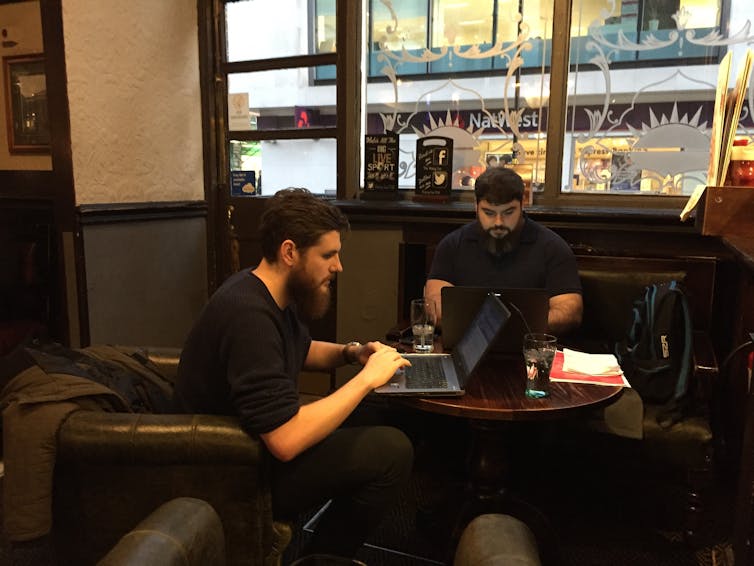 Pubs, such as this one in London, can become informal shared work spaces.
Carey Curtis
Pubs, such as this one in London, can become informal shared work spaces.
Carey Curtis
The ownership and funding of individual co-working spaces may also change through time, as they may receive new sources of government funding, attract new types of clients or relocate to new facilities.
What are the benefits?
There are many potential benefits for sharing a working space, including access to common spaces, equipment, tools, and technologies. Some people may only need a space for a few hours a day or on one occasion for a special project, so they can hire spaces in desirable locations without high rental charges.
Shared working spaces also offer social benefits through greater opportunities to interact, network and collaborate with like-minded workers.
A co-working space can be a good use of unused spaces in buildings and be birthing places of new enterprises. They can also support local businesses by hosting large groups of potential customers.
And they may afford people a place to work closer from home, reducing the need for long commutes.
What are the downsides?
Big players in the sharing economy – such as Uber, Lyft and Airbnb – have had a disruptive effect on existing markets by reducing opportunities for less advantaged people and workers in the market, and confusing regulators.
A similar scale of disruption may be on the horizon with the rapid growth of big players in co-working spaces such as WeWork. These could threaten existing shared work spaces by absorbing customers and competitively leasing out available buildings.
Read more: Airbnb: who's in, who's out, and what this tells us about rental impacts in Sydney and Melbourne
Shared work spaces could potentially contribute to the gentrification of older neighbourhoods by pushing up the price of real estate, and displacing established small businesses and residential tenants.
Co-working spaces has also been seen as representative of an increasing casualised workforce, as such spaces may host short-term contractors doing work that was previously performed by full-time internal staff members.
What we found
We analysed planning and economic development policy and interviewed founders and users of shared working spaces in Western Australia.
We identified around 20 shared work spaces in Perth and regional Western Australia. Many were in retrofitted older and under-used buildings such as an old department store, maternity hospital or converted office space.
Most founders told us that shared working spaces needed to be accessible to be viable. Many also identified the quality and intensity of activities around the area as essential to attracting workers to their space.
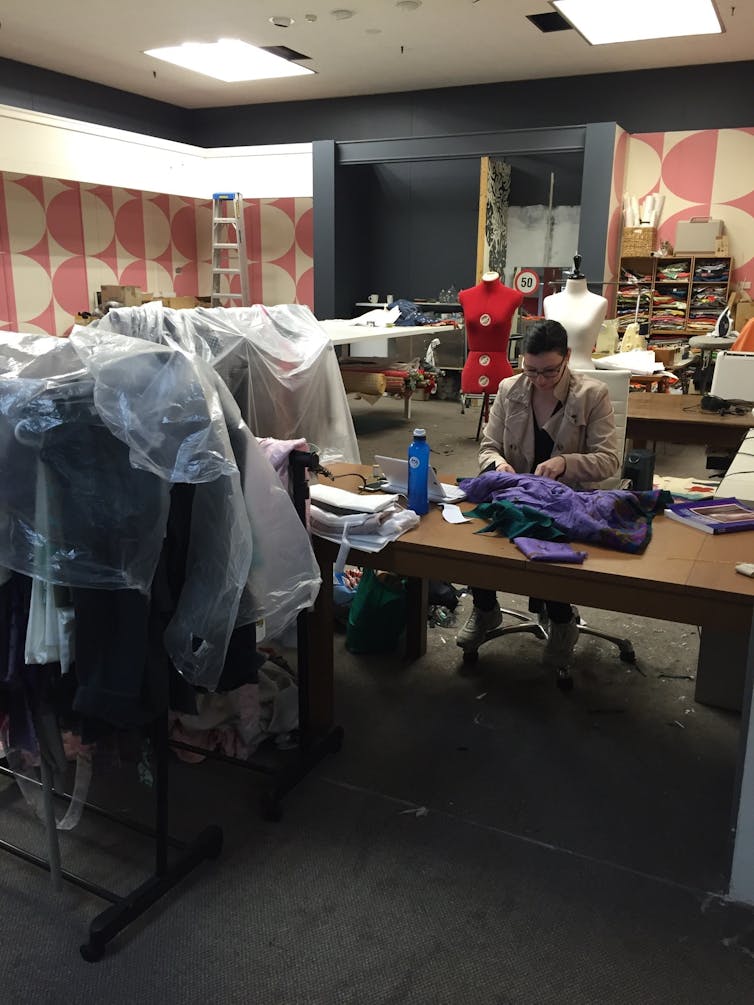 Shared work spaces can facilitate knowledge work, as well as manufacturing (like this one in Fremantle, WA).
Carey Curtis
Shared work spaces can facilitate knowledge work, as well as manufacturing (like this one in Fremantle, WA).
Carey Curtis
But founders identified regulatory frameworks, including land use permission controls, as significant barriers to establishing these spaces. For instance, a shared work space where people repair furniture or make jewellery could be considered as being used for manufacturing.
This type of activity may not be permitted in a disused department store that falls within a retail zone.
We found that often, local councillors and economic developers, have thrown their hat in the ring to help establish shared work spaces in their area. They would do so by helping founders secure required approvals, such as building accessibility certifications and emergency management plans.
Knowing the potential contribution of such spaces to the economy, they’ve also helped founders navigate regulations and planning controls intended for more permanent use of spaces.
But we found that town planners were rarely engaged in early conversations with shared work space founders. Planners generally didn’t identify or facilitate opportunities to host shared working spaces in unused buildings.
Planning policy documents and city planning departments didn’t actively recognise co-working spaces as a major new way people use buildings in cities.
Sharing spaces better
Technologies are creating new ways to match a mobile and flexible workforce with work spaces. This is leaving regulators to manage the impacts from the temporary uses of many shared work spaces.
City planners should be prepared to recognise and plan for the benefits these spaces bring, while minimising possible negative impacts on users, neighbours, and the broader community.
Planning strategies that seek to regenerate urban places and provide economic and social opportunities in urban growth areas will need to prompt more engagement with shared work space proponents, users, neighbouring businesses and residents, and local government divisions.
Shared work spaces have a positive role to play in Australian cities and regional centres. However, it seems planners are at risk of missing the boat when it comes to using shared work space to achieve more socially and economically viable planning outcomes.
Authors: Courtney Babb, Lecturer in Urban & Regional Planning, Curtin University


 Daily Bulletin


