

what Turnbull's urban policy has achieved, and where we go from here
- Written by: Paul Burton, Professor of Urban Management and Planning & Director, Cities Research Institute, Griffith University
Prime Minister Scott Morrison’s recently announced ministry includes a new Minister for Cities, Urban Infrastructure and Population. Alan Tudge’s first Tweet in his new role announced he is “looking forward to my new congestion busting role”.
Federal governments have rarely shown any explicit policy concern with cities or urban problems. And conservative governments had never done so until September 2015, when the then newly installed prime minister, Malcom Turnbull, announced the appointment of a Minister for Cities and the Built Environment.
Jamie Briggs was persuaded to adopt a version of the UK’s City deals as the major policy initiative of his ministry. City Deals are essentially about creating partnerships between all three levels of government (federal, state and local) to drive the sustainable growth of our cities.
This model encourages city councils or groupings of councils to work together more effectively in identifying local economic development opportunities. They then strike a deal with the central government to secure the funding necessary to realise these opportunities.
Read more: City Deals: nine reasons this imported model of urban development demands due diligence
In his farewell speech last week, Turnbull referred to City Deals as a “real innovation” in the way the three levels of government now engage in planning and managing our cities. Looking back over these three years, there are three important questions about City Deals to be answered.
- Have they transformed the way we go about planning our cities and managing their growth?
- Do they serve as the foundation for a coherent national urban policy?
- Have they made our cities – large and small – better places for most of us to live and work in?
1. Deals are nothing new
City Deals celebrated public-to-private partnerships, but these are nothing new in urban policy; nor are attempts to create better working relations between different levels of government.
The challenge has always been for these partnerships to remain in place and to retain the enthusiasm of the partners over the course of a long-term relationship. In contemporary Australia, we have a poor reputation for maintaining the long-term political relationships that enable policy stability.
 There’s little appetite in Australia to amalgamate local council areas.
from shutterstock.com
There’s little appetite in Australia to amalgamate local council areas.
from shutterstock.com
In the UK, City Deals were also part of a concerted drive to encourage greater amalgamation and cooperation among the patchworks of municipal governments in the larger, metropolitan areas. There have long been calls for a metropolitan-scale government in Australia to enable the plethora of local councils that run our major cities to work more effectively together.
But many locals are still tremendously hostile to council amalgamations in major cities. And there is no appetite for the creation of new metropolitan authorities and their “metro mayors”, which were a hallmark of the UK City deals program.
Read more: Deal or no deal: are UK-style City Deals a good bet for Australia?
2. Deals tend to be opaque
So, are City Deals likely to be the foundation for a coherent national urban policy, or even a national settlement strategy? We can only hope so, but the experience of City Deals in the UK suggests otherwise.
Three waves of UK City deals have resulted in some local improvements to public infrastructure such as improved broadband connectivity in a part of Nottingham and a new geothermal district heating system in Stoke on Trent. In some cases, the policy also strengthened relations between central and local government.
But the initiative as a whole has been criticised from various quarters for an overarching lack of transparency, which may explain why some areas appear to have struck better deals than others.
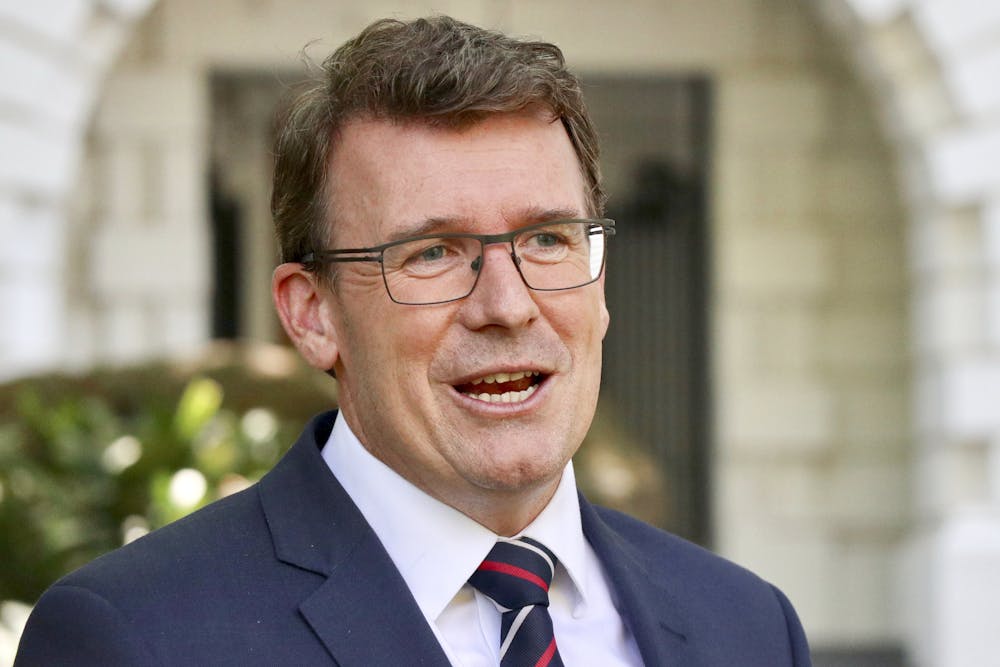 The new Minister for Cities, Urban Infrastructure and Population, Alan Tudge, will hopefully rise above congestion problems.
ALEX MURRAY/AAP
The new Minister for Cities, Urban Infrastructure and Population, Alan Tudge, will hopefully rise above congestion problems.
ALEX MURRAY/AAP
This goes to the heart of the deal-making approach to urban policy, or indeed to any central or federal government policy initiative based on deals. They tend to be opaque and to hide behind commercial-in-confidence clauses that deny the public (whose tax dollars are at stake) much insight into who is getting what from the deal.
Without principles of consistency and transparency there is often a suspicion that decisions about major infrastructure projects are influenced as much by pork barrel politics as they are by assessments that are both rigorous and transparent.
3. It’s about broader national policy
It is too early to say whether any of the aspirations, and even some of the early works undertaken under the first round of City Deals, are having the positive impact hoped for. The A$250 million North Queensland Stadium is underway and is expected to generate around 2,000 jobs during its construction. In Launceston, the University of Tasmania’s new campus is in the detailed planning and design stage.
There is no doubt such projects are having some impact – large scale infrastructure projects invariably provide a boost to the local construction industry – but we don’t and can’t yet know of their long-term impact.
This has always been a challenge when trying to measure the costs and benefits of long-term urban policy. The evaluative challenge is not only to assess whether the Townsville City Deal (under which the North Queensland Stadium is being built) has delivered more or less of what it promised. Nor can we say whether Launceston has become a better place.
Read more: Making small cities bigger will help better distribute Australia's 25 million people
What we need to know is whether we have begun to develop a more comprehensive and coherent national system of towns and cities. Because, if we have not, it is likely we will continue to ignore the important connections that exist between our major cities and their regional hinterlands.
We’re also likely to to deal ineffectually with the problems of rapid population growth in Sydney and Melbourne at the same as trying to lure people and investors to regional towns and cities with ad hoc inducements and inadequate incentives.
Prime Minister Morrison studied economics and geography at university and spent some time leading the Property Council of Australia. So, he has the credentials to continue the relatively new tradition of giving urban policy debates a national perspective. Let’s hope Minister Tudge can rise above the congestion problems of Sydney and Melbourne and bring a fresh approach that truly integrates population, infrastructure and city planning into a coherent national urban policy.
Authors: Paul Burton, Professor of Urban Management and Planning & Director, Cities Research Institute, Griffith University


 Daily Bulletin


