

VET needs support to rebuild its role in getting disadvantaged groups into education and work
- Written by: Linda Simon, Teacher in adult and vocational education, Charles Sturt University
This article is part of a series on the Future of VET exploring issues within the sector and how to overcome the decline in enrolments and shortages of qualified people in vocational jobs. Read the other articles in the series here.
In 1974, a review of the VET sector set out an agenda for the future of the vocational education and training sector. It emphasised education and social inclusion in work as key functions of the sector, rather than mainly its “manpower role”.
In the ensuing decades, this emphasis has been overturned. The vocational education and training system of today is industry-led. It is funded primarily to achieve employment outcomes.
Read more: What Australia can learn from England's plan for vocational education
VET’s role in skill development and educating those who engage in the range of occupations that contribute to Australia’s economy is critical. But we also need to strongly support the role VET plays in getting disadvantaged groups into education and work.
Previous social inclusion policies
Social inclusion in this case reflects the federal government’s social inclusion principles, established in 2010. These were created to ensure people have the resources, opportunities and capabilities they need to learn, work and have a voice.
Social inclusion initiatives are designed for groups generally identified as possibly experiencing disadvantage, who require extra support to succeed in education and work. Students with a disability, students from culturally and linguistically diverse backgrounds (CALD), Indigenous students and students from low SES backgrounds, women, and people from rural, regional or remote locations or communities are among those who might need this support.
 Disadvantaged groups, such as students with a disability or who come from rural communities, may need more help to get into education and work.
from www.shutterstock.com
Disadvantaged groups, such as students with a disability or who come from rural communities, may need more help to get into education and work.
from www.shutterstock.com
The then Labor government established a National VET Equity Advisory Council (NVEAC) in 2009. Its task was to provide training ministers with advice on how to reform VET to ensure disadvantaged students achieved improved outcomes from participating in VET. Such outcomes include securing a job or further study.
NVEAC drafted the Equity Blueprint in 2011. This set out the advisory committee’s advice to ministers on what reforms were needed to ensure the VET system could support all learners to achieve their potential, no matter what their circumstances.
These reforms were designed to be long-term, as system-wide reform takes time. Suggested reforms included:
- a new, more sustainable funding model for VET (including increased federal investment)
- measuring and reporting on disadvantaged students’ progress and achievement to keep providers accountable
- a national framework for building the capability of VET teachers to better train and support all students
- listening to the voice of the learner so their actual needs and concerns would be addressed, including types of courses on offer, facilities and how they learn
- investment in teaching foundation skills (such as literacy and numeracy) as a priority, and to do it better
- embedding career, pathway and transition planning and advice into the VET and school systems to better support students into employment.
Unfortunately, the Equity Blueprint was not implemented. With a change of government in 2013, NVEAC was disbanded.
Where are we now?
The VET sector has been increasingly marketised. This marketisation is seen in cuts to government funding of VET and the shifting of responsibility for funding post-school vocational education onto students.
Read more: Changes to VET might be good for business, but not for students
VET providers including TAFE, which has traditionally provided programs to meet the specific needs of disadvantaged groups, have increasingly cut access and Certificate I and II courses. It’s these low-level courses that can provide the initial skills and confidence needed to enter the workforce or to progress to an industry-recognised qualification.
Despite some acknowledgement by state and territory governments in their annual planning documents that there’s still a role for VET in meeting its obligation to equity and community service, funding has not fully reflected this. When restructures of the system are designed and money is tight, equity programs are often the first on the chopping block.
 Equity programs are usually first on the chopping block when money is tight.
from www.shutterstock.com
Equity programs are usually first on the chopping block when money is tight.
from www.shutterstock.com
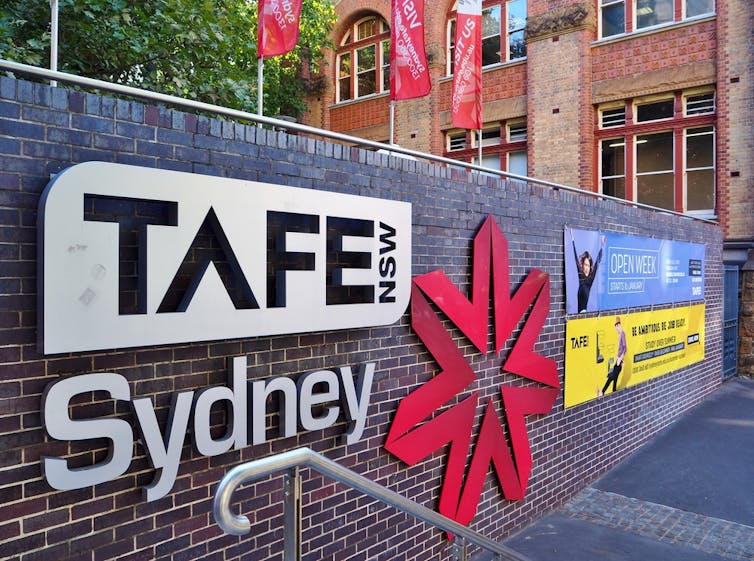
For example, the current restructure of TAFE NSW has cut many of the educationally qualified staff who designed and delivered outreach and support programs for students. This has meant reducing numbers of specialist staff for culturally and linguistically diverse students and those with disabilities.
Outreach programs provide opportunities for students to undertake relevant courses in their communities. This addresses both student and community needs.
Equity groups left out
National Centre for Vocational Education Research (NCVER) figures show a decline in the participation of several equity groups in recent years. They include people from remote and very remote areas, those in the most socio-economically disadvantaged group, female students and students in the youngest age group (15 to 19).
The fact many of these equity groups were targeted in the VET FEE-HELP scandals has possibly also undermined confidence in a VET pathway for these students.
Disadvantage often reaches into many aspects of a learner’s life, and that needs to be recognised and understood. Understanding issues around motivation to learn and social disadvantage is necessary.
Read more: To fix higher education funding, we also need to fix vocational education
How motivated a student is informs how much time and effort they put into their study. Factors such as low socio-economic status, language barriers or hurdles, and competing responsibilities at home can have negative effects on motivation to learn.
An NCVER study identified five effective strategies for supporting learners who become disengaged from study:
address the overall barriers and challenges experienced by students, which might include home life and socio-economic concerns as well as learning issues
provide appropriate teaching that meets students’ specific needs, such as team teaching with professionals who have tertiary qualifications as well as experience in literacy and numeracy, or giving students additional support while studying a vocational course
be flexible in the delivery of programs such as outreach programs so they’re delivered where students feel most comfortable, in community settings and at times that meet their parental and caring responsibilities
offer ongoing support beyond VET, which might include counselling, careers advice and further training in foundation skills
provide students with pathways to further study and/or work through VET providers, government agencies and community groups working together.
What needs to happen now
While VET has the capacity to offer socially inclusive educational programs, for successful and sustainable outcomes the training provider must also be able to work with other agencies supporting learners. A VET course is not the end of the journey. Government agencies and community groups can provide funding to ensure the VET qualification leads to meaningful work.
Read more: Victorian TAFE chaos: a lesson in how not to reform vocational education
But success for many students is not just measured through completions and attainment of a qualification or job. When we talk about success here, it’s more in terms of less tangible outcomes such as building confidence, self-respect, life skills and engagement with their communities.
To rebuild this role, VET needs sustainable investment. Supporting disadvantaged learners is successful when it’s an institution-wide commitment.
Such support requires the commitment of all levels of government, not only to ensure VET retains this capacity, but so there’s an obligation of social inclusion that goes beyond the classroom. It should also build strong relationships with employers and communities.
Authors: Linda Simon, Teacher in adult and vocational education, Charles Sturt University


 Daily Bulletin


