

Morrison wants Muslim leaders to do more to prevent terrorism, but what more can they do?
- Written by: Greg Barton, Chair in Global Islamic Politics, Alfred Deakin Institute for Citizenship and Globalisation; Co-Director, Australian Intervention Support Hub, Deakin University
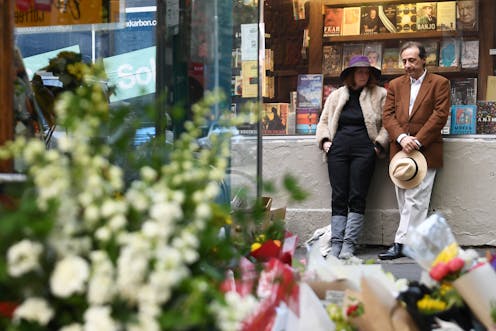
With the simple statement “more needs to happen”, Prime Minister Scott Morrison was emphatic. In the wake of the terror attack on the crowded streets of Melbourne’s CBD last Friday, it is difficult to argue against any plan to do more to fight terrorism in Australia.
The question is what can be done and what should be done. Morrison, in part, put the onus on religious leaders by urging them not to “look the other way”:
If you’re an imam or a leader in one of those communities, you need to know who those people are in your community that might be doing that.
But exactly what it is they should be doing to help prevent similar terror attacks is not spelt out.
Read more: Out of the ashes of Afghanistan and Iraq: the rise and rise of Islamic State
Lone-actor attacks hard to anticipate
Leaving aside the politically charged nature of comments from government ministers - campaigning ahead of the fast-approaching elections in Victoria and imminent federal elections in the new year - it is important to take an objective look at what reasonably can be done.
Friday’s attack was the sort of terrorist attack that police have identified as being their primary concern.
Clearly Australian authorities, along with counter-terrorism forces around the world, have been very effective in preventing large-scale, ambitious terrorist plots. A lot of hard work and enormous resources have gone into ensuring that the sort of massive attacks that jihadi terrorists carried out in New York, Bali, Madrid and London at the beginning of the century have not being repeated.
Read more: How the Australian government is failing on countering violent extremism
But lone-actor attacks continue to worry police precisely because they are so very hard to anticipate and disrupt. When one or two people decide to launch an attack with little planning and no communications across a larger terrorist network, the methods of intelligence that are so successful in preventing large-scale attacks have little utility.
One of the problems with suggesting that Muslim leaders need to “do more” is that it implies they have information they are not sharing, or that they’re failing to take action when they see a problem.
The reality is that Islamic leaders generally have little to do with the troubled young people most likely to be involved in lone-actor attacks like the one in Melbourne. Muslim communities, like many others in multicultural Australia, face a challenge in closing the gap between young people and the older generation recognised as the community’s formal leaders or religious teachers. They live in two separate worlds.
It is not the actively religious young people who are generally the source of problems. Rather, it is the alienated and the angry who turn their backs on community leaders – they are the real concern.
Among those attackers who do become religious, they generally reject mainstream religious leadership, making it difficult for those imams, for instance, to spot troubled youth and intervene.
Community-based outreach can have an impact
More than 250 passports have been cancelled or suspended by the Australian government over the last six years and many more people have had their travel plans stopped on the grounds of reasonable suspicion that they intended to travel to the Middle East and join a terrorist group like Islamic State.
They have not been found guilty of any crime and are under no legal obligation, generally speaking, to participate in rehabilitation programs.
Nevertheless, state and federal police are quietly having considerable success in working with these young people, on a voluntary basis, to reengage them with their families and communities. Some members of the Australian National Imams Council (ANIC) play a key role in this low-key work. Mental health professionals, counsellors and social workers work alongside religious teachers in attempting to turn troubled young lives around.
Can anything more be done? Almost certainly. While dozens of youths at risk of radicalisation currently receive help in this manner, there are hundreds of others who are not benefiting from structured interventions.
The lack of any legal compulsion for them to participate in one of these community-based programs is certainly one of the problems. But so, too, is the lack of resources. In comparison with the many tens of millions of dollars spent at the hard end of countering terrorism, the resources provided to youth workers and community intervention programs remain pitifully small.
If anything more can be done, it is in this area. Simply finding the resources to employ a hundred properly trained and equipped youth workers to engage with at-risk youths would likely yield considerable dividends.
But this will only be achieved with trust and confidence built on mutual respect. The last thing that is needed is to publicly call out Islamic leaders, and Muslims in general, and lay the problem at their feet. This is not fair. We don’t do this with other communities.
And doing this threatens to undermine so much of the good work that is being done away from the spotlight of public attention.
Authors: Greg Barton, Chair in Global Islamic Politics, Alfred Deakin Institute for Citizenship and Globalisation; Co-Director, Australian Intervention Support Hub, Deakin University


 Daily Bulletin


