

It's time to restore public trust in the governing of the Murray Darling Basin
- Written by: Jason Alexandra, PhD candidate, RMIT University
Fish deaths in the Darling River have once more raised the public profile of incessant political controversies about the Murray Darling Basin. These divisive debates reveal the deeply contested nature of reforms to water policy in the Basin.
It feels like Australia has been here before – algae blooms are not uncommon in these rivers. In 1992, the Darling suffered the world’s largest toxic algal bloom, over 1,000 kilometres long. This crisis became an iconic catalyst, and helped prompt the state and federal governments agreeing to water reforms in 1994.
Hopefully, our current crisis may be an opportunity to shine a strong light on the complexities of governing the Basin, and initiate the meaningful reforms needed to restore public trust.
Read more: How is oxygen 'sucked out' of our waterways?
Forewarned is forearmed
The rivers of the basin are unique and precious. Australia needs high quality and independent science to understand them and guide their management. Unfortunately in 2012 state and federal governments cut three important programs that provided vital research on the Basin’s rivers:
So while yesterday’s announcement of A$5 million funding to a new native fish recovery program is welcome, good science alone is not enough. Good policy processes and robust institutions are needed to apply this information. We cannot continue to ignore expert warnings.
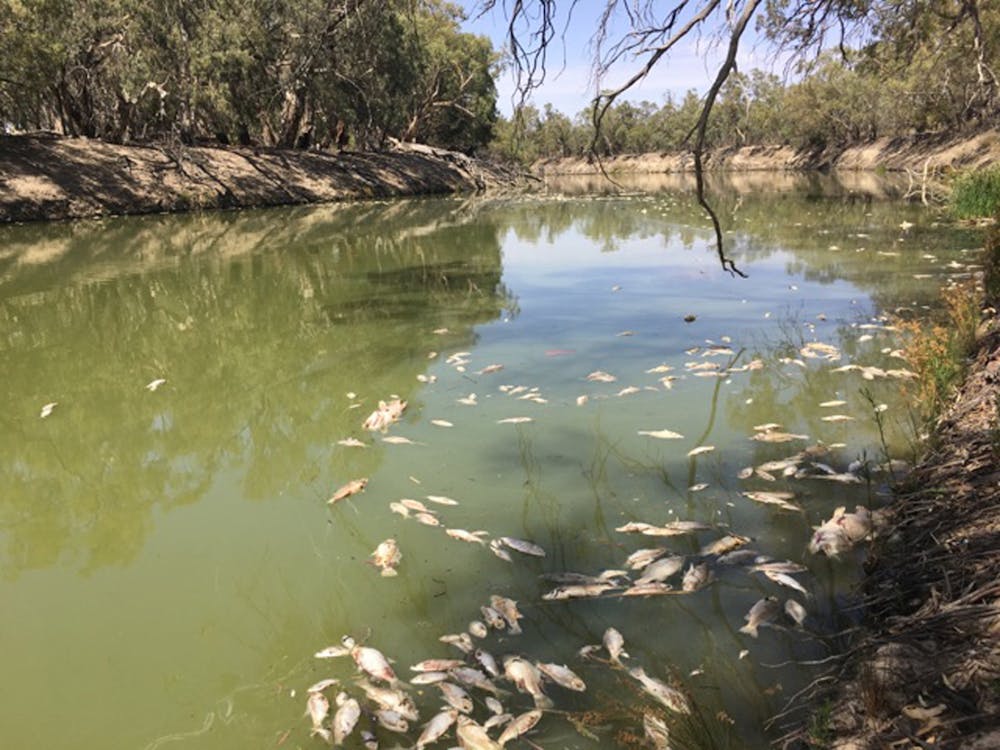 Allegations have surfaced that experts warned of the possibility of mass fish deaths as far back as 2012.
AAP Image/Supplied, Kate McBride
Allegations have surfaced that experts warned of the possibility of mass fish deaths as far back as 2012.
AAP Image/Supplied, Kate McBride
A crisis of trust
Since a 2017 Four Corners program exposed disturbing allegations of water theft and corruption, the media has revealed a host of further probity issues.
These and a plethora of formal inquiries into MDB governance indicates a crisis of trust, legitimacy and public confidence – in short, a loss of authority.
The 2018 federal Senate inquiry documents a litany of concerns, while disturbing evidence given at a South Australian Royal Commission raised substantive doubts about failures to heed the best scientific advice in the development of the Basin Plan.
Read more: Explainer: what causes algal blooms, and how we can stop them
More Commonwealth oversight is not enough
Without doubt pressure is mounting for more reforms. The Senate’s Rural and Regional Affairs Committee and the Productivity Commission have recommended splitting the Murray Darling Basin Authority into two entities – the MDB Corporation and a MDB Regulator – in order to clearly separate the Commonwealth’s regulatory oversight from other roles.
These proposals deserve critical scrutiny. Structural reorganisation can provide an illusion of government action, but can have long-term effects on the efficacy and justice of water governance.
The Murray Darling has a unique place in Australia’s history, environment, economy and culture. Agreements about its governance have their origins in debates leading up to Federation in 1901. Any renegotiation needs to respect the Constitution and the different legal powers of the states and the Commonwealth.
So reform to institutional arrangements need bespoke design. These are the legitimate remit of our discursive democracy. Nonetheless, the OECD’s 12 water governance principles usefully provide guidance about the need for clarity of roles, transparency, effectiveness, efficiency and broad stakeholder engagement.
Current calls for reorganisation focus on clarifying the Commonwealth’s regulatory role, but this is fairly narrow. Reforms are needed at all scales.
The governance challenges in the MDB require modernisation and redesign of arrangements across regional, state and Commonwealth agencies. This includes structuring “constructive tensions” that ensure transparency and accountability. Just like the police don’t control the courts, we need to more clearly define and separate roles in the water sector.
Embracing radical transparency
We need all water agencies to adopt a formal charter of transparency and openness. All state and Commonwealth agencies should open their books to scrutiny, rather than hiding information behind claims of “commercial in confidence” or opaque “freedom of information” processes.
Greater transparency measures should also be a condition of all water licences. It’s entirely feasible to create modern monitoring regimes, using state-of-the art digital metering coupled with annual water-use declarations. These would be similar to tax returns enforced with random audits and satellite verification of areas irrigated. If made publicly available, all interested parties could audit water extractions.
But doubts don’t exclusively focus on irrigators’ compliance. We also need to address the states and their willingness and capability to enforce regulations. Policies of radical transparency could be supported with openly available water data. With digital meters and automated gauging of river flows, we could create a computer platform where anybody could develop river models using real data, in near real-time.
Harnessing the power of citizen involvement, trust and openly sharing information has been a hallmark of Australia’s landcare and natural resource management. This is where we should look for the next generation of governance in the Basin.
Open books means communities, industries, research and educational institutions can all help monitor our institutions and ensure rivers are managed in the public’s interest.
Read more: Recent Australian droughts may be the worst in 800 years
Finally, droughts should not come as surprise. They are a recurrent feature of the Basin. With climate change, more frequent and intense droughts are predicted. As a nation we can do better than lurching from crisis to crisis each time drought returns.
We need careful deliberation about the institutions that will rebuild public confidence and restore trust in the governing of the Murray Darling. It’s time to develop a 21st century system that is cooperative, transparent and just.
Authors: Jason Alexandra, PhD candidate, RMIT University


 Daily Bulletin


