

Considering using IVF to have a baby? Here's what you need to know
- Written by: Hannah Brown, Chief Science Storyteller, South Australian Health & Medical Research Institute
If it’s not you, perhaps it’s someone you know. You don’t look infertile, you don’t feel infertile, but after many months (or years) of trying to start a family, followed by several months of monitoring your cycle in a fertility clinic, it’s time to discuss IVF.
This is a big decision. It will impact your time, your finances, your emotions, your relationships and your dreams of being a parent.
Despite the language of “falling pregnant”, inferring absolute simplicity, infertility is a reality for one in six Australian couples.
Read more: Women's fertility: does 'egg timer' testing work, and what are the other options?
Infertility isn’t picky, but it is ageist!
A woman’s age is the single best predictor of IVF success. This is because a woman is born with all the eggs she will ever have, somewhere between one and four million. Our eggs are slowly tricking out of the ovary in a steady stream, until at menopause there are no eggs left.
Despite the fact that almost 400 eggs will begin to grow each month from puberty to menopause, only one egg will survive each month, bursting out of the ovary at ovulation ready to be fertilised.
Sperm are an equally critical component of both IVF and natural fertility.
Despite the myth that male fertility is not impacted by age, a growing body of evidence shows men’s age – and lifestyle factors such as excess weight, smoking and heavy drinking – affect fertility.
Intracytoplasmic sperm injection (ICSI) has been developed so fertilisation in the lab can still be successful even if only one good quality sperm is available.
Read more: Most men don't realise age is a factor in their fertility too
What is the process and how will I feel?
IVF artificially increases the number of mature eggs ready for fertilisation. Your treatment very much depends on what your infertility diagnosis is, but for most couples undergoing IVF, the process will look a bit like this.
Step 1: ovarian stimulation
The hormone which makes eggs grow (FSH or follicle stimulating hormone) is given by very tiny, self-given injections just under the skin, in high but tailored doses. This creates a hormone tsunami, giving many eggs a chance to ride this wave.
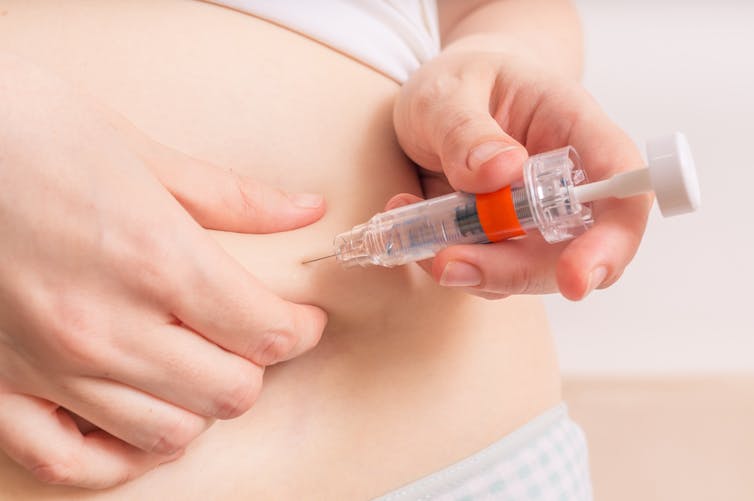 Women self-administer the hormone injections.
vchal/Shutterstock
Women self-administer the hormone injections.
vchal/Shutterstock
Using IVF, we can safely increase the number of eggs the woman produces in a cycle without risking of multiple births. We take the eggs out of the body, in a process known as egg harvest or oocyte pickup, or OPU. Leaving the eggs in the body for fertilisation incurs an unacceptable risk of having twins, triplets, or more.
These hormones can have some side effects, which are usually mild, and may include tenderness at the injection site, hot flashes, blurred vision, nausea, headache, irritability and restlessness. Your doctor will outline them, and tell you what to monitor.
Step 2: egg harvest (oocyte pickup)
When the eggs are mature (generally up to 18 mm in size) and your estrogen levels are consistent with the egg numbers and size we need, we plan an egg harvest.
A trigger injection is given to finalise egg growth and development, and approximately 36 hours later, we perform the surgical procedure to collect them, ready to put them together with the sperm for in vitro fertilisation (IVF).
This procedure is more like a blood test than open surgery and in many units this procedure is done with pain relief while the female partner is awake. Other units use a light sedative anaesthetic, while they insert a narrow needle and camera (ultrasound) through the vagina to collect the eggs for IVF.
Step 3: in vitro fertilisation (IVF)
Over the next few hours, the embryologists will wash all the viable eggs and prepare them for fertilisation. They are then placed in a dish with thousands of sperm, which were collected previously and frozen, or collected on the same day from your partner.
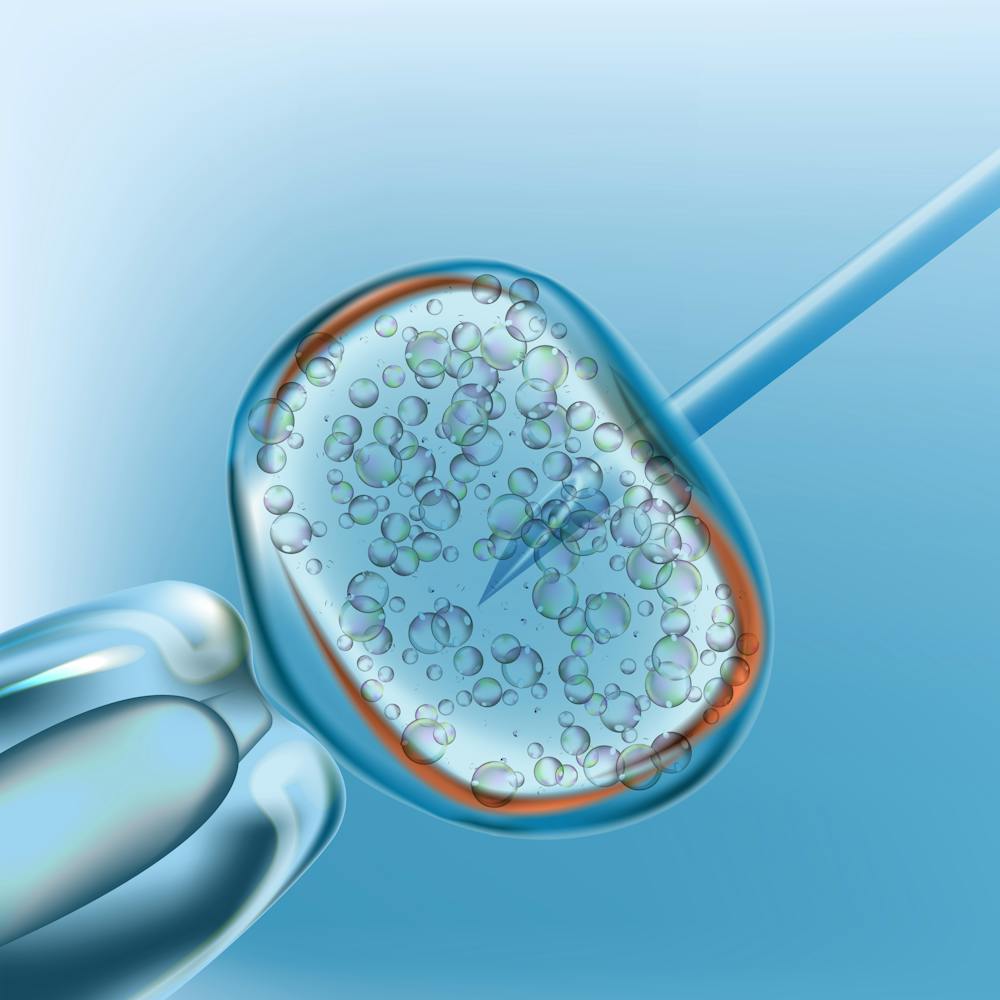 ICSI looks something like this.
Apl56/Shutterstock
ICSI looks something like this.
Apl56/Shutterstock
Or, if you’re using intracytoplasmic sperm injection (ICSI), the embryologists directly inject one sperm into the cytoplasm of each egg.
Step 4: embryo culture
The day after IVF, the embryologist or nurse will phone you to tell you how many eggs were fertilised.
For the next few days, your embryos will live in a dish, in an oven heated to body temperature. Staff will monitor their growth and development and will eventually pick the right one for transfer back into the womb.
The embryo is gently transferred back into the womb on day five or six, in a process similar to that of a pap test. If you have many healthy embryos at this stage, they can be frozen for use later.
Now you wait
About a week-and-a-half to two weeks after your embryo was transferred, we can test to see if it’s attached to the womb. A simple blood test, or even home pregnancy test, will detect levels of human chorionic gonadotrophin (HCG), a sign that you are finally pregnant.
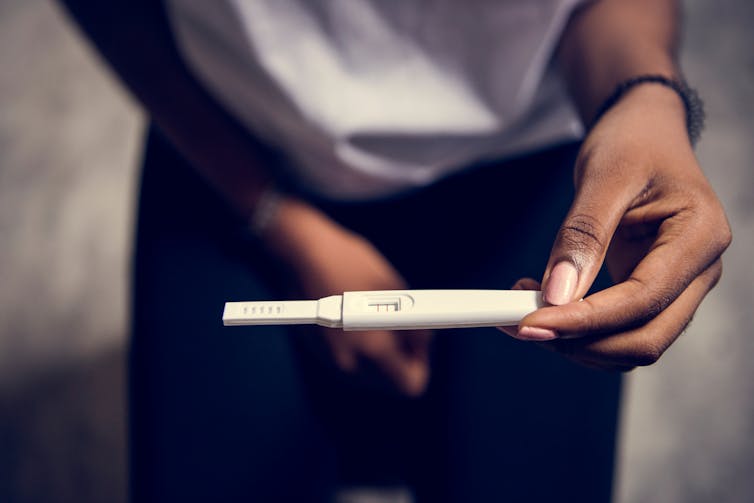 There’s so much waiting when you go through IVF.
Rawpixel/Shutterstock
There’s so much waiting when you go through IVF.
Rawpixel/Shutterstock
For some, the test will be negative. If they have frozen embryos, they can try again without needing to take more injections and have a surgical procedure.
Others will receive a diagnosis after learning something about their eggs, sperm and embryos, which can help the IVF team adjust the cycle plan and improve the couple’s outcomes in future cycles.
For some, it was the last time they were going to try IVF, or fertilisation didn’t occur, or an embryo transfer could not be done. Disappointment, frustration and grief becomes part of the experience and couples may need support and counselling.
For many, a positive pregnancy test is the outcome. But there is still more waiting; after all, you are still 38 weeks away from delivery. A small number of pregnancies miscarry or are lost so support in early pregnancy and good obstetric care is vital.
How much does it cost?
The cost of IVF is hugely variable, and is dependent on your level of private health cover. The out of pocket costs, even with the highest level of cover may reach A$9,000 for the first cycle. And each test and process will change the price.
Sit down with your specialist and ask “can you talk me through all of the costs associated with this round of treatment?” and have them break it down.
Read more: Women now have clearer statistics on whether IVF is likely to work
How do you find the right clinic?
There is a big difference in the quality of fertility care you can receive across Australia, with some clinics having dramatically higher success rates than others.
But keep in mind some clinics may not show all the data. They may quote the pregnancy rates for “every started IVF cycle” or for “every embryo transfer”, meaning the cycles where there is no embryo to transfer are excluded – thus making the rates look unrealistically good.
 Many factors affect a couple’s success rate.
Tina Bo
Many factors affect a couple’s success rate.
Tina Bo
Despite the desire to shop for price, asking the clinic specifically about your chance of taking home a healthy baby in their clinic, and finding a health care provider you feel comfortable with is key.
Read more: Five traps to be aware of when reading success rates on IVF clinic websites
Your personal success may not be equal across two clinics, and you may save yourself money by finding a clinician and clinic with high success rates, and with a specialist who specialises in your condition, whether it’s polycystic ovary syndrome (PCOS), endometriosis, or something else.
Never be afraid to ask as many questions as you have, and to ask for clarity when you don’t understand. Undertaking IVF is a big step.
Authors: Hannah Brown, Chief Science Storyteller, South Australian Health & Medical Research Institute
Read more http://theconversation.com/considering-using-ivf-to-have-a-baby-heres-what-you-need-to-know-108910


 Daily Bulletin


