

Homosexuality may have evolved for social, not sexual reasons
- Written by: Andrew Barron, Professor, Macquarie University
How did homosexuality in humans evolve?
Typically, this question is posed as a paradox.
The argument is this: gay sex alone can’t produce children, and for traits to evolve, they have to be passed onto children, who get some form of competitive advantage from them.
From this perspective, some argue homosexuality should not have evolved.
In a paper published yesterday by myself and Duke University professor Brian Hare, we propose human sexuality (including homosexuality) evolved as an outcome of the evolution of increased sociability in humans.
We argue many of the evolutionary forces that shaped human sexuality were social, rather than based on reproductive ability.
This is our “sociosexual hypothesis” for the evolution of gay sex and attraction.
Sex for bonding
For humans, and many other animals, sex is not just about reproduction.
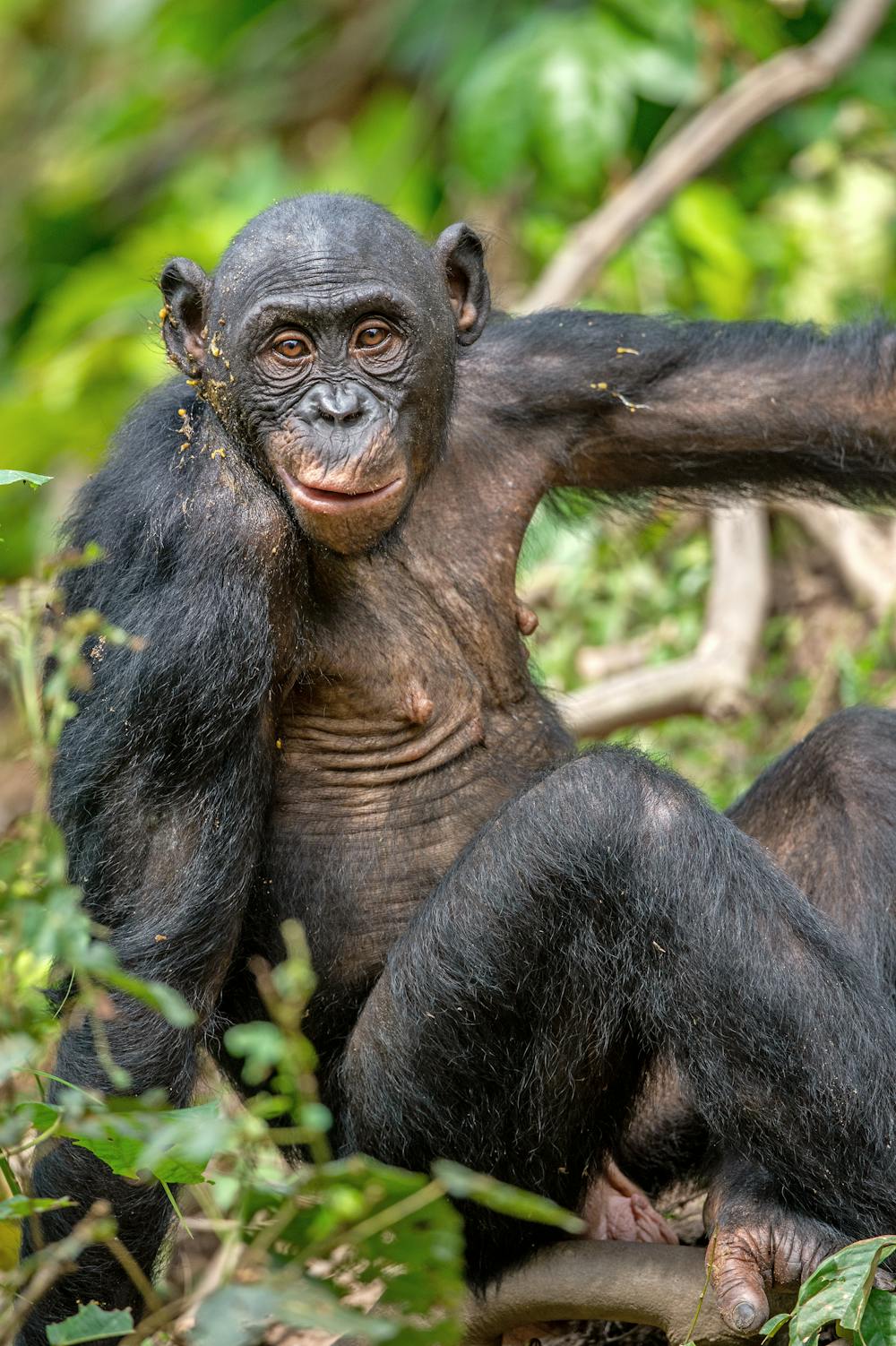 Bonobos and chimpanzees share about 99.6% of their DNA with humans.
shutterstock
Bonobos and chimpanzees share about 99.6% of their DNA with humans.
shutterstock
In our closest primate relative, the bonobo, straight and gay sex have vital roles in play, social transactions, barter of food, same-sex social bonding and bonding between mating pairs.
We shouldn’t limit our thinking about the evolution of sex to its reproductive functions. We must also consider its social functions.
Based on the social behaviour of primates (and other social mammals), we argue our species’ recent cognitive and behavioural evolution was driven by natural selection favouring traits that allowed better social integration. This is called prosociality.
Early humans that could quickly and easily access the benefits of group living had a strong selective advantage. We believe this led to the evolution of a whole range of traits including reduced aggression, increased communication, understanding, social play and affiliation.
Read more: 'Gay gene' search reveals not one but many – and no way to predict sexuality
Species such as the bonobo, that evolved for high prosociality, evolved to use sexual behaviour in many social contexts. This results in an increase of sex in general, greater diversity in the contexts of sex, and an increase in gay sex.
We believe something similar happened in recent human evolution. Gay sex and attraction may have evolved because individuals with a degree of same-sex attraction benefited from greater social mobility, integration and stronger same-sex social bonds.
This may sound counterintuitive, given gay people are socially marginalised, ostracised and even criminalised in many societies.
However, our argument addresses the early evolution of human sexuality, not how relatively recent phenomena like religion and religion-based legal structures have responded to sexual minorities.
Supporting facts
Many studies since the pioneering research of Alfred Kinsey and colleagues have emphasised that sexual minorities occur across all cultures, and the levels of gay and bisexual people in populations have been quite stable over time.
Our hypothesis predicts that bisexuality and people who identify as “mostly straight” should be more common than people who identify as exclusively gay, and this is the case.
Recent genetic analyses confirm hundreds of genes influence sexuality in complex ways.
We quite randomly inherit half our genes from each parent. Each person’s genetic makeup is unique, so it would be highly unlikely to find two people with exactly the same set of genes influencing their sexuality.
Read more: Born this way? An evolutionary view of 'gay genes'
Thus, variation is expected, and individuals fall along a spectrum ranging from a majority who are straight, to a minority who identify as gay.
Our hypothesis for the evolution of homosexuality would predict this kind of variation in human sexuality, and can help explain why it is generally stable across cultures.
We believe sexuality is a highly complex trait, interwoven with sociality. Attraction, sexual behaviour, social bonds and desire all contribute to its complexity.
Asking the right questions
Height is another feature influenced by hundreds of genes, many of which interact with our external environments in complex ways.
We see a continuous variation in human height – some very tall and very short people exist.
We might draw on nutritional ecology to explore the evolution of human height, but would not feel the need to introduce special evolutionary arguments to explain the existence of tall or short people.
No special explanation is necessary. They are simply exhibiting natural, genetically influenced variations in height.
Similarly, we think asking how gay sex and attraction evolved is the wrong question.
A more useful question to ask is: how did human sexuality evolve in all its forms?
In doing do, we acknowledge homosexuality does not present a paradox needing a special explanation. It is simply a result of our species’ recent sociosexual evolution.
Read more: 'Gay gene' testing apps aren't just misleading – they're dangerous
Authors: Andrew Barron, Professor, Macquarie University
Read more http://theconversation.com/homosexuality-may-have-evolved-for-social-not-sexual-reasons-128123


 Daily Bulletin


