today's grandmothers grew up protesting. Now they have nothing to lose
- Written by: Gillian Triggs, Emeritus Professor, University of Melbourne
Grandmothers as social activists? What a radical idea … but one that is increasingly true of today’s generation of grandmothers. Witness the determination and courage of Karen Nettleton in pulling out all the stops to persuade the Australian government to rescue her grandchildren from a Syrian refugee camp.
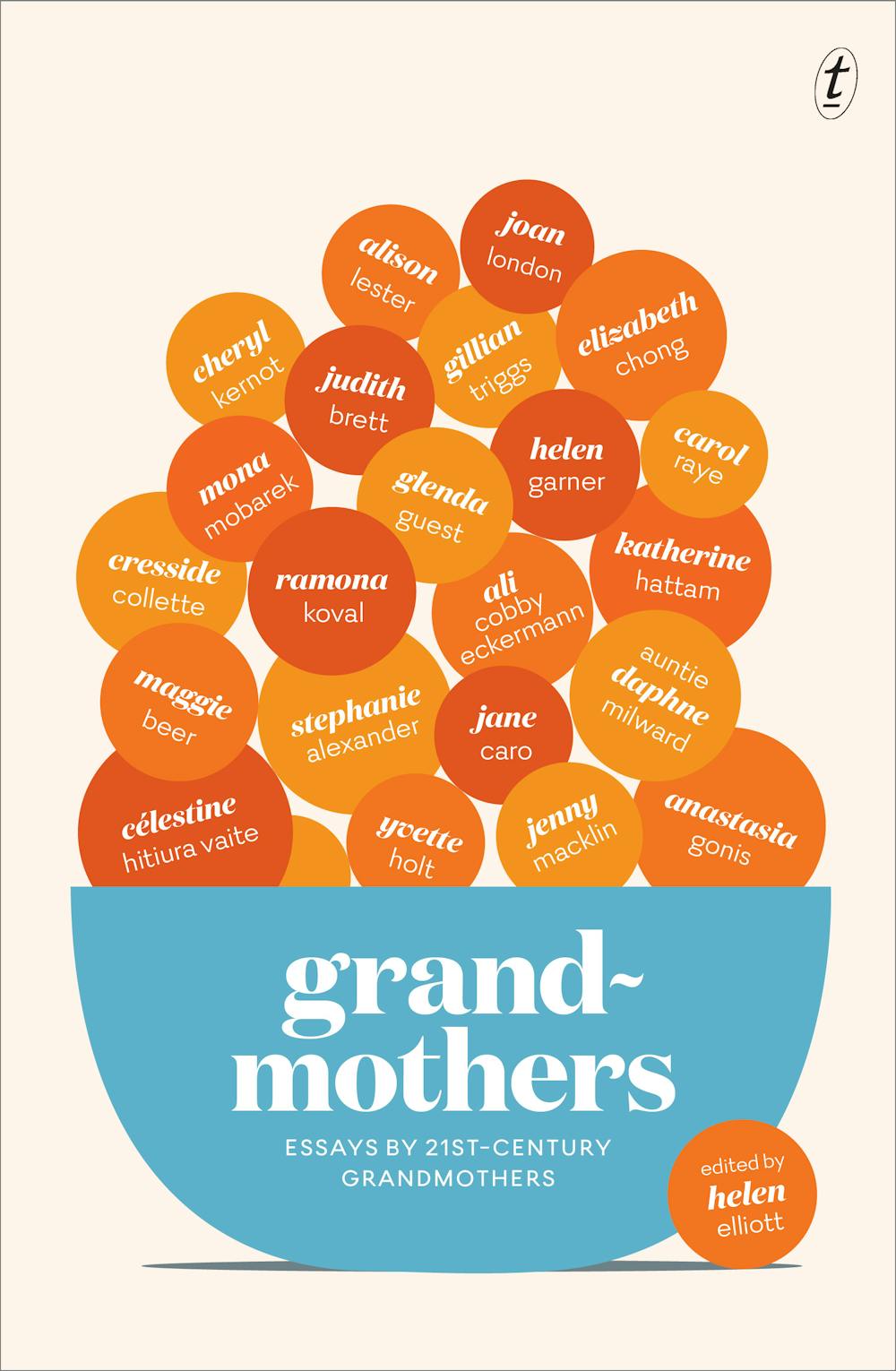 Text Publishing
A sweet memory of my time as president of the Australian Human Rights Commission was being asked by my executive assistant to look down from my Pitt Street office to the Grandmothers for Refugees singing in the street below to support the commission and its advocacy for refugees detained indefinitely in offshore detention camps. What a delight to see the men in their suits walk by in bemused wonderment. How mistaken to dismiss these grandmothers as having passed their use-by date.
Why should we be surprised? This generation of grandmothers came from the 60s and 70s, many – and for the first time in history – spending formative years at university with free or minimal fees, marching against Vietnam, experimenting with sexual liberation, burning our bras and “making love not war”. Political activism is mother’s milk to many of the women from those times.
Over the following years, this unique generation of women rode the crest of a wave of opportunity and optimism. The Sex Discrimination Act was passed in 1984 … problem of equality fixed. The future was ours. And, to a significant degree, so it has been.
Today, women over 60 are often well-educated and financially independent, having had a fruitful career while also doing a decent job of raising their children. Today, the 60s generation of women is emerging as a political force to be reckoned with.
Text Publishing
A sweet memory of my time as president of the Australian Human Rights Commission was being asked by my executive assistant to look down from my Pitt Street office to the Grandmothers for Refugees singing in the street below to support the commission and its advocacy for refugees detained indefinitely in offshore detention camps. What a delight to see the men in their suits walk by in bemused wonderment. How mistaken to dismiss these grandmothers as having passed their use-by date.
Why should we be surprised? This generation of grandmothers came from the 60s and 70s, many – and for the first time in history – spending formative years at university with free or minimal fees, marching against Vietnam, experimenting with sexual liberation, burning our bras and “making love not war”. Political activism is mother’s milk to many of the women from those times.
Over the following years, this unique generation of women rode the crest of a wave of opportunity and optimism. The Sex Discrimination Act was passed in 1984 … problem of equality fixed. The future was ours. And, to a significant degree, so it has been.
Today, women over 60 are often well-educated and financially independent, having had a fruitful career while also doing a decent job of raising their children. Today, the 60s generation of women is emerging as a political force to be reckoned with.
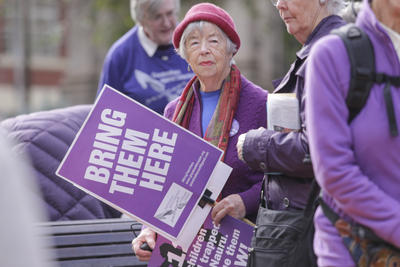
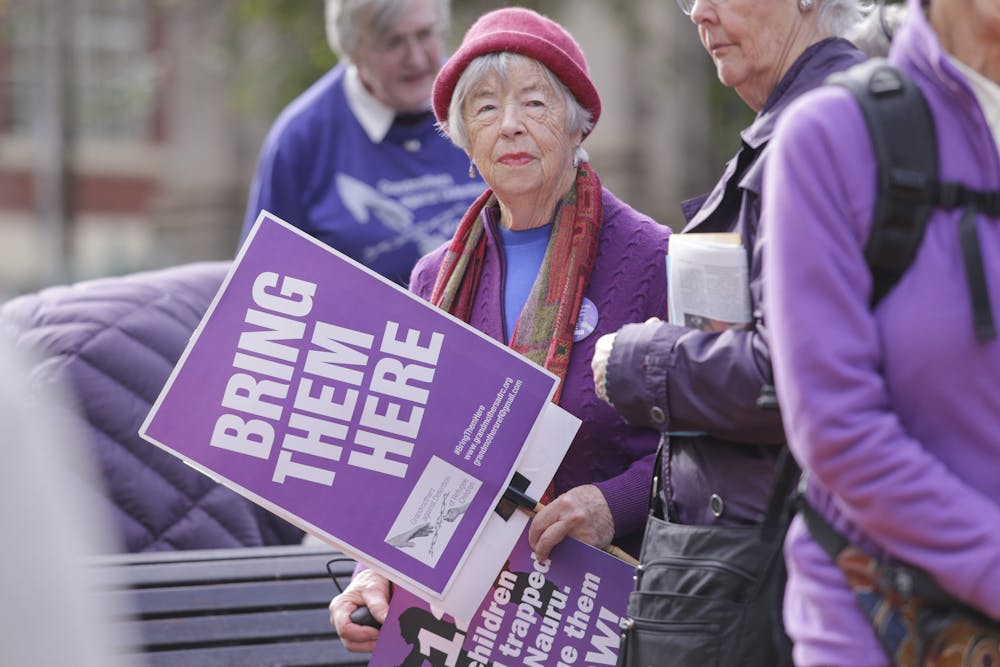 Grandmothers Against Detention of Refugee Children rally in Melbourne, July 2018.
AAP/Wayne Taylor
Not so fast
But wait. How can it be that the position of women in Australia has been in regression over the last 15 years or so? Here are some disturbing facts. The fastest-growing group of homeless people in Australia is not 18-year-old youths sleeping under a bridge, but women over 55. How ignominious and sad to have to ask your son or niece if you can sleep on their sofa for a few weeks as you can no longer pay the rent or the mortgage.
Women retire today on 46% of the superannuation available to men. Why? Because we agree to accept flexible, casual and contract work with little job security or opportunities for promotion. We fall off the superannuation ladder and never catch up, despite providing most unpaid caring work across the nation.
Women are still at the bottom of the employment pyramid in female-dominated industries – as hospital paramedics and cleaners, factory workers, maids and waitresses, in hotels and restaurants and in low-paid teaching and nursing positions. The gender pay gap of around 16% is narrowing with glacial speed.
In 2006, the World Economic Forum’s Gender Index placed Australia 15th globally, broadly among the nations we would most expect to be compared with — New Zealand, Canada, the United Kingdom, France and the Scandinavian countries. Ten years later, in 2016, we had slipped to 46th. By 2018, we had gone up a few points to 39th. Our 2020 ranking is 44th. We remain today stubbornly consigned to the lower ranks, below Serbia, Bolivia, Laos, Latvia, Cuba and Burundi.
Grandmothers Against Detention of Refugee Children rally in Melbourne, July 2018.
AAP/Wayne Taylor
Not so fast
But wait. How can it be that the position of women in Australia has been in regression over the last 15 years or so? Here are some disturbing facts. The fastest-growing group of homeless people in Australia is not 18-year-old youths sleeping under a bridge, but women over 55. How ignominious and sad to have to ask your son or niece if you can sleep on their sofa for a few weeks as you can no longer pay the rent or the mortgage.
Women retire today on 46% of the superannuation available to men. Why? Because we agree to accept flexible, casual and contract work with little job security or opportunities for promotion. We fall off the superannuation ladder and never catch up, despite providing most unpaid caring work across the nation.
Women are still at the bottom of the employment pyramid in female-dominated industries – as hospital paramedics and cleaners, factory workers, maids and waitresses, in hotels and restaurants and in low-paid teaching and nursing positions. The gender pay gap of around 16% is narrowing with glacial speed.
In 2006, the World Economic Forum’s Gender Index placed Australia 15th globally, broadly among the nations we would most expect to be compared with — New Zealand, Canada, the United Kingdom, France and the Scandinavian countries. Ten years later, in 2016, we had slipped to 46th. By 2018, we had gone up a few points to 39th. Our 2020 ranking is 44th. We remain today stubbornly consigned to the lower ranks, below Serbia, Bolivia, Laos, Latvia, Cuba and Burundi.
 Angry matriarchs are taking their grievances to the streets in protest.
Unsplash, CC BY
Cheats and double-dippers
The WEF Global Index is measured against four indices: economic participation, health and survival, educational attainment and political empowerment. The good news is that, not surprisingly, Australian women and girls are ranked first in the world for educational attainment.
But now the bad news: we are a 103rd for health, 77th for ministerial positions in government, 49th for political empowerment and 46th for economic participation. Our hopes for fair access to work were raised by Tony Abbott’s promise, as leader of the opposition, of a “rolled-gold” six months’ maternity leave, only to be dashed when the political debate descended into allegations women were “double dippers” and “welfare cheats”. The law for Australian women remains at 18 weeks’ paid maternity leave at minimum wage, compared with Sweden’s paternity leave of 480 days at 80% of salary.
How has it come to this? Why has education not ensured genuine equality? Why are Australia’s women not in the streets demanding fairness from a male-dominated government and corporate sector?
Are we, at heart, just like our grandmothers? Has very little really changed? Are grandmothers, by culture or by a law of nature, destined merely to be sweet, passive, caring and kind; to stand behind their men, support the family, love their grandchildren and seek little for themselves?
Memories of Sarah-Jane
My grandmother, Sarah-Jane, met all these clichéd standards. She was born in the reign of Queen Victoria, in 1899. She admirably met the traditional image of a grandmother: pretty, even in old age, white-haired and blue-eyed.
In 1958, as we stood on the deck of the Iberia, the flagship of the Orient and Pacific Line, leaving from Tilbury Docks for Australia, my mother said, “Give your grandmother a special wave. She is old and we may not see her again.” Sarah-Jane was 62, dressed in black, wearing pearl earrings and 60-denier lisle stockings, wrinkled at her ankles. Widowed at 53, with few financial resources, she had never been employed. Sarah-Jane was largely dependent on her daughters and sons-in-law.
She came to Melbourne several times to visit us and lived to be 89.
Sarah-Jane avoided any sort of disagreement or controversy in private, let alone in the public arena. “A lady’s name should appear in the newspapers only three times in her life: on birth, marriage and death.” She would have been horrified to know that her granddaughter was the subject of 42 satirical cartoons and over 60,000 words (and counting) of newsprint castigating me for my work as president of the AHRC.
For Sarah-Jane, family was all. She believed wholeheartedly in the adage that blood is thicker than water. As one of a typically large Victorian family of eight siblings, she was never particularly interested in widening her small group of friends. I have followed her directions for a successful dinner party.
It was bad form, she believed, to engage in one-to-one private conversations; a general conversation among the group on a neutral topic was the desired objective. Sex and religion should never be discussed. In this, I have strayed from her protocol. But I also prefer a wide-ranging debate at dinner. When I was first married to my husband and joined international diplomatic life as a “trailing spouse”, I remember him accusing me of conducting seminars at official dinner parties!
Read more:
Friday essay: this grandmother tree connects me to Country. I cried when I saw her burned
A driving force
Sarah-Jane might have been surprised to know that she has been a driving motivator in my life. As a teenager in the early 60s, I have a vivid memory of one of her visits. She was sitting up in bed, counting out her small change on the bedspread to see if she could stretch her money to buy a Christmas present for each member of the family. The sum total was pitiful.
Sarah-Jane had no means to increase her funds beyond whatever the family’s largesse had provided her. Mercifully, my parents were in business as jewellers and were, indeed, generous. At Christmas, we each received a modest gift from Sarah-Jane, and I treasured mine.
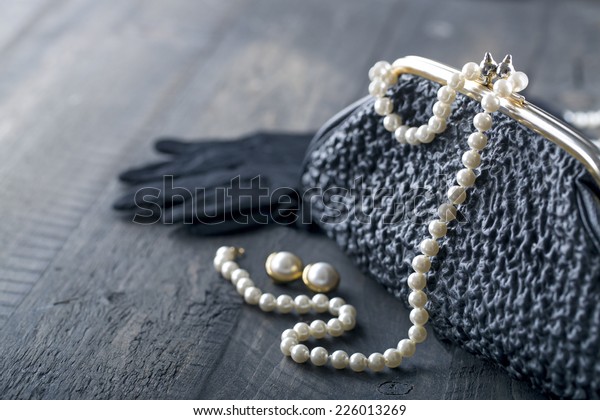
Yet another seemingly insignificant incident compounded my understanding of my grandmother’s loss of autonomy. Like Queen Elizabeth the Queen Mother, Sarah-Jane always wore pearls: three-strand necklaces and earrings. As the earrings were clipped on (pierced ears were vulgar), she was constantly losing one.
To go out in public without her pearls was unthinkable. She would ask my father, through the agency of my mother, to buy her new ones. As the saga of the lost earring was oft-repeated, my father became increasingly annoyed, but would eventually relent and provide another. I was struck at the time by the ignominy of Sarah-Jane’s position.
Angry matriarchs are taking their grievances to the streets in protest.
Unsplash, CC BY
Cheats and double-dippers
The WEF Global Index is measured against four indices: economic participation, health and survival, educational attainment and political empowerment. The good news is that, not surprisingly, Australian women and girls are ranked first in the world for educational attainment.
But now the bad news: we are a 103rd for health, 77th for ministerial positions in government, 49th for political empowerment and 46th for economic participation. Our hopes for fair access to work were raised by Tony Abbott’s promise, as leader of the opposition, of a “rolled-gold” six months’ maternity leave, only to be dashed when the political debate descended into allegations women were “double dippers” and “welfare cheats”. The law for Australian women remains at 18 weeks’ paid maternity leave at minimum wage, compared with Sweden’s paternity leave of 480 days at 80% of salary.
How has it come to this? Why has education not ensured genuine equality? Why are Australia’s women not in the streets demanding fairness from a male-dominated government and corporate sector?
Are we, at heart, just like our grandmothers? Has very little really changed? Are grandmothers, by culture or by a law of nature, destined merely to be sweet, passive, caring and kind; to stand behind their men, support the family, love their grandchildren and seek little for themselves?
Memories of Sarah-Jane
My grandmother, Sarah-Jane, met all these clichéd standards. She was born in the reign of Queen Victoria, in 1899. She admirably met the traditional image of a grandmother: pretty, even in old age, white-haired and blue-eyed.
In 1958, as we stood on the deck of the Iberia, the flagship of the Orient and Pacific Line, leaving from Tilbury Docks for Australia, my mother said, “Give your grandmother a special wave. She is old and we may not see her again.” Sarah-Jane was 62, dressed in black, wearing pearl earrings and 60-denier lisle stockings, wrinkled at her ankles. Widowed at 53, with few financial resources, she had never been employed. Sarah-Jane was largely dependent on her daughters and sons-in-law.
She came to Melbourne several times to visit us and lived to be 89.
Sarah-Jane avoided any sort of disagreement or controversy in private, let alone in the public arena. “A lady’s name should appear in the newspapers only three times in her life: on birth, marriage and death.” She would have been horrified to know that her granddaughter was the subject of 42 satirical cartoons and over 60,000 words (and counting) of newsprint castigating me for my work as president of the AHRC.
For Sarah-Jane, family was all. She believed wholeheartedly in the adage that blood is thicker than water. As one of a typically large Victorian family of eight siblings, she was never particularly interested in widening her small group of friends. I have followed her directions for a successful dinner party.
It was bad form, she believed, to engage in one-to-one private conversations; a general conversation among the group on a neutral topic was the desired objective. Sex and religion should never be discussed. In this, I have strayed from her protocol. But I also prefer a wide-ranging debate at dinner. When I was first married to my husband and joined international diplomatic life as a “trailing spouse”, I remember him accusing me of conducting seminars at official dinner parties!
Read more:
Friday essay: this grandmother tree connects me to Country. I cried when I saw her burned
A driving force
Sarah-Jane might have been surprised to know that she has been a driving motivator in my life. As a teenager in the early 60s, I have a vivid memory of one of her visits. She was sitting up in bed, counting out her small change on the bedspread to see if she could stretch her money to buy a Christmas present for each member of the family. The sum total was pitiful.
Sarah-Jane had no means to increase her funds beyond whatever the family’s largesse had provided her. Mercifully, my parents were in business as jewellers and were, indeed, generous. At Christmas, we each received a modest gift from Sarah-Jane, and I treasured mine.
Yet another seemingly insignificant incident compounded my understanding of my grandmother’s loss of autonomy. Like Queen Elizabeth the Queen Mother, Sarah-Jane always wore pearls: three-strand necklaces and earrings. As the earrings were clipped on (pierced ears were vulgar), she was constantly losing one.
To go out in public without her pearls was unthinkable. She would ask my father, through the agency of my mother, to buy her new ones. As the saga of the lost earring was oft-repeated, my father became increasingly annoyed, but would eventually relent and provide another. I was struck at the time by the ignominy of Sarah-Jane’s position.
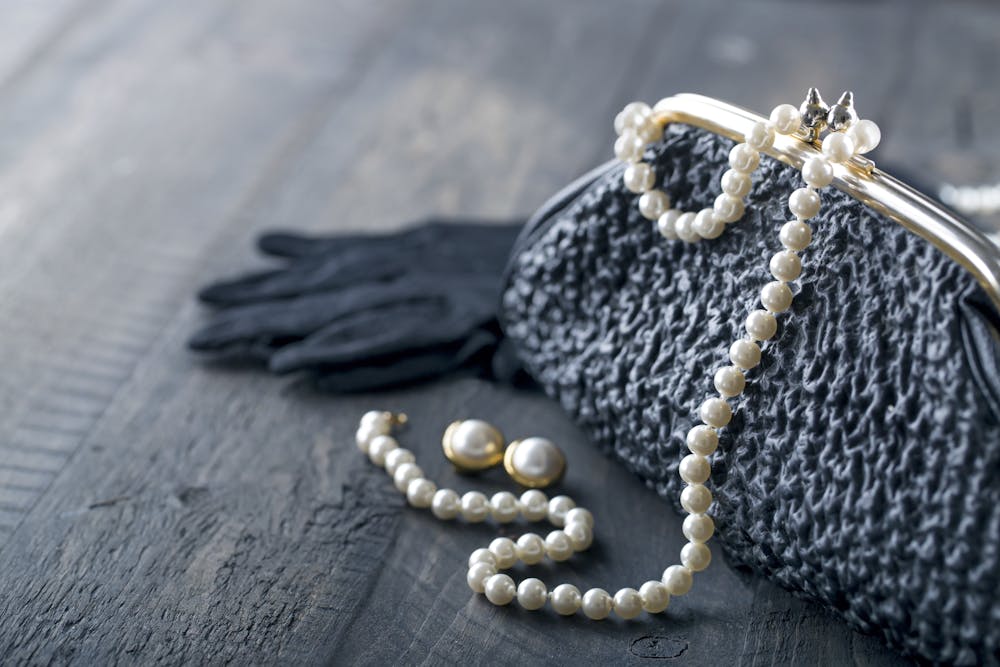 To go out in public without pearls was unthinkable to the author’s grandmother.
Shutterstock
Today, if I had lost such an item, I would simply buy a replacement without a second thought. I doubt she was ever able to enjoy that freedom. Such minuscule details of ordinary life mark how things have changed for women today who have financial autonomy.
Even as a young girl, I was mortified by the evident frustration of an older woman who had so little financial independence. I vowed never to be in that position. I knew, instinctively, that to reach whatever potential one might have, it was essential, as Virginia Woolf well understood, to have “a room of one’s own”. That is not to say that money has been a catalyst for my work over the decades, but rather that a reliable income is vital to achieving autonomy.
Sarah-Jane also had a steely inner core. Arriving home after school one day, I was shocked when she asked me, “Will you do the ironing or shall I?” As she’d left the house for work that morning, my mother had apparently airily asked my grandmother to iron the ever-mounting pile of sheets, shirts and napkins, always the last household chore to be tackled.
From my mother’s point of view, as Sarah-Jane was at home all day, this seemed to be an entirely reasonable request. Not so for Sarah-Jane. The heat of the summer was inescapable and enervating. She was probably about 70 years old. Far better to ask a healthy teenager. I, of course, agreed to do the ironing, but filed away for future reference that my grandmother was smarter than others gave her credit for!
As Sarah-Jane sank into the oblivion of Alzheimer’s, she lived out her last years in an aged-care residence in London. Whenever I returned to England, I would visit my tranquil, beautifully dressed grandmother, who, having no idea who I was, said to me, “You’re a nice young girl. Do come to see me again.” I would leave in tears, but grateful that Sarah-Jane had at least found some sort of serenity.
Today’s grandmothers
Delving into these sepia-tinted flashes from the past, I am surprised by how powerful — even hurtful — they remain. Why would I care today about such fleeting incidents, which one might have imagined would quickly fade? I do not know. But perhaps the psychologists would say that such early experiences shape our adult lives in profound, lasting and unexpected ways.
Sarah-Jane would not recognise my 21st-century role as a grandmother. At 74, I am working, travelling and continuing to be outspoken. My grandchildren, Sia (aged four) and Leonard (aged two), live an international life in Paris and are becoming bilingual. I speak to them by Skype and babysit for a couple of weeks in July when the creches and schools are closed for the summer. Every second year, they come to Australia for Christmas.
To go out in public without pearls was unthinkable to the author’s grandmother.
Shutterstock
Today, if I had lost such an item, I would simply buy a replacement without a second thought. I doubt she was ever able to enjoy that freedom. Such minuscule details of ordinary life mark how things have changed for women today who have financial autonomy.
Even as a young girl, I was mortified by the evident frustration of an older woman who had so little financial independence. I vowed never to be in that position. I knew, instinctively, that to reach whatever potential one might have, it was essential, as Virginia Woolf well understood, to have “a room of one’s own”. That is not to say that money has been a catalyst for my work over the decades, but rather that a reliable income is vital to achieving autonomy.
Sarah-Jane also had a steely inner core. Arriving home after school one day, I was shocked when she asked me, “Will you do the ironing or shall I?” As she’d left the house for work that morning, my mother had apparently airily asked my grandmother to iron the ever-mounting pile of sheets, shirts and napkins, always the last household chore to be tackled.
From my mother’s point of view, as Sarah-Jane was at home all day, this seemed to be an entirely reasonable request. Not so for Sarah-Jane. The heat of the summer was inescapable and enervating. She was probably about 70 years old. Far better to ask a healthy teenager. I, of course, agreed to do the ironing, but filed away for future reference that my grandmother was smarter than others gave her credit for!
As Sarah-Jane sank into the oblivion of Alzheimer’s, she lived out her last years in an aged-care residence in London. Whenever I returned to England, I would visit my tranquil, beautifully dressed grandmother, who, having no idea who I was, said to me, “You’re a nice young girl. Do come to see me again.” I would leave in tears, but grateful that Sarah-Jane had at least found some sort of serenity.
Today’s grandmothers
Delving into these sepia-tinted flashes from the past, I am surprised by how powerful — even hurtful — they remain. Why would I care today about such fleeting incidents, which one might have imagined would quickly fade? I do not know. But perhaps the psychologists would say that such early experiences shape our adult lives in profound, lasting and unexpected ways.
Sarah-Jane would not recognise my 21st-century role as a grandmother. At 74, I am working, travelling and continuing to be outspoken. My grandchildren, Sia (aged four) and Leonard (aged two), live an international life in Paris and are becoming bilingual. I speak to them by Skype and babysit for a couple of weeks in July when the creches and schools are closed for the summer. Every second year, they come to Australia for Christmas.
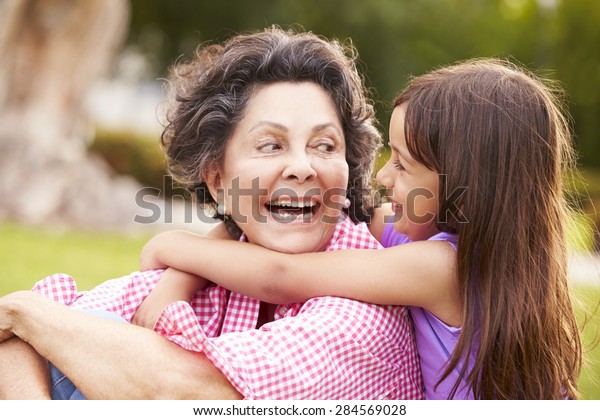
 Today’s grandmothers are often active and engaged in both private and public spheres.
Shutterstock
I have some French and would love to speak to my grandchildren in their first language. Rightly, their parents, my son James and his French partner, Marie, insist that I speak only English, otherwise Sia and Leonard will adopt the easy option of French. Sia thinks I am intellectually rather slow. If I mispronounce a word in French or make a grammatical error (quelle horreur), she corrects me and, in exasperation, employs both the English and French words to ensure I get her point. I love being with such bright, energetic children and am sometimes sad that I am a distant, fly-in, fly-out spectre in their lives.
My relationship with my grandchildren will be very different from many grandparenting relationships of the past. Different but, I hope, just as special. The geographical distance means that I will not be part of the day-to-day lives of Sia and Leonard. I will not be able to pick them up from school and hear their triumphs and woes. I will always be the visitor who swans into town, breaks the household rules with forbidden treats and goes away again. I will not be there to listen to whispered hopes and fears, nor will I be a gentle, calm and constant presence in their lives.
But I will bring to Sia and Leonard that fierce loyalty for family that Sarah-Jane maintained, rightly or wrongly, as well as her warmth and integrity. I hope to be a strong influence in their lives; to stimulate, excite and support them in every way possible. Perhaps I can show them what a woman can achieve in her lifetime, given the opportunity and a dash of determination.
No woman left behind
I suspect many women today grapple with finding a new version of the contemporary grandmother, as they retain a traditional view of a caring woman with little autonomy or life beyond her family. Grandmothers today are likely to be healthy, relatively fit and up for a game of tennis or a ski trip (on the moderate slopes).
With some significant exceptions (for example, those who have no superannuation, live alone or have high medical expenses), today’s grandmother will have financial means of her own, a career and a fruitful, active life. She will nurture her grandchildren, but will be less passive, more actively engaged with the world, freer to rise to her own potential and, I suggest, happier than many grandmothers in the past, with greater self-confidence.
Today’s grandmothers are often active and engaged in both private and public spheres.
Shutterstock
I have some French and would love to speak to my grandchildren in their first language. Rightly, their parents, my son James and his French partner, Marie, insist that I speak only English, otherwise Sia and Leonard will adopt the easy option of French. Sia thinks I am intellectually rather slow. If I mispronounce a word in French or make a grammatical error (quelle horreur), she corrects me and, in exasperation, employs both the English and French words to ensure I get her point. I love being with such bright, energetic children and am sometimes sad that I am a distant, fly-in, fly-out spectre in their lives.
My relationship with my grandchildren will be very different from many grandparenting relationships of the past. Different but, I hope, just as special. The geographical distance means that I will not be part of the day-to-day lives of Sia and Leonard. I will not be able to pick them up from school and hear their triumphs and woes. I will always be the visitor who swans into town, breaks the household rules with forbidden treats and goes away again. I will not be there to listen to whispered hopes and fears, nor will I be a gentle, calm and constant presence in their lives.
But I will bring to Sia and Leonard that fierce loyalty for family that Sarah-Jane maintained, rightly or wrongly, as well as her warmth and integrity. I hope to be a strong influence in their lives; to stimulate, excite and support them in every way possible. Perhaps I can show them what a woman can achieve in her lifetime, given the opportunity and a dash of determination.
No woman left behind
I suspect many women today grapple with finding a new version of the contemporary grandmother, as they retain a traditional view of a caring woman with little autonomy or life beyond her family. Grandmothers today are likely to be healthy, relatively fit and up for a game of tennis or a ski trip (on the moderate slopes).
With some significant exceptions (for example, those who have no superannuation, live alone or have high medical expenses), today’s grandmother will have financial means of her own, a career and a fruitful, active life. She will nurture her grandchildren, but will be less passive, more actively engaged with the world, freer to rise to her own potential and, I suggest, happier than many grandmothers in the past, with greater self-confidence.
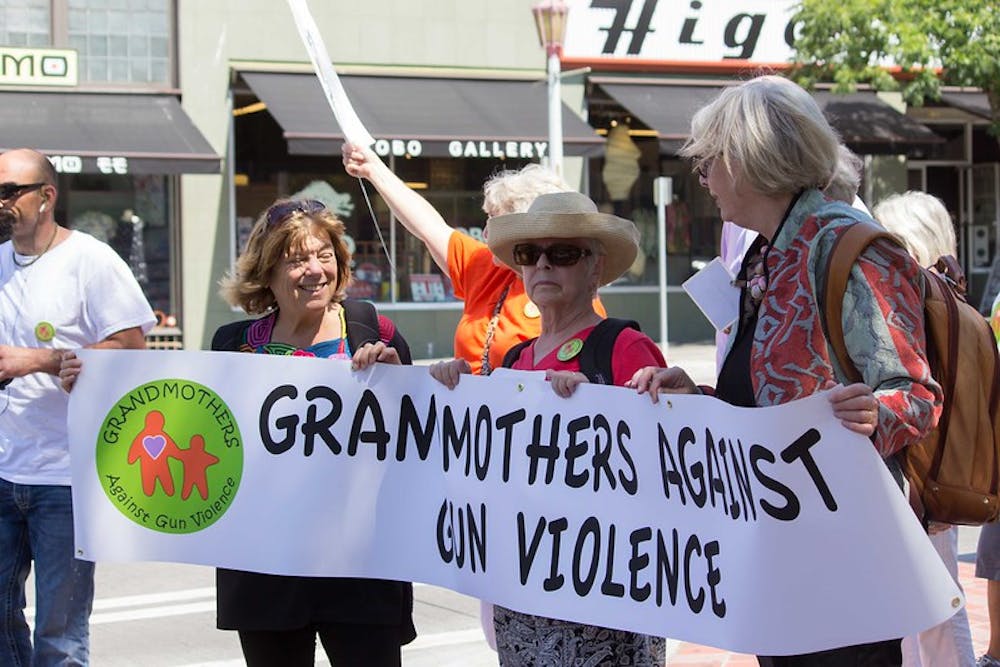 Grandmothers march against gun violence in Seattle.
Seattle City Council/Flickr
While my generation has been uniquely privileged in so many ways, I believe that, as grandmothers, we should use our remaining years and decades to reach out to our less privileged sisters to bring them with us. Too many women have been left behind. The promises of the 60s and 70s have not been met fully for all Australian women. We grandmothers now have a responsibility to advocate, to be politically active in using our education and financial independence to ensure equality of opportunity and outcome. For all women.
How dismaying that I should have studied for a law degree, a Master of Laws and a PhD, all at the expense of the Australian, American and British taxpayers, while law students today will finish their JD degree $100,000 in debt. As grandmothers, we should be demanding affordable childcare, full superannuation even when on maternity and carers leave, equal pay for equal work, freedom from sexual harassment and bullying in employment, and protection from domestic violence at home.
As grandmothers, what do we have to lose? We are not looking for advancement in our careers. We are strong, healthy and independent. Bravo to Grandmothers for Refugees, the Older Women’s Network and the scores of other women’s advocacy and networking groups. Let us work together to harness the power of today’s generation of grandmothers, who can and will speak up for social justice. Let us work together to achieve the vision of gender equality that we and our political leaders had in the 60s and 70s.
I like to think that, in Sarah-Jane’s quiet way, she would have supported my outspokenness on human rights and forgiven me my notorious media presence. I now understand better the continuing influence she has had on my life, and thank her for it.
Postscript: I am about to leave for Geneva to take up a new role in the United Nations as Assistant High Commissioner for Protection. For the first time in my grandchildren’s lives, I will be only three hours by train from Paris. It seems one should never say never. Maybe in the future I can be a more real presence in their lives than I had believed possible.
This essay is an extract from Grandmothers: Essays by 21st Century Grandmothers edited by Helen Elliott and published by Text.
Grandmothers march against gun violence in Seattle.
Seattle City Council/Flickr
While my generation has been uniquely privileged in so many ways, I believe that, as grandmothers, we should use our remaining years and decades to reach out to our less privileged sisters to bring them with us. Too many women have been left behind. The promises of the 60s and 70s have not been met fully for all Australian women. We grandmothers now have a responsibility to advocate, to be politically active in using our education and financial independence to ensure equality of opportunity and outcome. For all women.
How dismaying that I should have studied for a law degree, a Master of Laws and a PhD, all at the expense of the Australian, American and British taxpayers, while law students today will finish their JD degree $100,000 in debt. As grandmothers, we should be demanding affordable childcare, full superannuation even when on maternity and carers leave, equal pay for equal work, freedom from sexual harassment and bullying in employment, and protection from domestic violence at home.
As grandmothers, what do we have to lose? We are not looking for advancement in our careers. We are strong, healthy and independent. Bravo to Grandmothers for Refugees, the Older Women’s Network and the scores of other women’s advocacy and networking groups. Let us work together to harness the power of today’s generation of grandmothers, who can and will speak up for social justice. Let us work together to achieve the vision of gender equality that we and our political leaders had in the 60s and 70s.
I like to think that, in Sarah-Jane’s quiet way, she would have supported my outspokenness on human rights and forgiven me my notorious media presence. I now understand better the continuing influence she has had on my life, and thank her for it.
Postscript: I am about to leave for Geneva to take up a new role in the United Nations as Assistant High Commissioner for Protection. For the first time in my grandchildren’s lives, I will be only three hours by train from Paris. It seems one should never say never. Maybe in the future I can be a more real presence in their lives than I had believed possible.
This essay is an extract from Grandmothers: Essays by 21st Century Grandmothers edited by Helen Elliott and published by Text.
Authors: Gillian Triggs, Emeritus Professor, University of Melbourne


 Daily Bulletin