

Why coronavirus must not stop Australia creating denser cities
- Written by: Max Holleran, Lecturer in Sociology, University of Melbourne, University of Melbourne
Stay-at-home orders have meant many people are happy to live in dispersed suburbs with free-standing, single-family homes. Quarantine feels less daunting with a backyard, plenty of storage space to stockpile supplies, and a big living room for morning stretches. Before the crisis, though, Australia was slowly moving toward urban density.
More apartments with communal amenities, rather than privatised space, were being built, creating less dependence on driving. It is easy to think these urbanites are now glumly looking out their windows towards the more spacious suburbs, wishing they had made different choices. Yet, despite the impacts of restrictions, Australia’s future is in urban density and not the suburban sprawl of the past.
Read more: As coronavirus forces us to keep our distance, city density matters less than internal density
The benefits of density done well
Before the world changed and Australians were ushered inside en masse, the country was making great strides toward creating more compact, walkable cities. Denser neighbourhoods provided multiple benefits:
better access to transport alternatives to cars
the creation of vibrant commercial districts
increased ability to house more people during affordability and homelessness crises.
Read more: No need to give up on crowded cities – we can make density so much better
Nationally, we were building almost as many apartment units as single family homes. In cities like Melbourne and Sydney, apartment construction even surpassed stand-alone houses despite lax quality regulations and design and construction flaws.
Density was achieved not just through towers for Asian investors in CBDs, but more subtle alterations such as townhouses and small blocks of flats. Residents moving into these neighbourhoods affirmed a sense of environmental consciousness, based on driving less, but also the belief in tight-knit communities with small businesses, parks and thriving street life.
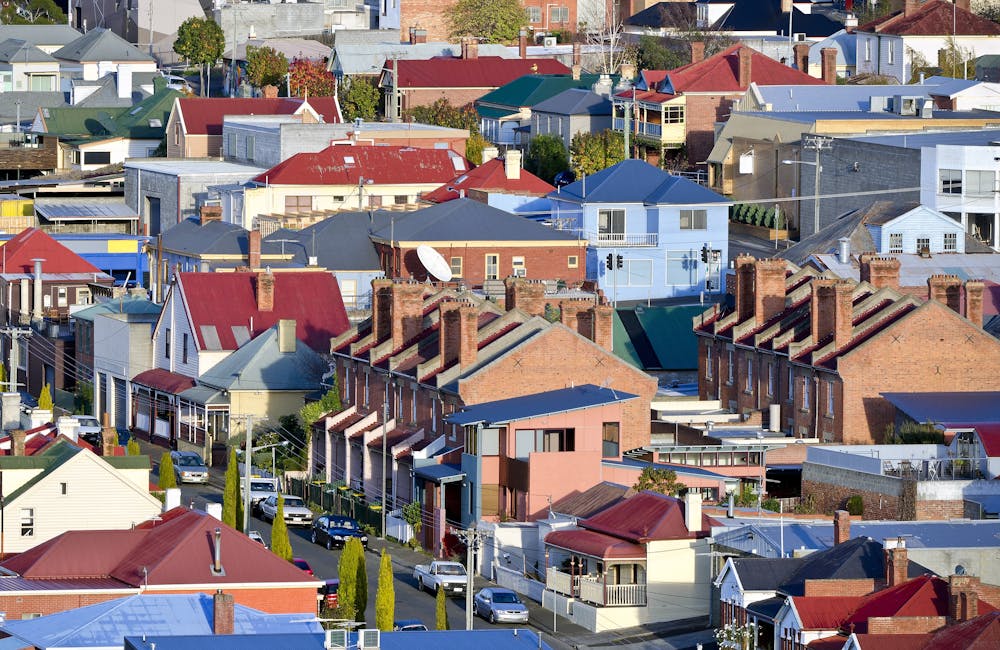 Townhouses, like these in Hobart, increase urban density more unobtrusively than high-rise apartment blocks.
David Lade/Shutterstock
Townhouses, like these in Hobart, increase urban density more unobtrusively than high-rise apartment blocks.
David Lade/Shutterstock
Read more: Becoming more urban: attitudes to medium-density living are changing in Sydney and Melbourne
Beware the siren call of suburbia
With the onset of COVID-19, it seems Australia’s new-found love of city living might be over, reverting to the suburban norm. The suburbs always offered a sense of safety, now more than ever.
Yet much of this is illusory. People still have to go shopping and, in many cases, to work, where they could be exposed to the virus. People have just as much control over their physical space in an apartment as in a house. (The exception is the lifts, but distancing measures and gloves can easily reduce risk.)
Australians may be tempted to re-embrace suburbia out of nostalgia for pre-virus safety, but they should remember what brought them to cities in the first place. As the architect Robin Boyd bemoaned way back in his 1960 critique of suburbanisation, The Australian Ugliness:
… the suburbs’ stealthy crawl like dry rot eating into the forest edge.
With 60 years of government policy propping up sprawl through freeway construction and tax breaks like negative gearing, it continues to be its own kind of infection scarring the landscape.
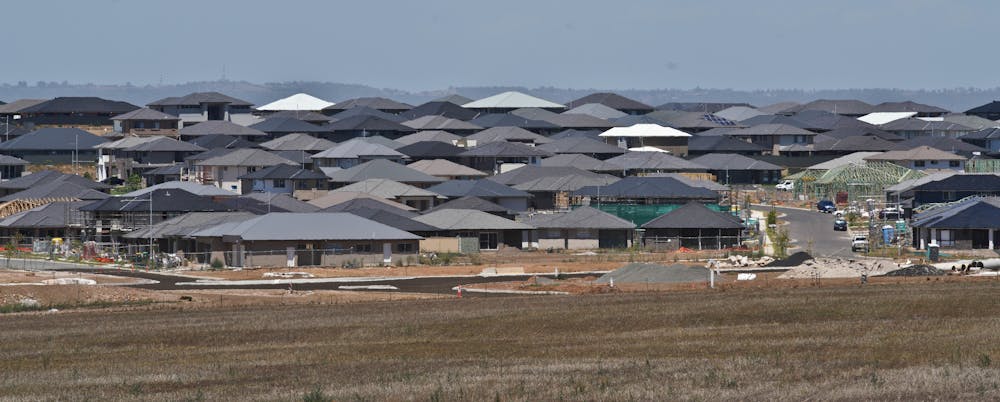 The relentless spread of low-density Australian suburbs continues to expand our cities.
Ben Rushton/AAP
The relentless spread of low-density Australian suburbs continues to expand our cities.
Ben Rushton/AAP
Read more: Move away from a car-dominated city looks radical but it's a sensible plan for a liveable future
Don’t blame public health failures on density
Despite re-animated fears of living closer together, many countries that have successfully contained the coronavirus have some of the most densely populated cities in the world. These cities include Seoul, Hong Kong and Taipei. They have done this not by separating people but by increasing testing and contact tracing.
Read more: How South Korea flattened the coronavirus curve with technology
What is needed during a pandemic is not panic but effective public health. Prosperous, well-managed city governments are often best placed to offer these services to the community.
Negative examples like the United States, where the Trump administration has devolved responsibilities to states and cities, provide even more proof of why cities have to be at the forefront of public health campaigns, whether or not they choose that role voluntarily. The same could be said of Australia, where state governments in Victoria and New South Wales took the lead on restricting gatherings as the national government dithered.
Now, more than ever, we are appreciating urban life from afar: making lists of our favourite restaurants, changing our Zoom background during “virtual happy hour” to the interior of our local pub, and yearning for social connections that have migrated online.
We should listen to our desires and use this moment to double down on urban density when the crisis subsides, by funding mass transit and providing incentives to construct apartments rather than free-standing suburban homes.
Low-density living is less sustainable, less affordable and less fun. We should all remember that, despite currently having to keep our distance from one another.
Read more: Our cities fall short on sustainability, but planning innovations offer local solutions
Authors: Max Holleran, Lecturer in Sociology, University of Melbourne, University of Melbourne
Read more https://theconversation.com/why-coronavirus-must-not-stop-australia-creating-denser-cities-137487


 Daily Bulletin


