

The Senate inquiry into family violence has closed, missing an important opportunity
- Written by: Kate Fitz-Gibbon, Director, Monash Gender and Family Violence Prevention Centre; Senior Lecturer in Criminology, Faculty of Arts, Monash University
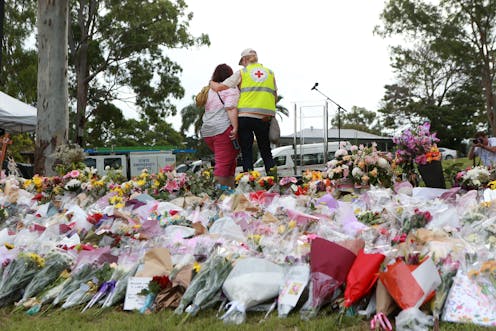
One week after the horrific killing in February of Hannah Clarke and her three children, Aaliyah, Laianah and Trey, the Australian Senate established an inquiry into domestic violence. The inquiry was to have a particular focus on violence against women and children. This reflected the national outrage and horror at the four deaths and family violence in general.
The committee was required to report by mid-August 2020.
This week that inquiry closed. It did so without conducting any consultations or taking any submissions from the specialist domestic and family violence sector. It did not hear from those with personal experience of family violence.
The inquiry’s final report, tabled this week, states:
The committee formed the view that conducting another lengthy, broad-ranging public inquiry into domestic and family violence in Australia at this time would be of limited value.
Why does the inquiry’s closure matter?
The inquiry’s inaction and closure sends a dangerous message to the Australian community that domestic violence is not a priority area for government. This is particularly concerning given the irrefutable evidence women and children are facing heightened risks of family violence during the current coronavirus pandemic.
Read more: Coronavirus and 'domestic terrorism': how to stop family violence under lockdown
The timing of the inquiry’s closure and the release of its final report is ill-conceived.
During the first three weeks of May, six women have allegedly been killed by men’s violence in Australia, equating to two women a week.
While these deaths are just the tip of the iceberg that is Australia’s domestic violence crisis, they are a firm reminder of the significant risk of family violence in Australia.
The need for this inquiry
The inquiry comes after several years of policy attention on family violence in Australia. Since 2015, there have been numerous national and state reviews in the areas of primary prevention and service responses. Key frameworks have been introduced or redeveloped to support informed responses to violence against women across Australian states and territories.
The Victorian Royal Commission into Family Violence, for example, undertook 13 months of activity. It received over 1,000 written submissions, held 44 group sessions attended by about 850 individuals, and held 25 days of public hearings. The evidence generated presents one of the most comprehensive examinations of family violence internationally. The 227 recommendations paved the way for the transformation of responses to, and prevention of, family violence.
The Queensland Special Taskforce on Domestic and Family Violence undertook six months of consultation in 2014-15. It delivered 140 recommendations to the Queensland government in its Not Now, Not Ever report. The special taskforce compiled information from 185 submissions, 367 group consultations with victim survivors, service providers and community leaders, and close to 1,000 survey submissions.
The Queensland government accepted the 140 recommendations made by the special taskforce. These are being implemented as part of a ten-year plan.
On the back of these reform activities, as well as numerous others, an argument can be made that the Senate inquiry was not needed. But once it was established, it was in the best interests of the Australian community that it took its role seriously and undertook the task set.
It is certainly questionable now whether that was achieved.
What does the inquiry’s final report say?
As it closed, the inquiry released a 50-page final report, including a three-page dissenting report from South Australian Senator Rex Patrick. The report looks minor against the 370 pages of the Queensland special taskforce’s report and even more so the Victorian royal commission’s seven-volume report.
The Senate inquiry’s final report provides a summary of the findings and recommendations of other government-led recent reviews, including the work of 1800 Respect, the national helpline for violence against women. It poses questions but makes no recommendations.
The president of the Law Council of Australia has criticised the report as a “scanty literature review”. It falls short on all accounts.
What the inquiry should have done
The inquiry has missed an important opportunity to improve Australian responses to coercive and controlling behaviours. More questions than answers remain following the killing of Hannah Clarke and her children. What has become abundantly clear, though, is the coercive control she suffered throughout her marriage to her eventual killer.
The Clarke murders could have provided the pivotal moment at which all Australian governments ensured all agencies charged with monitoring perpetrator risk and keeping women and children safe understand the risk posed by coercive control, which does not necessarily manifest in physical abuse.
Read more: How do we keep family violence perpetrators ‘in view’ during the COVID-19 lockdown?
Australia has yet to grapple in a co-ordinated and meaningful way with the pervasiveness and severity of coercive control in the lives of abused Australian women. The evidence base on coercive control is well established in Australia and internationally. But it is yet to be translated into comprehensive training of frontline practitioners outside the specialist family violence sector.
While the risk posed by non-physical abuse is beginning to feature in risk screening and assessment frameworks, we have little understanding of how this has been applied in practice. We also need to examine if coercive control is being adequately identified, assessed and managed.
An investment in this would save lives.
The inquiry closure also dismisses an opportunity to re-engage with outstanding recommendations from the special taskforce’s report and the Queensland Domestic and Family Violence Death Review and Advisory Board. A renewed commitment to realise these recommendations and understand the impact of reforms to date would have been a welcome contribution.
The Australian government must take action
The government’s focus is firmly on ensuring the health and economic recovery of Australia during the coronavirus pandemic. This is understandable. However, we must not lose sight of what Australia has identified as a national emergency and what the United Nations more recently termed the “shadow pandemic”: violence against women. Family violence remains a significant threat to the lives of Australian women and children.
We may already have the evidence and the answers. But the Senate inquiry’s closure brings the government’s commitment into question. It must commit the resources and take the actions required to secure the lives of Australian women and children.
Authors: Kate Fitz-Gibbon, Director, Monash Gender and Family Violence Prevention Centre; Senior Lecturer in Criminology, Faculty of Arts, Monash University


 Daily Bulletin


