India, Pakistan and the changing rules of engagement: here's what you need to know
- Written by: Republished with permission
More than 40 Indian security staff lost their lives in a suicide attack on February 14, 2019 in the Pulwama region of Indian-administered Kashmir. The Pakistan-based Islamist militant group Jaish-e-Mohammed (JeM) claimed responsibility for the attack.
Twelve days later, India launched air strikes against JeM training camps in Balakot, Pakistan. India claimed the strikes inflicted significant damage on infrastructure and killed militant commanders, while avoiding civilians.
India said the strikes were “pre-emptive”, based on intelligence that JeM were planning more suicide attacks in Indian territory. Pakistan denied India’s claims, both about the damage done by their airstrikes and that Pakistan was planning further attacks.
But Pakistan retaliated with an airstrike on what it termed a “non-military installation” in the Indian controlled region of Kashmir. In the ensuing skirmish with the Indian Air Force, an Indian jet was downed and a pilot captured.
These events, in the disputed territory of Kashmir, have brought international attention to the prospect of a nuclear confrontation between India and Pakistan. But why is the decades-long conflict heating up again, and why now?
Read more: Nuclear war between India and Pakistan? An expert assesses the risk
History of Kashmir
India and Pakistan have been involved in a territorial dispute over Kashmir for decades. The roots of the conflict lie in the partition of British India in 1947, which created the secular state of India and the Muslim state of Pakistan.
The idea behind the partition was for Muslim-majority regions to become a part of Pakistan. But Kashmir was complicated. Although a Muslim-majority state, it was ruled by a Hindu king.
He decided to accede to India in October 1947. This was unacceptable to Pakistan, which launched a war in 1948 to capture Kashmir by force.
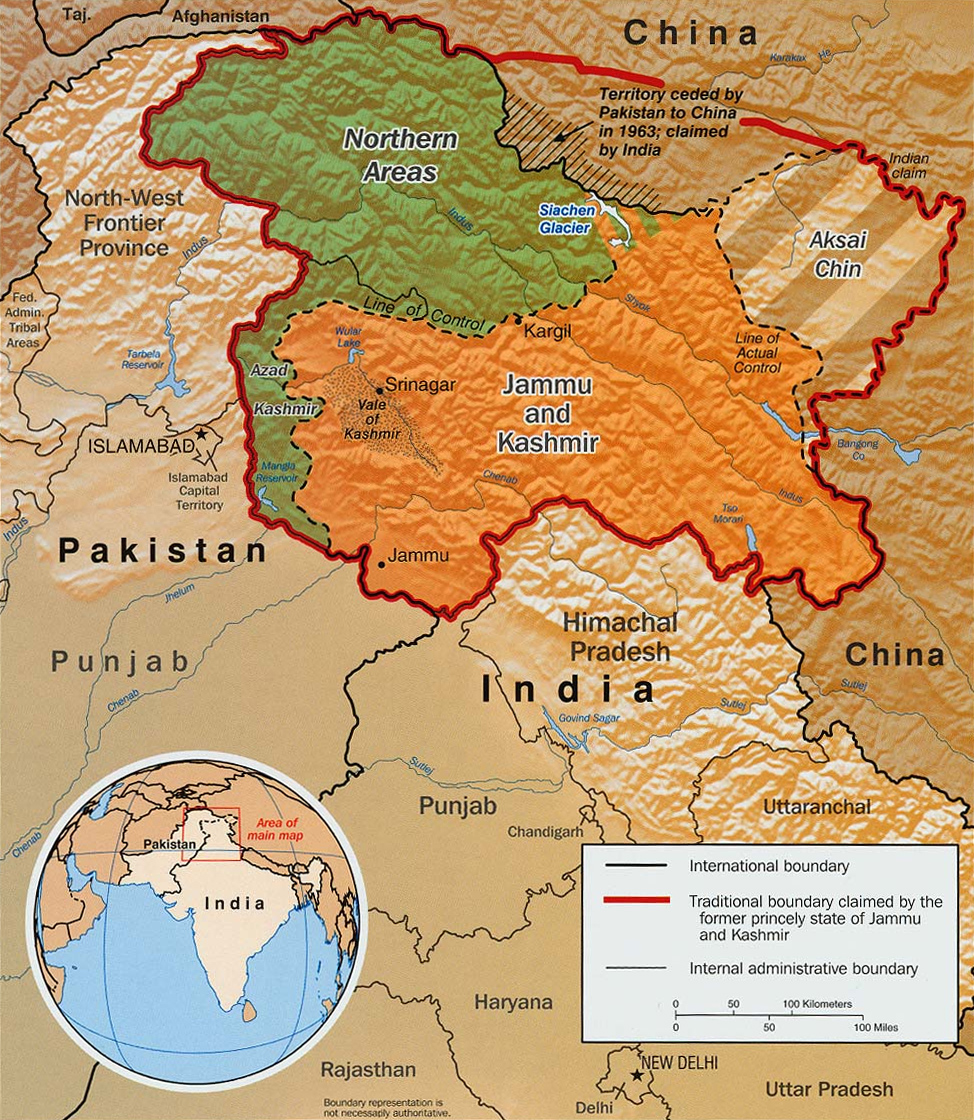
A result of the war was a UN-mediated ceasefire line. This divided Kashmir into Indian-administered “Jammu and Kashmir” (J&K) – which constituted two-thirds of the territory – and Pakistan-administered “Azad (free) Kashmir”, which was one-third of the territory.
While the 1948 ceasefire brought an end to the fighting, Kashmir’s status remained unresolved and Pakistan continued to contest the territorial boundaries. India granted J&K constitutional autonomy, while the Pakistan-administered region was a self-governing entity.
Read more: Why Kashmir is still ensnared in conflict after 70 years
View from Pakistan
Kashmir is central to Pakistan’s national identity as a Muslim state, and therefore it represents unfinished business after the 1947 partition.
Pakistan launched another war against India in 1965, which caused thousands of casualties on both sides. Hostilities between the two countries ended after a diplomatic intervention by the Soviet Union and the United States and a UN-mandated ceasefire.
The 1965 war, the 1971 Indian intervention in Pakistan’s civil war, and the subsequent creation of Bangladesh led to more changes to the territorial borders in Kashmir. The ceasefire line is now designated as the Line of Control (LoC).
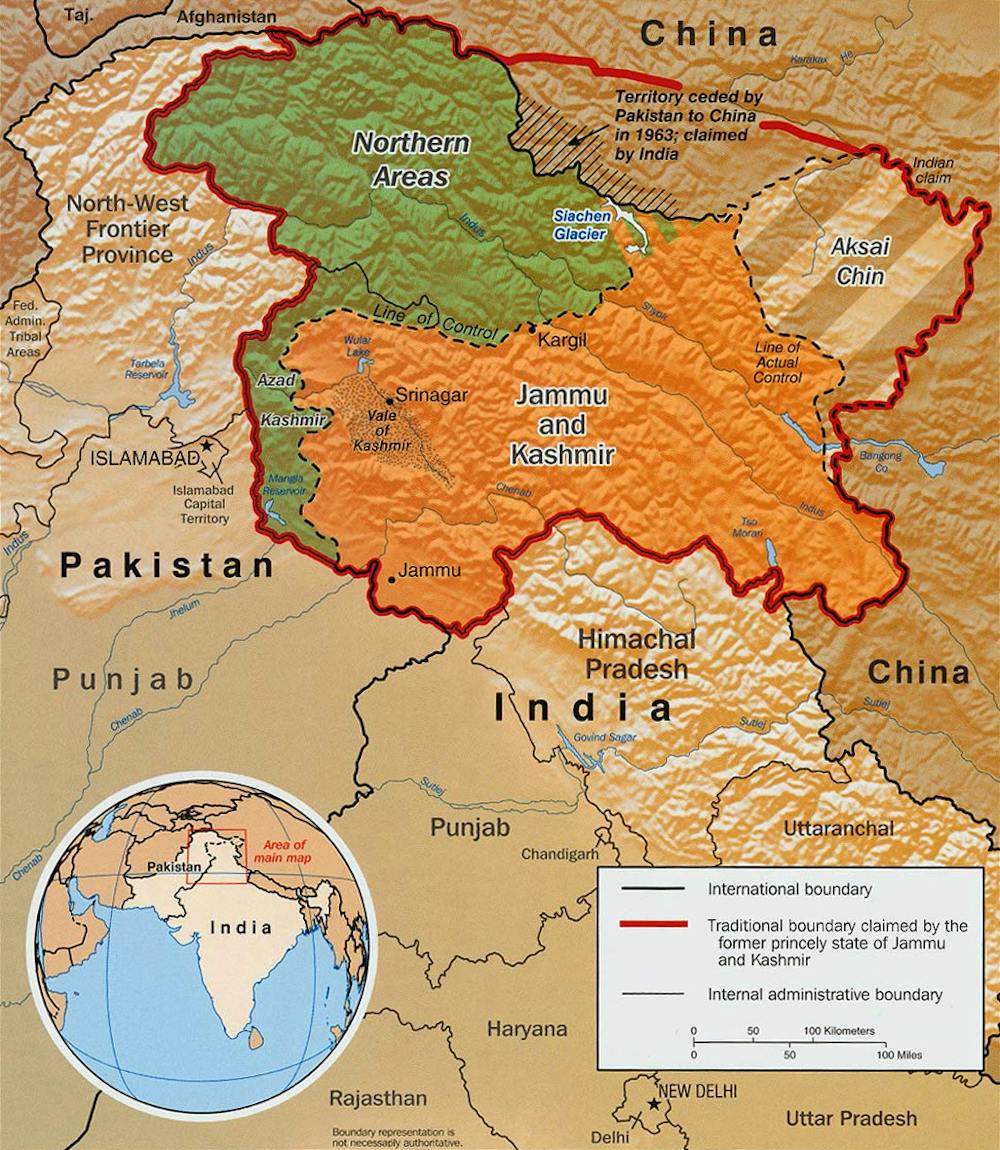 The Line of Control divides the Indian and Pakistani territories of Kashmir.
Wikimedia Commons
The Line of Control divides the Indian and Pakistani territories of Kashmir.
Wikimedia Commons
Since the 1990s, Pakistan has supported militant groups such as the Lashkar-e-Taiba (LeT) and Jaish-e-Mohammed (JeM) to attack Indian security forces and civilians.
View from India
Kashmir has also been central to India’s national narrative of unity in diversity propagated by leaders of the independence movement, Jawaharlal Nehru and Mahatma Gandhi. Indian leaders have often projected the accommodation of a Muslim majority state in the J&K region as proof of Indian secular democracy.
India’s official position considers the whole of undivided Kashmir as a part of India. And India has not consistently upheld J&K’s constitutionally-guaranteed autonomy. Political instability in the state has been compounded by interference from the Indian government. Indian armed forces in the area have often used force against civilians.
In the 1990s, this led to a mass uprising and insurgency among the Kashmiri population in India. Pakistan exploited this discontent, offering arms, training and funds to both Pakistan-based and local Kashmiri militants.
The insurgency in Indian Kashmir eased in 2003, with a ceasefire and the initiation of an India-Pakistan peace process that led to a relative period of calm.
Read more: Kashmir conflict is not just a border dispute between India and Pakistan
The peace process came to an end after the 2008 Mumbai terrorist attacks, carried out by the LeT. But India’s policy of strategic restraint and pressure on Pakistan by the United States to address militancy prevented a worsening of hostilities.
A new government came to power in India in 2014, led by the Hindu nationalist Bharatiya Janata Party. The leadership’s approach to Pakistan and Kashmir has been significantly different from the previous administration, with more emphasis on curbing dissent in J&K and using pre-emptive strikes across the LoC against militant groups in Pakistan’s territory.
Local discontent in Indian Kashmir has also led to an increase in militancy since 2014 with more Pakistani support and a combination of rising local recruitment and an influx of foreign militants.
What does this mean?
The rules of engagement between India and Pakistan are changing. India’s “pre-emptive” air strikes in February were a significant shift away from the previous policy of strategic restraint. This is the first time since the dispute emerged that India has targeted militants inside Pakistani territory.
Pakistan chose to escalate tensions further, a move that had previously been prevented by the US. Pakistani Prime Minister, Imran Khan, has reiterated his desire for dialogue with India. But ceasefire violations across the LoC and the international border have continued unabated since February 14k, with both sides reporting civilian casualties.
Diplomatic pressure from the UN and the rest of the international community has forced the Pakistani government to ban some militant groups. Yet, it continues to deny that JeM is active in Pakistan.
Meanwhile, tensions with Pakistan are playing well into Indian Prime Minister Narendra Modi’s promotion of being a “strong leader”, capable of protecting the country from its enemies. This is all part of the strategy leading up to the coming elections.
Read more: Kashmir: India and Pakistan's escalating conflict will benefit Narendra Modi ahead of elections
The escalatory responses by both governments have shown the actions of the two countries are becoming more difficult to control, particularly with the United States’ lack of involvement in defusing tensions as it disengages from the region.
Authors: Republished with permission


 Daily Bulletin