

What are the major parties promising on health this election?
- Written by: Stephen Duckett, Director, Health Program, Grattan Institute
The major parties’ manifestos for the 2019 federal election present voters with starkly contrasting health policies. These policies are shaped and constrained by the overall themes presented by the party leaders, but have some unique elements.
Liberal – money in your own hands
The Liberal campaign has two main messages: standing on the government’s claimed record as good economic managers, and offering significant tax cuts in the long-term. The tax cuts are marketed as giving people the power to make their own choices about how the money should be spent.
In health care, this spending-light approach has led to a focus on re-announcing existing policy, and spending down the Medical Research Future Fund with research announcements popping up every other day.
The Future Fund announcements have attracted good publicity for the government, even though they do not represent any increase in research funding, just a change in how the available funding is to be used.
The re-announcement approach can probably best be seen in the Liberal’s policy on youth mental health and suicide prevention, where the five-page policy concludes:
The Coalition’s plans for youth mental health and suicide prevention will not place additional costs on the Budget.
Throughout his term as health minister, Greg Hunt has highlighted new drugs being added to the Pharmaceutical Benefits Scheme in formulaic ministerial media releases such as new listings of drugs for cancer, attention deficit hyperactivity disorder, and spinal arthritis.
He has sought to contrast the Coalition’s approach – where the advice of the Pharmaceutical Benefits Advisory Committee about listing a new drug has always been followed – to that of the previous Labor government, which deferred some listings after the global financial crisis.
Read more: The Coalition's report card on health includes some passes and quite a few fails
Minister Hunt has continued this focus during the campaign. In a unique approach, he used much of his time in the National Press Club health debate last Thursday to tell stories about new Pharmaceutical Benefits Scheme listings. It is an old political aphorism that “all politics is local”. Minister Hunt was presenting the message that all politics is personal.
The personal stories and the real impact a new listing can have were quite touching, helping to humanise the minister and presenting the government as really caring for individuals in need.
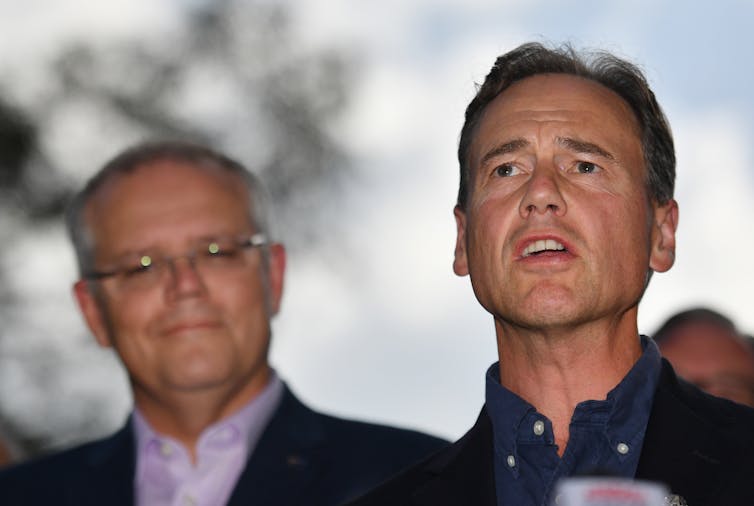 Health minister Greg Hunt has focused on telling the stories of individuals who benefited from new drug listings.
Mick Tsikas/AAP
Health minister Greg Hunt has focused on telling the stories of individuals who benefited from new drug listings.
Mick Tsikas/AAP
Of course, drugs being listed on the PBS is part of the routine business of government, and Labor has committed to listing the same drugs. The difference is in the way the government chose to inject these stories into the political debate. The message was: vote for us and we will look after your individual needs and care for you as an individual, because we are the party that supports innovation in pharmaceuticals.
This focus on individuals is very much in the Liberal tradition, harking back to the “forgotten people” meme of the Menzies era.
Read more: Budget 2019 boosts aged care and mental health, and modernises Medicare: health experts respond
The only significant spending announcement by the Liberals in this campaign was to reduce the co-payment thresholds for the Pharmaceutical Benefits Scheme from 60 to 48 scripts for pensioners and health care card holders, and from an annual cap of A$1,550.70 to A$1,470.10 for other patients.
This is a good policy which Labor has now matched.
Labor – cost of living needs to be addressed
Labor’s campaign on health is quite different from the Liberals. A key overarching theme is the cost of living. The Labor message is: wages have flat-lined, but prices keep going up, and Labor will fix that.
Labor’s policies on childcare and minimum wages fit within this general theme. So does shadow minister Catherine King’s approach to health policy.
Labor has made health a centrepiece of its campaign, with five big announcements.
The first big announcement was to promise billions of dollars to reduce out-of-pocket costs for people with cancer and to expand funding for public hospitals.
 Labor has committed to funding 50% of the hospital funding growth.
Jacob Lund/Shutterstock
Labor has committed to funding 50% of the hospital funding growth.
Jacob Lund/Shutterstock
The cancer announcement played extremely well, tapping into concerns that opposition leader Bill Shorten had picked up in his “listening tour” of dozens of town hall meetings throughout Australia since the last election.
The cancer policy includes:
- new items on the Medicare Benefits Schedule to encourage bulk billing by cancer specialists
- a guarantee that new drugs will be listed on the Pharmaceutical Benefits Scheme
- expansion of cancer outpatient services in public hospitals.
Read more: Labor's cancer package would cut the cost of care, but beware of unintended side effects
The second big-ticket health promise was to restore the share of the cost of public hospital funding growth met by the Commonwealth to 50%, up from 45% now.
The cut from 50% to 45% was announced in Prime Minister Tony Abbott’s 2014 budget. Labor has identified the impact of that cut on every public hospital in the country.
The third big promise was to reduce the out-of-pocket costs of dental care. As the 2019 Filling the Gap Grattan Institute report showed, more than 2 million Australians miss out on dental care each year because of cost.
The promised Labor scheme is for seniors only. Importantly, though, the policy commits Labor to introducing a universal dental care scheme in the long-term.
Read more: Too many Australians miss out on timely dental care – Labor's pledge is just a start
The fourth big health promise, announced during the official campaign launch on Sunday, was extra funding for public hospitals to improve emergency services.
A fifth health initiative does not involve specific spending but also addresses cost of living — a cap of 2% on private health insurance premium increases for the next two years while the Productivity Commission reviews the private health sector.
Together, these policies will not only help address cost of living pressures; they will reshape the health sector significantly.
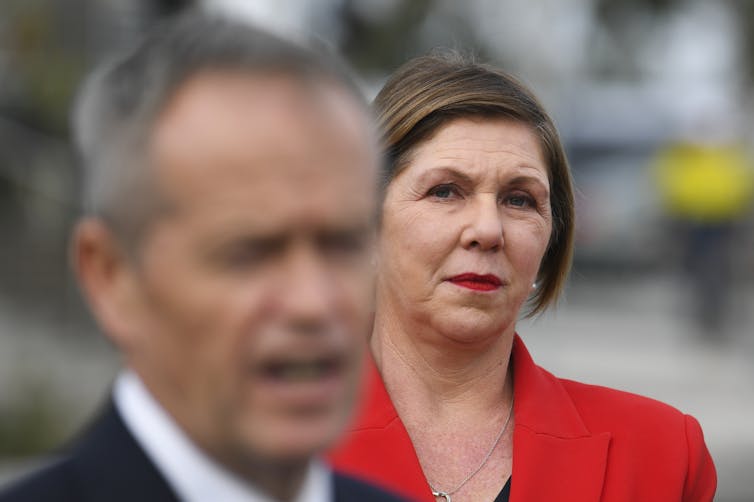 Opposition leader Bill Shorten and shadow health minister Catherine King have made health the centrepiece of Labor’s election campaign.
Lukas Coch/AAP
Opposition leader Bill Shorten and shadow health minister Catherine King have made health the centrepiece of Labor’s election campaign.
Lukas Coch/AAP
The dental announcement especially is transformative, addressing a major gap in Australia’s public funding of health care.
The new bulk-billing item for cancer care could also have a major effect.
And the Productivity Review of private health could lead to a major shake-up of that sector.
Read more: Labor's 2% cap on private health insurance premium rises won't fix affordability
The bill for Labor’s health policies is big: more than A$8 billion over the next four years.
Where’s the money coming from?
Labor’s answer is to close what it calls tax loopholes for multinationals and wealthy people; taking from the very rich to give to ordinary Australians.
Different prescriptions
Health policy was a significant feature of the 2016 election, when Labor’s so-called Mediscare campaign tapped into voter concerns.
This time Labor is front-footing health policy, fitting neatly into its overall campaign meme of addressing cost of living pressures.
The Liberal campaign is not a big spending one, and so re-announcements of previous commitments and an innovative personalisation of the benefit of new drugs are being used to present the Liberals’ health credentials.
Authors: Stephen Duckett, Director, Health Program, Grattan Institute
Read more http://theconversation.com/what-are-the-major-parties-promising-on-health-this-election-116427


 Daily Bulletin


