

Let them play! Kids need freedom from play restrictions to develop
- Written by: Brendon Hyndman, Senior Lecturer and Course Director (Postgraduate Education courses), Charles Sturt University
You may have heard of play. It’s that thing children do – the diverse range of unstructured, spontaneous activities and behaviours.
Children play in many ways, including by exploring movements, constructing with equipment, creating games, using imagination and chasing others around a playground or engaging in dance classes for toddlers.
The UN Convention on the Rights of the Child recognises play as every child’s basic right. But play is becoming extinct. Global studies, across generations, have confirmed outdoor children’s play has been declining, across all age groups, for decades.
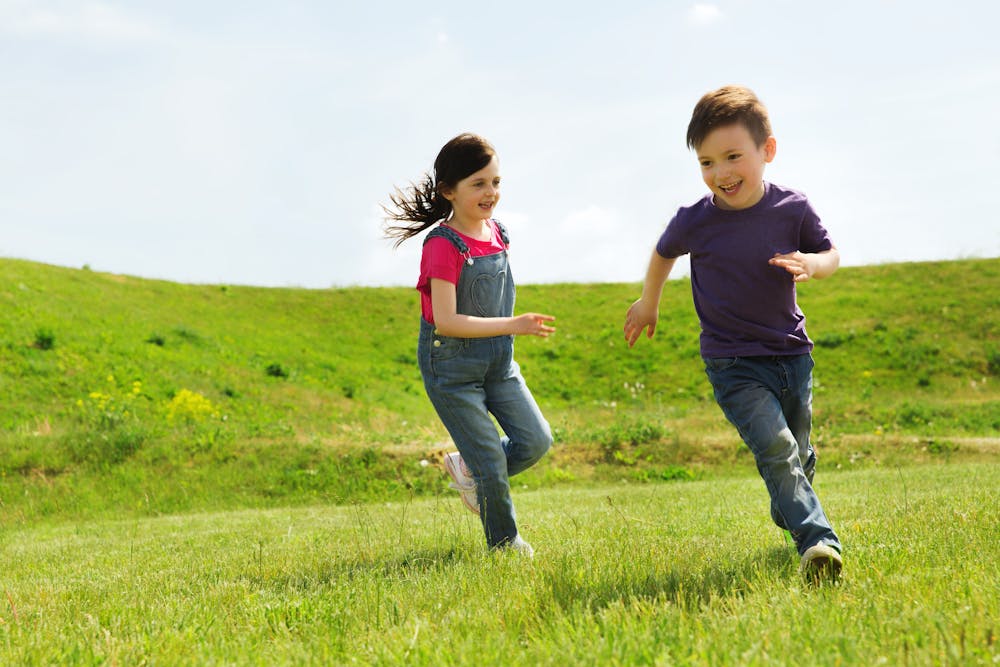 Play is every child’s basic right. from shutterstock.com
Unstructured play improves learning and social and physical development. Providing a variety of play options, improved play access and fewer restrictions can encourage children to engage in physical activity with peers in line with their imaginations.
Read more: Why suburban parks offer an antidote to helicopter parenting
Play is becoming extinct
Australian children’s active or independent travel has been declining over the past two decades, consistent with other countries.
There are many reasons researchers are describing child’s play as “endangered” and “extinct”. These include more use of electronic devices and parents wanting to protect children from strangers, traffic, pollution and bullying.
Research also points to a low awareness of the importance of play, more pressure on children to do well in class and more restrictions on play. Hectic schedules, such as parents’ jobs and children’s extra-curricular activities, may also contribute.
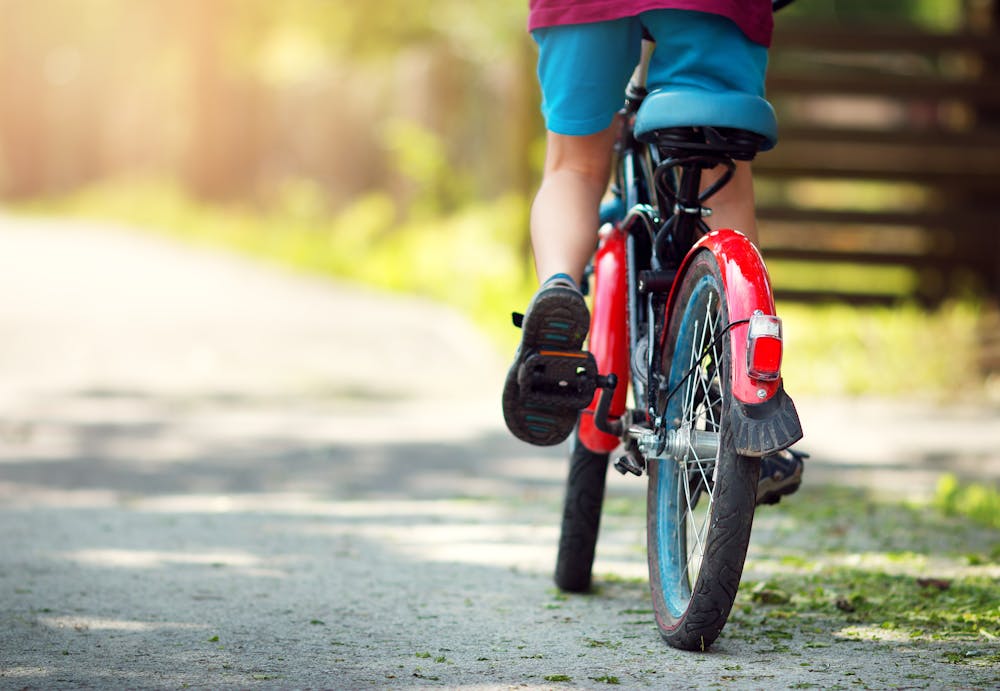 Fewer children are cycling or walking to school. from shutterstock.com
Parents have reported their children are playing outdoors far less than they used to when they, themselves, were children. Parents are noticing fewer children walking and cycling to school or actively playing after school.
Modern parents are more likely to accompany children, by driving them to school, attending their excursions, supervising them on school grounds, or keeping them indoors altogether.
More than half of the world’s population lives in cities. Urban environments are prone to decreasing play opportunities with less open, natural spaces for outdoor play.
Why this matters
Children have fewer opportunities to engage with nature. Providing more contact with nature can enhance children’s creativity, boost their mood, lower stress, improve well-being, promote physical activity and improve attention spans.
Nature play is also becoming more important as a counterbalance to children’s technological saturation. It is important for children to connect with nature early, as they are then likely to learn to appreciate nature into adulthood.
Read more: Children are our future, and the planet's. Here's how you can teach them to take care of it
In primary school, children spend around 30 hours per week at the school and have more than 4,000 recess periods. If play opportunities are becoming limited around the home and community, schools are the best place for children to meet their play requirements.
How schools can help
Research shows introducing simple objects from around the home (such as milk crates, pipes and wooden planks) into school playgrounds may influence children to work cooperatively. They discover new ideas and solve problems by constructing, observing, designing and learning from each other.
Read more: Children need to play outdoors, but we're not letting them
Providing more options for children to play outdoors ensures they are intellectually challenged and engaged to find new ways to use such spaces for discovery. If loose play equipment, such as balls, bats and blocks, isn’t available children can still use what nature provides, such as twigs, leaves, rocks, feathers, petals, mud and sand.
The diversity of outdoor objects and features offers children a variety of shapes, sizes and locations they can use to discover, explore and invent games or designs. It’s better for play objects not to be fixed as this helps with exploration, discovery and creativity.
How three UK schools have improved playgrounds through natural play materials and landscapes.Many Australian school playgrounds are fixed in the same spot. But new and replenishing play opportunities are important for children. For schools and parents to maximise children’s play, play environments should include:
- spaces for thinking, so school children can make discoveries, learn and be intellectually engaged
- spaces for doing, so school children can take moderate risks, undertake play challenges and extend themselves physically
- spaces for being, so school children can be themselves away from the confines of classroom walls or overly restrictive rules, regulations and routines
- spaces for feeling, so school children can explore and independently embrace their senses and play decisions with a diversity of colours and features.
The Australian Curriculum recognises the importance of play and outdoor learning. Ensuring children can access quality outdoor play can help align with national curriculum objectives.
Authors: Brendon Hyndman, Senior Lecturer and Course Director (Postgraduate Education courses), Charles Sturt University
Read more http://theconversation.com/let-them-play-kids-need-freedom-from-play-restrictions-to-develop-117586


 Daily Bulletin


