

Had pre-eclampsia in pregnancy? These 5 things will lower your risk of heart disease
- Written by: Clare Collins, Professor in Nutrition and Dietetics, University of Newcastle
Pre-eclampsia is a serious condition triggered by pregnancy that starts with an increase in blood pressure and the detection of protein in the woman’s urine.
While most cases are mild, if left untreated, women with pre-eclampsia can develop dangerously high blood pressure which damages vital organs – including the brain, liver and kidneys – and can cause seizures and strokes.
The unborn baby’s growth can also be affected, leading to premature birth or stillbirth.
One in 30 pregnant women in Australia are diagnosed with pre-eclampsia. Each year, two Australian women die from pre-eclampsia or other high blood pressure conditions.
Read more: Explainer: what is pre-eclampsia, and how does it affect mums and babies?
Signs and symptoms of pre-eclampsia usually resolve by about two months after the birth. However, women then have four times the risk of developing high blood pressure and twice the risk of having heart disease over their lifetime. The greatest risk is in the first ten years following pre-eclampsia.
Yet a survey of 127 Australian women with a history of pre-eclampsia found only two-thirds were aware of their increased heart disease risk, with most discovering this by their own efforts.
The good news is lifestyle changes can help lower heart disease risk. If you’ve had pre-eclampsia, here are five ways you can improve your heart health:
1. Have regular heart health check-ups
Regular heart health check ups means having your blood pressure and blood cholesterol checked by your doctor every five years, as a minimum.
Your GP can help monitor and manage factors that put you at higher risk of heart disease.
2. Develop heart healthy eating habits
Using the Heart Foundation’s Heart Healthy Eating Principles as a guide, aim to include:
five serves of vegetables and two serves of fruit per day. This can seem like a lot, but try having some at each meal: adding fruit to breakfast cereal or as a snack; including salad vegetables at lunch; and a vegetable-based stir fry or salad at dinner
wholegrain and high-fibre breads and cereals. This could include a wholegrain sandwich at lunch time and brown rice or wholemeal pasta at dinner
a variety of lean protein sources including fish and seafood, lean meat and poultry, legumes, nuts and seeds
avoid highly processed meats such as salami, ham, sausages and bacon
reduced-fat dairy, including unflavoured milk, yoghurt and cheese. This helps reduce your total kilojoule intake
heart-healthy fat sources, including nuts, seeds, avocados, olives and oils higher in monounsaturated and polyunsatured fats such as olive and canola oil for cooking
herbs and spices to flavour foods, instead of salt
choosing water as your preferred drink.
Following these recommendations will boost your intake of fibre, phytonutrients and unsaturated fats (omega-3 and omega-6). In the longer term this will help reduce high blood pressure and high blood cholesterol, which are major risk factors for heart disease.
Check your eating habits by taking the Healthy Eating Quiz and get some brief advice on how to boost your score. Or visit an accredited practising dietitian for tailored advice.
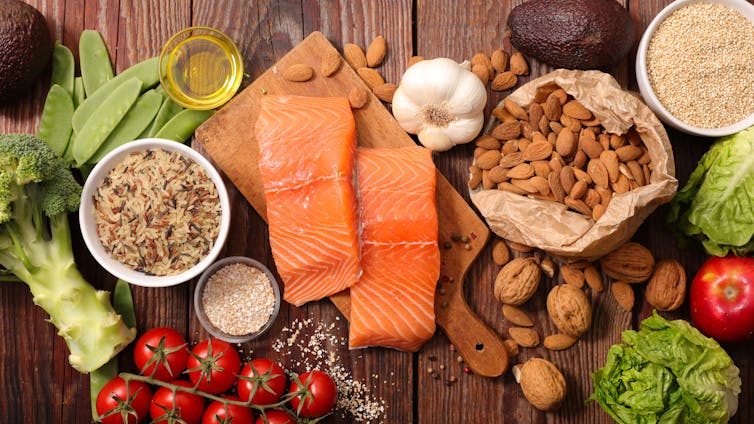 Fruits and vegetables, legumes, wholegrains and fish are among the foods good for our heart health.
From shutterstock.com
Fruits and vegetables, legumes, wholegrains and fish are among the foods good for our heart health.
From shutterstock.com
3. Be physically active
Regular physical activity helps reduce heart disease risk in women who have had pre-eclampsia. It does this by improving your blood pressure, blood cholesterol and blood glucose (sugar) levels and helping achieve a healthy weight after childbirth.
A study of 24 women with a recent history of pre-eclampsia found that a 12-week exercise intervention helped improve indicators of heart function.
Doing any physical activity is better than doing none. But if you are returning to exercise after recently giving birth, talk to your GP or an exercise physiologist or physiotherapist about how best to start.
Australia’s exercise guidelines recommend women be active for 30 to 60 minutes on most, if not all days of the week. Include moderate intensity activities (that don’t make you too breathless) or vigorous intensity activities (that make you huff and puff) or a combination of both.
It’s also recommended that women do muscle strengthening activities – such as pilates, yoga, or activities that include lifting weights or resistance training – twice a week.
Finally, when sitting, it’s important to get up and move every 30 minutes.
4. Aim for a healthy body weight
It takes time for women to return to their pre-pregnancy weight.
About half of pregnancy weight gain is commonly lost in the first six weeks postpartum, due to birth of the baby and the placenta, and the loss of blood and fluids needed to support the pregnancy.
 Pre-eclampsia affects about one in 30 pregnant women.
From shutterstock.com
Pre-eclampsia affects about one in 30 pregnant women.
From shutterstock.com
While some of the remaining weight gain is intended to support the energy cost of breastfeeding, it can be much harder to shift. A study in 152 women found 68% of women had retained around 4.5kg of their pregnancy weight gain at 12 months post-partum.
Fad diets are not recommended, especially while breastfeeding. By focusing on healthy eating and regular physical activity, it’s reasonable for women to expect to lose 0.5-1 kg per week.
Read more: Forget bouncing back, balance is the healthiest way to manage weight post-pregnancy
Your non-pregnant waist circumference is another indicator of heart health and reflects the amount of fat stored around your internal organs. The target waist circumference for women for optimal heart health is is less than 80cm. Measuring your waist circumference is an easy check you can do at home.
If appropriate, a long-term goal can be to aim for a body mass index (BMI) in the “healthy weight” range (18.5 to 24.9 kg/m2) to help reduce heart disease risk.
Just keep in mind that BMI is a population-level indicator of health risks; it’s not an accurate measure of body fat for everyone.
Read more: Health Check: what's the best diet for weight loss?
5. Quit smoking
Women who smoke one cigarette per day have double the risk of developing heart disease.
Quitting smoking can halve your risk of a heart attack.
Your GP can provide advice about quitting, or you can call Quitline on 13 QUIT (137 848) or use the Heart Foundation’s Quit Smoking Action Plan.
With education, knowledge and support, women with a history of pre-eclampsia can take control of their heart health.
Authors: Clare Collins, Professor in Nutrition and Dietetics, University of Newcastle


 Daily Bulletin


