

We asked over 2,000 Australian parents how they fared in lockdown. Here's what they said
- Written by: Subhadra Evans, Senior lecturer, Psychology, Deakin University
Parents have faced unprecedented stress during the pandemic as they care for children while juggling paid work from home.
However, very little research so far has focused on family well-being during the pandemic.
So we asked more than 2,000 parents to tell us in their own words about the pandemic’s impact on their families. We did this in April 2020, during Australia’s first lockdown. Our published study is the largest of its kind in Australia, and one of very few internationally looking into families’ experiences of the pandemic.
Families’ responses followed six key themes.
1. Boredom, depression and mental health
Parents reported a spectrum of emotions. They said they and their children were stressed, trapped and bored. New and existing mental health conditions also challenged the equilibrium in a number of families. One mother of two children said:
My mental health has taken a really bad hit and I’m struggling to support my children.
2. Families missed things that keep them healthy
Families missed sport, extracurricular activities, visits with family and friends, playgrounds, places of worship, trips to connect with the natural world, and other family supports. A mother of three children said:
We used to see family, friends, go to church and do kids’ activities like playgroup a lot […] Cutting all of that out to stay home has been hard. We miss being able to see our family and friends, to do activities outside of home that are more than a walk around the block. We’re all tense and exhausted.
3. Changing family relationships
Family relationships changed, which we called the “push-pull of intimacy”.
Strained relationships were common, including increased conflict and arguments between parents, parents and children, and between siblings.
The demands of caring for children was a source of discord, requiring more from already exhausted parents or creating tension in the family as a result of bickering and fighting as a result of being “cooped up”. One mother of two said:
We have too much time together. We are often irritable with each other. My child wants more social interaction from me that I can’t give.
For many, there was a sense that goodwill between family members was “wearing thin”. But in some families, closer bonds emerged. A father of three said:
It’s been great. Lots of quality time together.
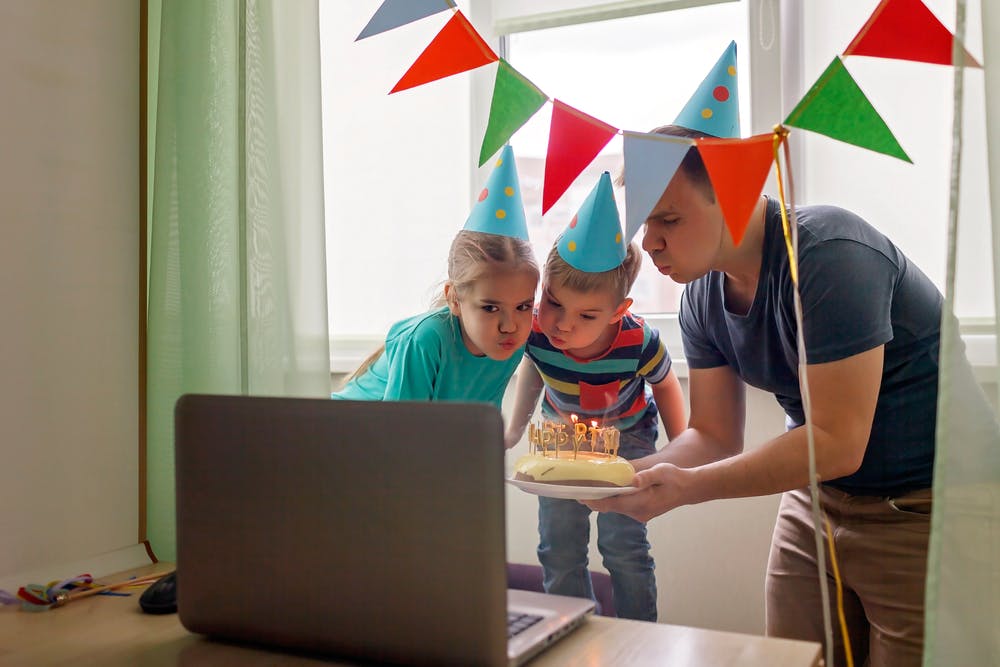 Families faced many new challenges during lockdown.
Shutterstock
Families faced many new challenges during lockdown.
Shutterstock
4. The unprecedented demands of parenthood
The loss of important structures in the community, particularly schools, reveals the extent to which such institutions play a pivotal role in raising healthy families and children, with parents alone unable to provide the proverbial village that children need. A mother of three said:
COVID-19 had turned me into a stay-at-home mum, primary teacher, speech therapist, occupational therapist, strict budgeter, with no social outlet or relief. And I’m doing this alone with my health-care worker husband being overworked.
5. The unequal burden
For people with physical or mental health conditions, lockdown restrictions were especially hard to endure. A father of one child told us about his family’s experience of being confined to a small space:
My wife is on the spectrum which makes being in a confined space with others quite difficult for her — and those around her. Confined space gives her little room for calming, so her anger events have increased.
Families living in small apartments with limited outdoor space were also highly challenged, using words such as “suffocating” and “going insane”. Families facing economic worries were also a group in need. A single mother of two children said:
Shopping alone is now a huge stress as I don’t want to expose my babies […T]he price rise in food has caused us now to only be able to buy enough food for a week so we are having less in each meal to ensure the children eat three meals a day. Most days I now miss meals so they can eat.
6. Holding on to positivity
Parents told us the pandemic provided an opportunity to cultivate “appreciation”, “tolerance and understanding” as well as “learning to cope and develop patience”.
Some parents said they were grateful for what they had and were relatively fortunate compared with others.
Parents were also grateful for access to the internet, a safe space to call home, enough food to eat, time to spend together, good health, financial stability and “having enough”. One mother of two children said:
I was quite panicked to begin with, but the kids love being with us all the time and are building relationships with each other.
Read more: It's OK to be OK: how to stop feeling 'survivor guilt' during COVID-19
Why these findings matter
Our large, diverse sample of Australian parents captured a range of experiences. Although more than 80% of our participants were mothers, we also heard fathers’ experiences.
Some of these experiences are likely to be similar to those of families around the world. However, the Australian experience may also be unique. Coming out of a tragic season of bushfires, many families may have already had stretched emotional and financial resources to handle another crisis.
The unique experiences of Victorian families, who endured a second period of longer and harsher lockdown, are worthy of follow-up research, as their resilience was likely pushed to the limit.
COVID-19 is not over, and we need to continue to ask parents and individuals how they are doing. Studies like ours, together with those comparing family experiences around the world, will also help researchers, policymakers, and service providers understand how to preserve community and family supports if we have future lockdowns or pandemics.
If this article has raised issues for you, or if you’re concerned about someone you know, call Lifeline on 13 11 14.
Authors: Subhadra Evans, Senior lecturer, Psychology, Deakin University


 Daily Bulletin


