

Humans are polluting the environment with antibiotic-resistant bacteria, and I'm finding them everywhere
- Written by: Michelle Power, Associate Professor in the Department of Biological Sciences, Macquarie University
Many of us are aware of the enormous threat of antibiotic- (or “antimicrobial”) resistant bacteria on human health. But few realise just how pervasive these superbugs are — antimicrobial-resistant bacteria have jumped from humans and are running rampant across wildlife and the environment.
My research is revealing the enormous breadth of wildlife species with superbugs in their gut bacterial communities (“microbiome”). Affected wildlife includes little penguins, sea lions, brushtailed possums, Tassie devils, flying foxes, echidnas, and a range of kangaroo and wallaby species.
Read more: Speaking with: Dr Mark Blaskovich on antibiotic-resistant bacteria and the threat of superbugs
To combat antibiotic resistance, we need to use “One Health” — an approach to public health that recognises the interconnectedness of people, animals and the environment.
And this week’s appointment of federal Environment Minister Sussan Ley to the world’s first One Health Global Leaders Group on Antimicrobial Resistance, brings me confidence we’re finally heading in the right direction.
Where we’ve found superbugs
Tackling antimicrobial resistance with One Health requires studying resistance in bacteria from people, domesticated animals, wildlife and the environment.
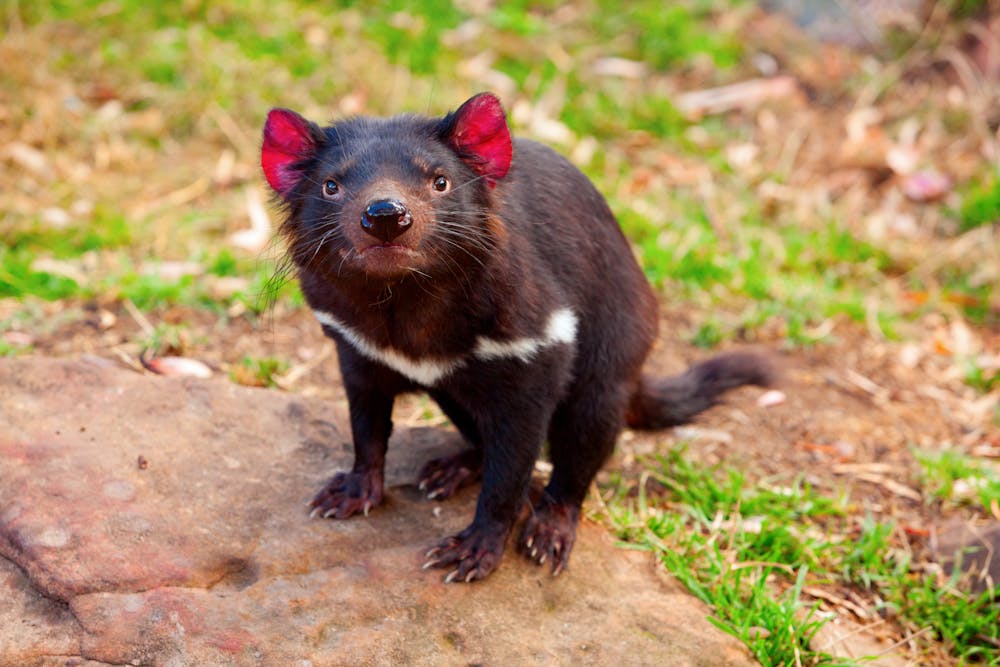 Tasmanian devils are among the species we’ve found harbouring resistant bacteria.
Shutterstock
Tasmanian devils are among the species we’ve found harbouring resistant bacteria.
Shutterstock
Humans have solely driven the emergence and spread of antimicrobial-resistant bacteria, mainly through the overuse, and often misuse, of antibiotics.
The spread of superbugs to the environment has mainly occurred through human wastewater. Medical and industrial waste, which pollute the environment with the antibiotics themselves, worsen the issue. And the ability for antibiotic-resistant genes to be shared between bacteria in the environment has propelled antimicrobial resistance even further.
Read more: How antibiotic pollution of waterways creates superbugs
Generally, wildlife closer to people in urban areas are more likely to carry antimicrobial-resistant bacteria, because we share our homes, food waste and water with them.
For example, our recent research showed 48% of 664 brushtail possums around Sydney and Melbourne tested positive for antibiotic-resistant genes.
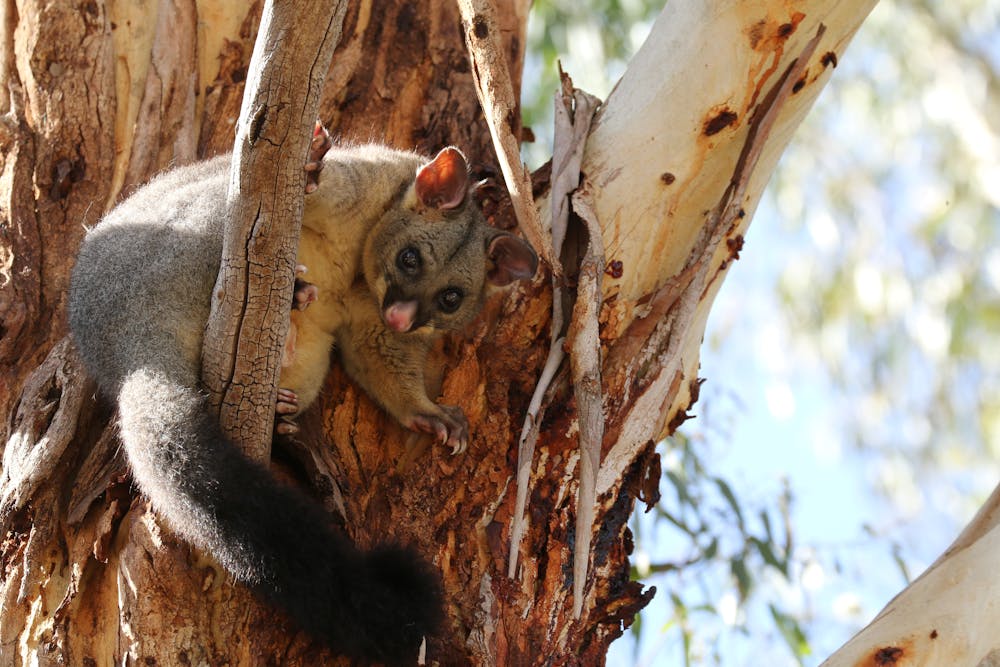 Hundreds of possums around Sydney and Melbourne have resistant bacteria.
Shutterstock
Hundreds of possums around Sydney and Melbourne have resistant bacteria.
Shutterstock
Whether animals are in captivity or the wild also plays a role in their levels of antimicrobial resistance.
For example, we found only 5.3% of grey-headed flying-foxes in the wild were carrying resistance traits. This jumps to 41% when flying-foxes are in wildlife care or captivity.
Likewise, less than 2% of wild Australian sea lions we tested had antibiotic-resistant bacteria, compared to more than 40% of those in captivity. We’ve found similar trends between captive and wild little penguins, too.
And more than 40% of brush-tailed rock wallabies in a captive breeding program were carrying antibiotic resistance genes compared to none from the wild.
So why is this a problem?
An animal with antibiotic-resistant bacteria may be harder to treat with antibiotics if it’s injured or sick and ends up in care. But generally, we’re yet to understand their full impact – though we can speculate.
 We’ve found new types of resistant genes in flying-fox communities.
Shutterstock
We’ve found new types of resistant genes in flying-fox communities.
Shutterstock
For wildlife, resistant bacteria are essentially “weeds” in their microbiomes. These microbial weeds may disrupt the microbiomes, impairing immunity or increasing the risk of infection by other agents.
Another problem relates to how antimicrobial-resistant bacteria can spread their resistant genes to other bacteria. Sharing genes between bacteria is a major driver for new resistant bacterial strains.
We’ve been finding more types of resistant genes in an animal’s microbiome than we do in comparison to commonly studied bacteria, such as Escherichia coli. This means some wildlife bacteria may have acquired resistance genes, but we don’t know which.
Many of the wildlife species we’ve examined also carry human-associated bacterial strains — strains known to cause, for instance, diarrhoeal disease in humans. In wildlife, these bacteria could potentially acquire novel resistance genes making them harder to treat if they spread back to people.
This is something we found in grey-headed flying-fox microbiomes, which had new combinations of resistant genes. These, we concluded, originated from the outside environment.
How do we mitigate this threat?
Antimicrobial stewardship — using the best antibiotic when a bacterial infection is diagnosed, and using it appropriately — is a big part of tackling this global health issue.
 The World Health Organisation appointed the Environment Minister Sussan Ley to a global leaders group to fight antimicrobial resistance.
AAP Image/Mick Tsikas
The World Health Organisation appointed the Environment Minister Sussan Ley to a global leaders group to fight antimicrobial resistance.
AAP Image/Mick Tsikas
This is what’s outlined in Australia’s National Antimicrobial Resistance Strategy: 2020 & Beyond, which the federal government released in March this year.
The 2020 strategy builds on a previous strategy by better incorporating the environment, in what should be a true “One Health” approach. The World Health Organisation’s appointment of Ley supports this.
Antimicrobial stewardship is equally important for those in veterinary fields as well as medical doctors. As Australia leads the world in wildlife rehabilitation, antimicrobial stewardship should be a major part of wildlife care.
For the rest of us, preventing our superbugs from spilling over to wildlife also starts with taking antibiotics appropriately, and recognising antibiotics work only for bacterial infections. It’s also worth noting you should find a toilet if you’re out in the bush (and not “go naturally”), and not leave your food scraps behind for wild animals to find.
The 2020 strategy recognises the need for better communication to strengthen stewardship and awareness. This should include education on the issues of antimicrobial resistance, what it means for wildlife health, and how to mitigate it.
Citizens tackle antibiotic resistance in the wild.This is something my colleagues and I are tackling through our citizen science project, Scoop a Poop, where we work with school children, community groups and wildlife carers who collect possum poo around the country to help us better understand antimicrobial resistance in the wild.
The power of working with citizens to better the health of our environment cannot be overstated.
Read more: Explainer: what are superbugs and how can we control them?
Authors: Michelle Power, Associate Professor in the Department of Biological Sciences, Macquarie University


 Daily Bulletin


