

Victoria is boosting disability support in schools by A$1.6 billion. Here are 4 ways to make the most of it
- Written by: David Armstrong, Senior Lecturer in Special and Inclusive Education, RMIT University
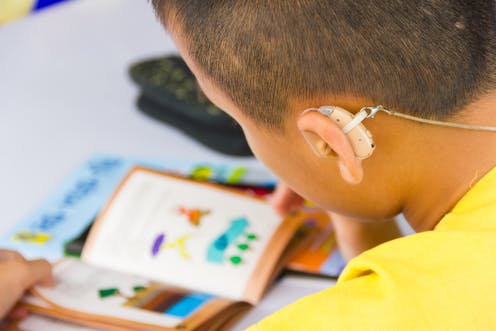
The Victorian government has announced an investment of nearly A$1.6 billion for public schools to ensure students with disability are supported in the classroom.
The money will double the number of students with disability receiving extra support to 55,000.
Further detail on the funding is imminent. But this seems to be news of a major upskilling (up to 1,730 jobs across the state by 2025) of the Victorian school workforce and a move towards a higher quality, inclusive school system.
But making Victorian schools truly inclusive involves changing the prevailing culture. A 2019 report highlighted multiple barriers to ensuring students with disability were included in in Australian schools.
They included widespread discrimination towards children with disability, and under-trained teachers.
Over the past decade, a rising number of children with disability in Australia have attended special schools — the opposite of inclusive schooling.
When the Victorian government announced the new funding, it said:
A world-leading pilot in more than 100 schools will now be rolled out across the state, to identify and respond to the needs of students with disability.
We don’t know anything else yet about this pilot but the fact this basic knowledge has to be gained by a new initiative shows how much change is needed in schools to even approach inclusion.
Recently I gave evidence at the Disability Royal Commission and heard sadly familiar stories from families and students. Young people with a disability described how a “one size fits all” education failed to meet their needs.
The stories revealed that flexibility, empathy and compassion from teachers would have often made a huge difference. Vulnerable kids often become angry, demotivated and disengaged in classrooms with standardised teaching. This is because their needs are not being met or because often they simply can’t attain the same academic level as kids who don’t have a disability.
Worse still, when kids have misbehaved they are often “managed” or “disciplined”, or suspended and expelled. This pushes students with disabilities out of mainstream schools, into limbo or special provision — ultimately reducing their opportunities later in life.
So, how can Victorian schools use this investment?
1. Help teachers know how to best help students with disability
This is a golden opportunity for a socially just and quality education system in Victoria.
But schools and the state government should acknowledge the scale of challenges involved. They should reflect this in their planning, underpinned by funded research.
One challenge, for instance, is a chronic lack of knowledge among many teachers in regular schools about how to help students with disabilities learn, make friends and be part of the life of the school. This includes taking part in school performances and excursions.
Read more: Students with disabilities need inclusive buildings. We can learn from what's already working
Often, even if students are physically present, teachers don’t know how to adapt the curriculum (what subject content needs to be taught) so students with disability can make progress in mathematics or literacy for example.
Funded, evidence-based and accredited professional learning for Victorian teachers, accompanied by high quality applied examples, can help address this gap in knowledge. This will also provide professionals with confidence that inclusion can succeed.
2. Address the systemic dysfunction that blocks inclusion
Some education policies work against inclusion. For instance, policies like NAPLAN act as disincentives for schools to enrol students with disabilities if they believe they won’t attain strong test results. Such beliefs can prompt illegal gate-keeping practices such as those highlighted at the recent Disability Royal Commission.
Applied research, which asks professionals what’s preventing inclusion and what can be done to address cultural or systemic barriers, would help make smart decisions on spending this funding.
International studies reveal many educational initiatives falter over time. Schools quietly drop newly learned practices and return to custom, however ineffective or unjust. For example, Positive Behaviour Interventions and Support is an effective program tens of thousands of US schools have used to help students with social, emotional and behaviour issues. Unfortunately the program seems to be faltering in some US schools. This is because schools have returned to their punitive approach (three strikes, you’re out) to problem behaviours.
Studies have identified steps to avoid this problem. The first step is having a thorough, research-based assessment around the needs and resources necessary. It’s not clear if the Victorian government has completed this step.
3. Target the funding
Targeted initiatives can make the most of Victoria’s investment. A funded travelling behaviour roadshow, staffed by behaviour specialists, could provide mobile advice statewide for parents and schools on how to improve young people’s behaviour — avoiding the use of suspension or expulsion from school.
Expert advice and support could be provided on-site to help teachers use effective and evidence-based strategies.
Research has suggested promising new approaches to behaviour, which are already successfully used in health and psychology but need to be adapted to use in schools. Cognitive behavioural therapy is one example.
Read more: NSW wants to change rules on suspending and expelling students. How does it compare to other states?
Such approaches should be developed with this funding, showcasing Victoria as a world-leading knowledge producer in furthering educational inclusion.
Read more: Students with disabilities need inclusive buildings. We can learn from what's already working
A direct investment approach like this avoids paying expensive private consultants and commercial organisations out of public funding to implement change. This is a common problem affecting public educational initiatives.
4. Ensure these changes are sustained
To ensure the education system sustains these changes, our future teachers need to be included. The state government should partner with organisations offering teacher education in Victoria.
Students who may have previously been ineligible for targeted support — such as those with autism, dyslexia or complex behaviours — are included in the funding announcement.
Successful initiatives in England have targeted dyslexia and funded accredited postgraduate programs for teachers providing the advanced knowledge required to identify and support students with dyslexia. Teachers gained specialist teacher status.
Universities offering teacher education programs and the state government can work together to ensure the content of teacher education programs is tweaked to reflect this priority and fully prepares the school workforce.
Authors: David Armstrong, Senior Lecturer in Special and Inclusive Education, RMIT University


 Daily Bulletin


