

A vaccine will be a game-changer for international travel. But it's not everything
- Written by: Adrian Esterman, Professor of Biostatistics and Epidemiology, University of South Australia
The United Kingdom yesterday became the first country to approve the Pfizer/BioNTech COVID-19 vaccine for widespread use. Following a review by the country’s drug regulator, the UK government announced it will begin rolling out the vaccine next week.
Other countries are likely to follow soon, authorising the Pfizer/BioNTech vaccine and possibly other leading candidates too. Australia’s Therapeutic Goods Administration says it’s continuing to assess the Pfizer/BioNTech data.
The world has been eagerly awaiting a COVID vaccine, touted since early in the pandemic as our best hope of returning to “normal”. A big part of this is the resumption of international travel.
Certainly, an effective vaccine brings this prospect much closer. But a vaccine alone won’t ensure a safe return to international travel. There are several other things Australia and other countries will need to consider.
International travel in the age of a COVID vaccine
When people are vaccinated before boarding a flight, we can have confidence there will be significantly less COVID risk associated with international travel. However, the data we have at the moment doesn’t tell us everything we need to know.
Let’s take the Pfizer/BioNTech vaccine as an example. They have reported the efficacy of their mRNA vaccine to be 95% in preventing symptomatic COVID-19, having tested it on around half of the 43,000 participants in their phase 3 trial (the other half received a placebo).
The vaccine appears to be safe with only mild side-effects in some participants. And notably, the study included people aged 65 and over and those with health conditions that put them at higher risk of more severe disease.
However, the study hasn’t officially reported the efficacy of the vaccine against becoming infected, as opposed to displaying symptoms. While it’s encouraging to know a vaccine stops people getting sick, this point is important because if people can still become infected with SARS-CoV-2 (the virus that causes COVID-19), they may still be able to spread it.
Read more: Pfizer vaccine has just been approved: here's what the next few months will look like
Ugur Şahin, BioNTech’s cofounder and chief executive, believes the vaccine could reduce transmission by 50%. This puts something of a dampener on vaccination being the key to the safe resumption of international travel.
At this stage, we also don’t know how long immunity will last for those vaccinated with the Pfizer/BioNTech vaccine. But as the trial will continue for several more months, some of this data should become available in 2021.
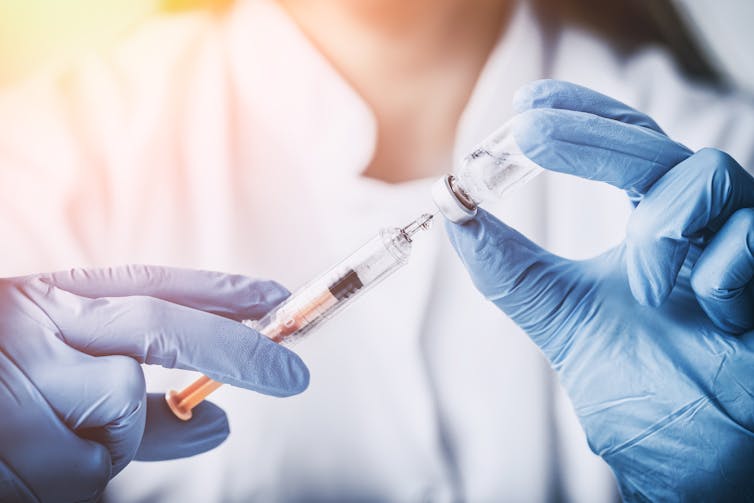 Over time, vaccine trials will reveal more data.
Shutterstock
Over time, vaccine trials will reveal more data.
Shutterstock
Not everyone will be vaccinated straight away, so we’ll still need quarantine
It’s going to take months — or, more realistically, years — to vaccinate everybody who wants to be vaccinated. It won’t be feasible to expect every single person travelling internationally to be vaccinated.
There are several countries that appear never to have had community transmission. As of November, these included many Pacific island nations such as Tonga, Kiribati, Micronesia, Palau, Samoa and Tuvalu.
Then there are countries that have COVID-19 under control with little, if any, community transmission. Examples include Australia, New Zealand, Vietnam and Singapore.
People arriving in Australia from these countries pose very little risk and should not need to quarantine, whether vaccinated or not. For other countries, it would very much depend on their epidemic situation at the time.
Some organisations have already developed COVID risk ratings for different countries or jurisdictions. For example, the European Centre for Disease Prevention and Control (ECDC) rates the COVID situation in each European country as “stable”, “of concern” or “of serious concern”.
These risk assessments are based on factors including each country’s 14-day COVID case notification rate, the proportion of tests coming back positive, and the rate of deaths.
Clearly, people from high-risk areas or countries will still need to quarantine on arrival, unless they have been vaccinated. It’s likely Australia will develop a similar rating system to the ECDC to streamline these decisions.
Testing
Many countries now require a negative COVID test certificate before entry. For example, Spain requires a negative PCR test no more than 72 hours before travelling.
Similarly, some airlines, such as Emirates and Etihad, are mandating COVID testing before travel.
It would also make sense to have rapid antigen testing available at airport arrivals or border crossings. Although not as accurate as PCR tests, these tests would provide a second check that a traveller hasn’t incubated COVID-19 on the way to their destination.
Even with vaccination, testing will still be important, as vaccination doesn’t guarantee a passenger is not infected, or infectious.
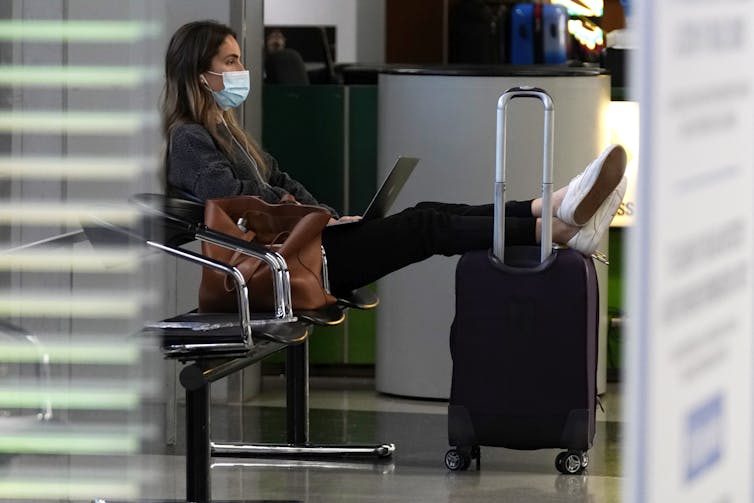 COVID-19 has necessitated many changes to the way we travel.
Nam Y. Huh/AP
COVID-19 has necessitated many changes to the way we travel.
Nam Y. Huh/AP
Certificates and passports
Once COVID-19 vaccines become accessible, countries and airlines may well require visitors to produce a certificate of vaccination.
Qantas chief executive Alan Joyce has suggested all Qantas international passengers from next year would be required to have a COVID vaccination certificate.
There are also many groups around the world working on immunity passports and technologies to track travellers’ virus status.
For example, the International Air Transport Association is developing a digital health pass which will carry testing and vaccination status.
It’s likely international travel will be allowed globally in the second half of next year, once vaccination is well underway.
It will be wonderful to be able to travel internationally again, but wherever we go — even with a vaccine — it will be some time before travel looks like it did before the pandemic.
Authors: Adrian Esterman, Professor of Biostatistics and Epidemiology, University of South Australia


 Daily Bulletin


