

Early childhood educators are leaving in droves. Here are 3 ways to keep them, and attract more
- Written by: Jen Jackson, Program Director, Centre for Policy Development, and Associate Professor of Education, Mitchell Institute, Victoria University
Childcare centres across Australia are suffering staff shortages, which have been exacerbated by the COVID crisis.
Many childcare workers across Australia left when parents started pulling their children out of childcare due to the pandemic, especially casuals not eligible for JobKeeper. And when the federal government introduced its temporary free childcare package, centres struggled to get the staff back.
The situation is not new. In a 2016 survey of 1,200 early childhood educators and teachers in childcare centres and preschools across Australia, one in five said they planned to leave their job within a year. The reasons included low pay, feeling undervalued and increasing time spent on paperwork.
And a survey conducted in 2019 showed up to two in three early childhood educators in Victoria were considering leaving their role. High staff turnover — of up to 30% — is an enduring problem in early childhood services.
Read more: COVID-19: what closing schools and childcare centres would mean for parents and casual staff
Whenever an educator leaves the sector, it’s a loss for children that affects their learning and well-being. Staff turnover also means more public money needs to be spent training new workers.
Based on unpublished Mitchell Institute analysis of ABS census data, just over half the educators who have gained early childhood certificates since 2012 (when qualification requirements were introduced) are still working in relevant jobs. In comparison, almost all of those who completed vocational certificates in building are still in relevant roles.
To address workforce issues in the sector, Australian governments are developing a National Early Childhood Workforce Strategy, due for release in the latter half of 2021. It’s more important than ever before to get this right.
A report from the Mitchell Institute shows three policy moves needed to retain and attract skilled educators to the sector.
1. Early childhood careers need to be valued
Teaching and caring for young children is complex, and requires people with the right training and qualifications. Qualified educators provide better-quality education and care, which benefits children’s learning and development, as numerous international studies have shown.
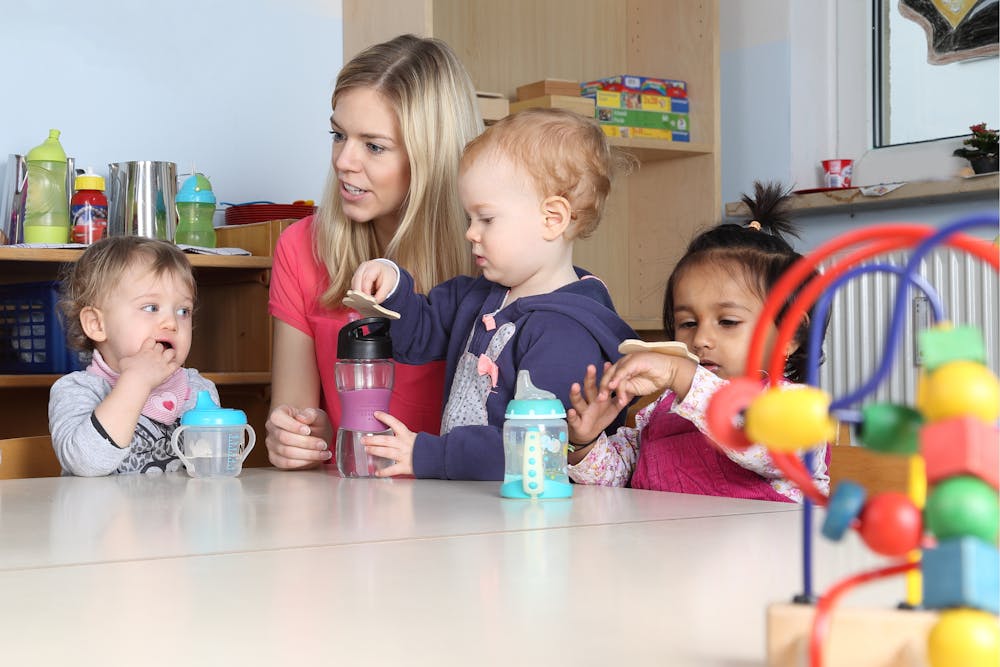 Most early childhood educators are paid below the Australian average gross weekly earnings.
Shutterstock
Most early childhood educators are paid below the Australian average gross weekly earnings.
Shutterstock
Yet, most early childhood educators are paid well below the Australian average gross weekly earnings. Educators with vocational certificates are the lowest paid, and earn less for doing skilled work with children than a trainee working in a call centre.
These educators are vital to the sector’s survival: they make up almost 40% of the early childhood workforce, working alongside colleagues with diplomas and degrees.
Recent gains have been made in some states. Victoria has introduced a pay increase of up to 31% for qualified preschool teachers. But this only covers a small proportion of the around 50,000 educators in the state.
More people using early childhood education and care services, and governments lifting the bar for quality, means Australia will still need to recruit 6,800 degree-qualified early childhood teachers to 2024, as well as over 30,000 more educators with vocational diplomas and certificates. This will only happen if all educators are valued, and have opportunities for rewarding careers.
2. Educator well-being needs to matter too
COVID-19 has been tough on early childhood educators’ well-being. While school teachers had it tough with the transition to remote learning, early childhood educators also had to contend with rapid changes to policy, funding and work arrangements, as governments worked to keep the sector afloat.
The well-being of educators matters to children’s learning. Recent Australian research shows that educators with greater well-being can better respond to children in playful, educational ways that support their learning and development. Educators need support for their physical health and well-being, especially given the challenges of maintaining COVID-safe environments.
Early childhood educators have experienced many stressors during the pandemic. Many have worked hard to adapt their services to the changing needs of children and families, whose lives were turned upside down. Others have experienced financial insecurity themselves, or uncertainty about their future employment.
Under any circumstances, educators need support to cope with the emotional labour of working with young children, and putting their heart into their job.
 Skilled early childhood educators make a demonstrable difference to children’s learning.
Shutterstock
Skilled early childhood educators make a demonstrable difference to children’s learning.
Shutterstock
Research shows one way to boost retention and well-being for early childhood educators is to have meaningful career paths and supportive workplace cultures. While 80% of educators feel supported by their managers, low wages and limited access to professional development and promotion constrain educators’ careers.
Expert educators need more opportunities to become mentors and leaders, to motivate them to stay in the sector and inspire new educators to learn.
3. Streamline funding responsibility
The reason it’s so hard to get educators’ pay and conditions right is that the money comes from different sources.
Governments pay around half the total cost of early childhood services, mainly through the childcare subsidy from the Australian government that helps families pay fees. State governments also contribute to preschool. Families pay the remainder of the fees, with many paying more for early childhood services than they would for private schools.
Employers ultimately make decisions about how much to pay their staff, within various industrial agreements.
This means educators’ wages and conditions are everybody’s problem and nobody’s problem. Former Education Minister Dan Tehan has said paying educators more is up to employers. Employers and unions argue governments need to contribute more funding to the sector before educators’ wages can increase.
Families are already stretched, and passing costs on to them seems unthinkable in the current economic climate.
Read more: Increasing the childcare subsidy will help struggling families — and the economy
Similar problems arise in determining who pays for improvements to educators’ conditions, such as making sure they have enough time for professional development (something few currently receive).
Government funding to early childhood services needs to be high enough to support fair wages, and delivered in a way that ensures it is spent well. With different funding models in each state, and thousands of employers, it won’t be easy to design a system that works for everyone. But governments have a responsibility to Australian families to ensure all educators are paid enough to stay.
Can Australia get this right in 2021? Maybe – in 2020, governments, employers and unions worked together on some of the most critical workforce challenges Australia has faced. Perhaps the education and care of our children will be important enough to bring them together again.
Authors: Jen Jackson, Program Director, Centre for Policy Development, and Associate Professor of Education, Mitchell Institute, Victoria University


 Daily Bulletin


