

Freedom camping needs new regulations and foreign tourists aren’t the only villains
- Written by: Michael Lueck, Professor of Tourism, Auckland University of Technology
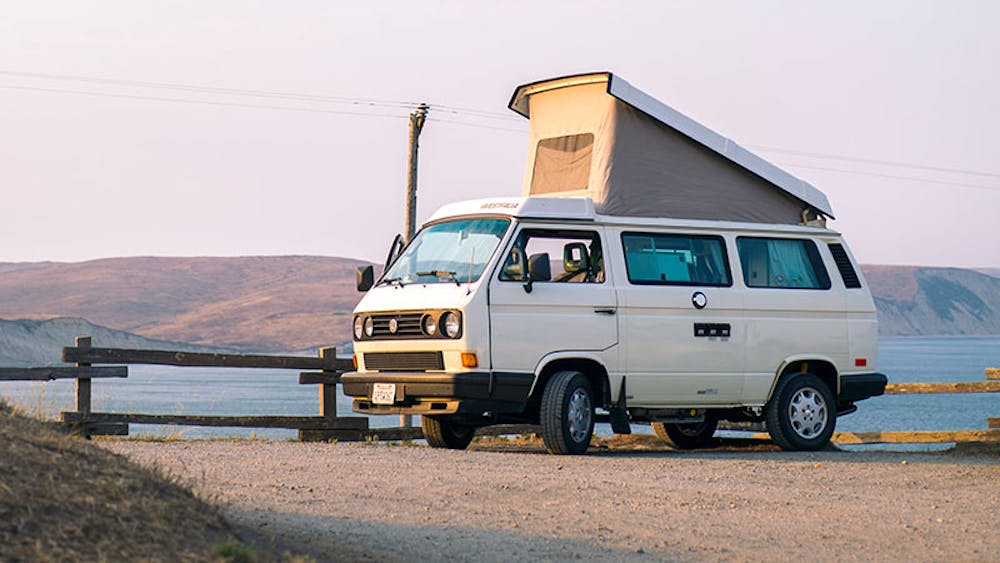
Freedom camping has a long tradition in New Zealand. Using your own vehicle as accommodation and parking in public spaces is seen as something of a birth right.
But when international tourists cottoned on to this cheap and cheerful way to see the country, things began to change. Foreign freedom camper numbers grew from 10,000 in the early 2000s to an astonishing 123,000 by 2018.
This massive growth inevitably led to resentment in local communities. Crowding at car parks and beach fronts, road congestion, littering and campers using the natural environment as toilets became a major concern.
Perhaps not surprisingly, the latest tourism report this month from the Parliamentary Commissioner for the Environment devotes one of its four main recommendations to better regulation of freedom camping in Aotearoa New Zealand.
The report, Not 100% - but four steps closer to sustainable tourism, argues for using the disruption caused by COVID-19 to reset the tourism industry as sustainable and internationally competitive in a climate-conscious world. As such, the old freedom camping model was arguably overdue for reform.
Freedom ‘freeloaders’
This is not the first time it has been a regulatory target. Perception of freedom campers as freeloaders came to head when New Zealand hosted the Rugby World Cup in 2011.
Read more: NZ tourism can use the disruption of COVID-19 to drive sustainable change — and be more competitive
The Freedom Camping Act 2011 (FCA) set out clearer conditions and definitions. It referred to camping in a tent or vehicle in a public space 200m off a road, coastline or Great Walk hiking track.
Local governments are empowered to pass bylaws that regulate freedom camping more tightly. In 2019, the central government announced investments of NZ$8 million in public amenities and education as well technology, such as the Ambassador App (for Android and Apple) to help monitor freedom campers.
Based on the controversy around freedom camping, the Parliamentary Commissioner for the Environment made the following recommendations:
vehicles to have a permanently plumbed toilet in order to be certified as self-contained, and vehicles should also have separate holding tanks for grey and black water
the government reintroduce national oversight of the certification process […] and a national register of self-contained vehicles
the government ensures freedom camping penalties represent a serious deterrent to undesirable camping behaviour.
Tourism rethink
Since the early stages of the pandemic, many voices have been asking to “reset the tourism button” in Aotearoa New Zealand and redevelop tourism guided by sustainability principles. We believe the current absence of international tourists offers the perfect opportunity.
Our research with participants from central and regional governments, regional tourism organisations, tourism businesses, community groups and individual citizens revealed mixed feelings about freedom camping, and how it should be regarded and managed.
Many were sceptical about putting the blame on international tourists for disrespectful behaviour, and argued many New Zealanders are stuck in the past. As one said:
My theory is, that most New Zealanders have had the pleasure, thanks to some friendly farmers, in the past to being able to camp wherever they like and they do believe that is a God-given right. Even though no longer they have a little car and a little tent, but they all have these larger motorhomes.
When it comes to the rubbish left behind in car parks, a story shared from South Island shows the misconceptions about (international) freedom campers:
Some locals got together and set up a camera and they watched it back and they noticed that pretty much every person that left some rubbish wasn’t the freedom campers, it was local teenagers […] the freedom campers, by and large, picked up their rubbish and took it with them.
In terms of congestion, some participants noted that freedom campers clog up small roads in communities, and should be kept out of town centres (such as in Akaroa), and from beach fronts (such as in Napier).
A car park at the town entrance would be a good solution to alleviate such problems.
 Freedom campers are not always to blame for problems.
Flickr/DANNY DE HEK, CC BY-NC-ND
Freedom campers are not always to blame for problems.
Flickr/DANNY DE HEK, CC BY-NC-ND
Reform needed
We agree with the Parliamentary Commissioner for the Environment that the self-contained certification of vehicles needs to be strengthened. Smaller vans with portable camping toilets would not qualify as self-contained.
Vehicles should have permanently fixed toilets and holding tanks for wastewater. Portable camping toilets are inconvenient and are far less likely to be used. Larger motorhomes are less likely to release wastewater and sewage into the environment.
Read more: The mysterious existence of a leafless kauri stump, kept alive by its forest neighbours
The majority of our participants, while often critical, did not see freedom camping as the problem it is often portrayed to be.
In particular, they noted that international freedom campers bear the brunt of the blame when Kiwis are equally problematic, leaving rubbish or parking in unsuitable spaces, due to a sense of entitlement.
So the commissioner’s recommendations have the most potential to lead to a sustainable future for freedom camping by both international and domestic tourists.
Authors: Michael Lueck, Professor of Tourism, Auckland University of Technology


 Daily Bulletin


