

One Health: why we need to combine disease surveillance and climate modelling to preempt future pandemics
- Written by: Arindam Basu, Associate Professor, Epidemiology and Environmental Health, University of Canterbury
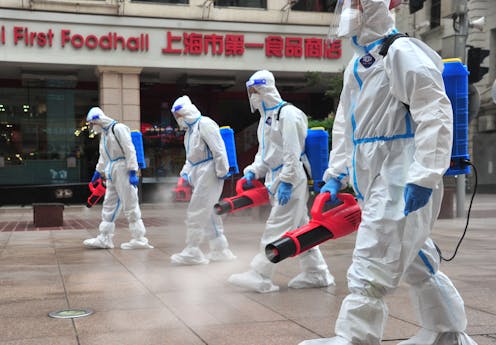
Within less than three years, the World Health Organization (WHO) has declared two public health emergencies of international concern: COVID-19 in February 2020 and monkeypox in July 2022.
At the same time, extreme weather events are being reported continuously across the world and are expected to become more frequent and intense.
These are not separate issues. We will have a better chance of suppressing infectious diseases only if we adopt what the WHO calls a One Health approach and integrate predictive modelling and surveillance used in both infectious disease control and climate change.
Public health experts have relied on disease surveillance systems to track emerging diseases since the 19th century. Their methods have become increasingly sophisticated, including genomic surveillance to track how pathogens evolve.
But as long as these surveillance systems depend on diseases that have already emerged, they remain behind the curve and we risk “sleepwalking” into the next pandemic.
Given the impacts of a changing climate on ecosystems, any surveillance of new disease outbreaks must include humans, animals and planetary changes.
Read more: One Health: A crucial approach to preventing and preparing for future pandemics
New and re-emerging pathogens
COVID-19 will continue to evolve into new variants despite high vaccination rates in some countries and the availability of antiviral treatments. At the same time, new diseases will continue to emerge.
In the first week of August, more than 25,000 cases of monkeypox were registered worldwide and new reports of deaths continue to emerge. Ghana has declared an outbreak of Marnburg virus disease in July and Mozambique reported its first case of polio in 30 years in May.
Polio has now also been detected in wastewater samples in New York and public health authorities in other wealthy countries are racing to head off the re-emergence of a virus that had been almost eliminated.
While the latter is most likely due to a global drop in vaccinations, health experts are warning that new pathogens, particularly those that jump between animals and humans, will become more frequent as habitats change in a warming world.
Read more: NZ children face a ‘perfect storm’ of dangerous diseases as immunisation rates fall
Health scientists refer to diseases such as COVID-19 and monkeypox as zoonoses – pathogens known to be transmitted from animals to humans. Close contact between humans and wild animals is increasing as forests are destroyed to make way for agriculture and trade in exotic animals continues.
At the same time, the thawing of permafrost is releasing microbes hidden beneath the ice. Taken together, there is an ever growing risk of new pathogens.
The link between human, animal and environmental health
Global climate models are increasingly sophisticated at projecting how climate change will affect Earth systems and ecosystems. There are efforts to “connect the dots” by integrating human and animal health and the “sickness of the planet”, as described by the late Norwegian physician Per Fugelli in his 1994 essay, In Search of a Global Social Medicine.
Incremental steps in integrating disease and planetary surveillance are under way. In 2008, the WHO, the Food and Agriculture Organization (FAO), the World Organisation for Animal Health (WOAH) and other organisations jointly drafted a framework for how best to diminish the risk and minimise the global impact of pandemics.
In 2014, a manifesto published in the Lancet called for an urgent transformation in our values, based on the recognition of our “interdependence and interconnectedness of the risks we face”.
Read more: Most laws ignore ‘human-wildlife conflict’. This makes us vulnerable to pandemics
In 2021, the One Health high level expert panel adopted a definition of an integrated, unifying approach that aims to balance and optimise the health of people, animals and ecosystems.
A One Health approach to disease surveillance is now used by the African Centers for Disease Control and the global network to address antimicrobial resistance. In 2019, the UN’s interagency coordinating group on antimicrobial resistance recognised that microbes that infect animals and humans share the same ecosystems and their prevention therefore requires a coordinated approach.
These are relatively recent initiatives in our effort to understand and track past, present and future outbreaks. There may be a long way to go in integrating disciplines, but the answer to predicting and preempting future outbreaks and pandemics lies in a One Health approach.
Authors: Arindam Basu, Associate Professor, Epidemiology and Environmental Health, University of Canterbury


 Daily Bulletin


