

What was behind Australia's potato shortage? Wet weather and hard-to-control diseases
- Written by: Ronika Thapa, PhD Student, University of Tasmania
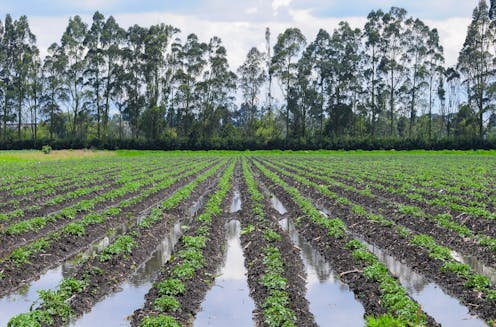
If you’ve been into a fish and chip shop in the last 12 months, you may well have seen a notice tacked to the wall about the impact of the potato shortage. Supermarkets, too, slapped temporary limits on frozen chip purchases.
What was behind it? Wet weather, floods – and highly persistent fungal diseases. Growers in Tasmania were worst hit, with mainland growers in New South Wales and Victoria also hit.
Even 175 years after Ireland’s devastating famine caused by an introduced potato blight, we’re still struggling to combat these diseases. That’s a problem, because potatoes are vital. More than a billion of us eat them regularly. They’re the fourth most important staple food after rice, wheat and corn, and the largest non-cereal crop.
Diseases such as pink rot and powdery scab can live in the soil for years. They’re almost impossible to eradicate down there. When there’s a sudden pulse of water, they spread and can destroy entire fields of potatoes.
What we can do is be better prepared. Our research team is monitoring soil moisture and temperature levels to help us predict whether we’re likely to see an outbreak. This knowledge could let growers respond quickly with fungicide or stopping irrigation to slow or prevent a severe outbreak.
So what caused the shortage?
In the lead-up to Christmas last year, Australia had a major potato shortage.
Our main growing regions in Tasmania, Victoria and South Australia were hard hit by flooding and heavy rain due to La Niña, which created conditions ripe for potato diseases to spread. Waterlogged or diseased potatoes cannot be sold.
Other issues included delays to harvesting and planting due to the weather. And the skyrocketing costs of fuel and fertiliser have forced some growers not to plant potatoes. Potatoes need a lot of fertiliser and water.
While you might associate these tubers with snack foods, in reality they’re highly nutritious and an important source of complex carbohydrates.
Read more: Potatoes deserve to be a part of the super-food family
The way we grow them is very efficient. The amount of food energy we get per hectare of potatoes is many times greater than other staples like rice and wheat.
Stored properly, potatoes can last up to eight months.
Many growers find them to be one of the most profitable crops they can grow – as long as they’re prepared to face risks such as disease.
What’s next for our potato sector?
With the major rains at an end for now, potatoes are returning to the shelves and frozen food section.
But potato lovers aren’t out of the woods yet. For producers, there are still many worries. The increasing costs of production in fertiliser and other inputs. The chance of renewed heavy rainfall. And the continual battle against soil-borne disease.
Take Tasmania’s growers, who produce almost a third (31%) of Australia’s potatoes.
Unexpectedly wet soil conditions in spring last year forced many growers to delay planting until after mid-November.
Planting after this date comes with a cost. It means that by the time the plants mature, Tasmania will be through summer and into cooler months, reducing available sunlight and growing temperatures. That can mean a lower yield.
Facing delays like this, growers often simply don’t plant a crop at all. But because of the shortages, Tasmania’s major processing companies offered a bonus to encourage a late crop to ensure factories could keep running.
The eternal fight against disease
Ever since potatoes emerged from the Andes to become a global crop, growers have battled the threat of soil-borne fungal and bacterial diseases.
Backyard gardeners may well be familiar with some of these. If you’ve ever pulled up a potato plant only to find a half-rotten tater, you’ll know the disappointment.
What keeps Australian growers up at night are diseases like powdery scab, as well as rot diseases like black leg, soft rot and pink rot.
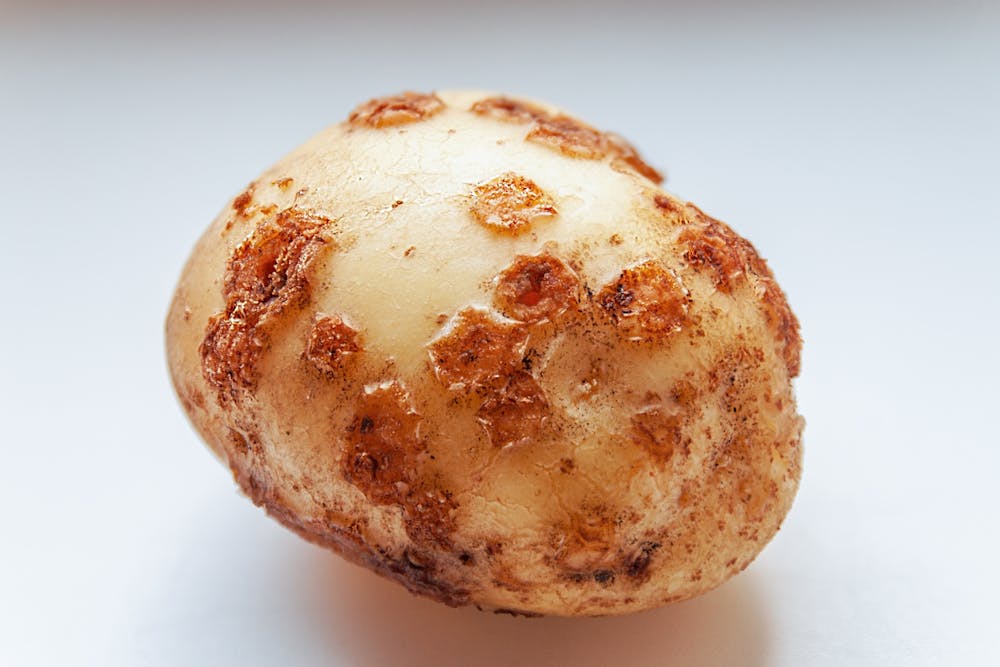
Powdery scab is mainly a cosmetic issue, turning nice-looking potatoes into unappetising, lesion-covered blobs.
But rot is real trouble. These bacteria and fungi can destroy entire fields.
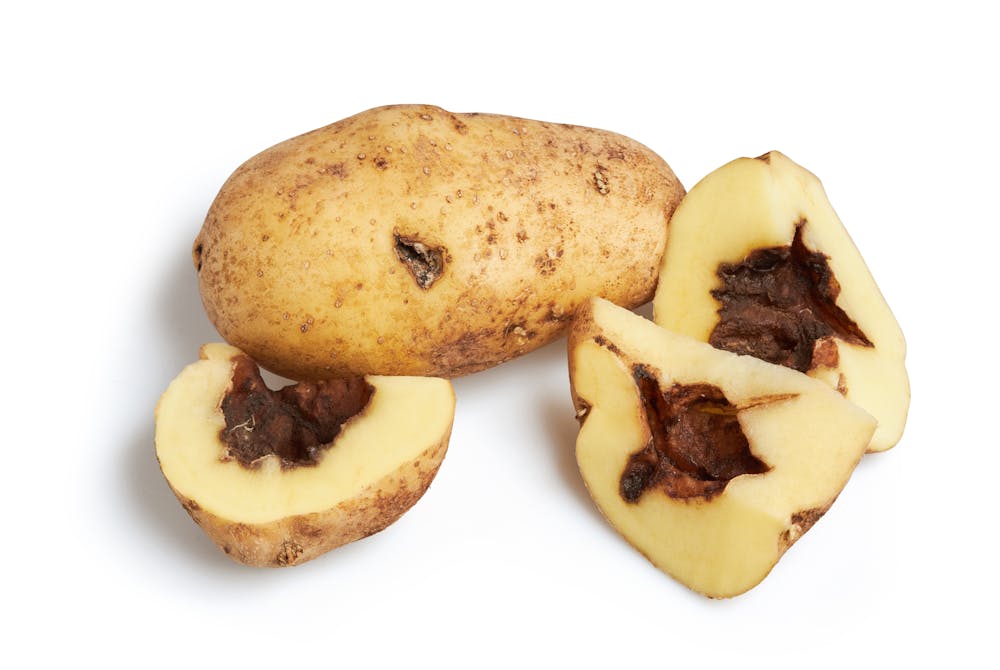 Fungal rot diseases like black foot can devastate potato crops.
Shutterstock
Fungal rot diseases like black foot can devastate potato crops.
Shutterstock
Pink rot is heavily influenced by free water in the soil. Heavy rainfalls just before an autumn harvest have triggered major rot epidemics with significant losses to growers in three of Tasmania’s last five growing seasons.
In severe cases, growers have to abandon fields with the tubers left to rot away, while in less severe cases there’s still substantial loss of crop and lower product quality.
If we see these levels of unprecedented rainfall again – as is likely with climate changes warping weather patterns – we’re like to see more potato shortages.
So what can growers do? For pink rot and powdery scab disease, we don’t have good options. There are a few disease-resistant varieties, but their resistance comes at the cost of desirable properties like crop yield and how well they cook. Chemical controls are limited, and if we overuse them, we risk these fungi developing resistance just as bacteria do with antibiotics.
Fungi and bacteria can lie dormant for many years or stay alive on other plant species between crops. That limits how effective crop rotation is as a tool.
Cropping land proven to be pathogen free is in very short supply. Food industries which rely on potatoes are compensating for these expected losses by contracting a greater number of growers and over-planting.
But it’s not a hopeless case. We and other researchers are working on it. Recently, we made a new tool to help rapidly spot powdery scab disease in new potato varieties.
Now we’re working on ways to track changes in soil moisture and temperature against rot and powdery scab outbreaks. This, we hope, will let us predict outbreaks before they occur.
Sometimes, you don’t have to defeat a disease outright. Better prediction and containment may be enough to keep us supplied with hot chips.
Read more: What's driving the potato chip shortage and when will it pass?
Authors: Ronika Thapa, PhD Student, University of Tasmania


 Daily Bulletin


