

Europe’s worst mass murder since World War II happened at Srebrenica. Gretchen Shirm’s novel witnesses the war crimes trial
- Written by: Jane Turner Goldsmith, PhD Creative Writing, School of Humanities, University of Adelaide
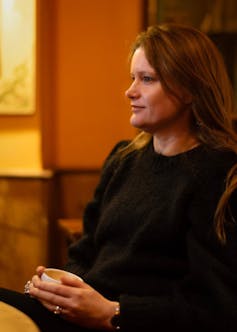
Gretchen Shirm was a legal intern in the Hague, the UN’s International Court of Justice, which is the setting for her new novel, Out of The Woods. While Shirm interned in 2006, her novel is set earlier, in 2000. It fictionalises the real trial of Radislav Krstić, relating to a genocide that was the worst episode of mass murder in Europe since World War II.
In July 1995, Bosnian Serb forces killed more than 8,000 Bosnian Muslim boys and men, and expelled more than 20,000 civilians from Srebrenica, a town in eastern Bosnia and Herzegovina. Krstić, commander of the Bosnian Serb corps responsible for the Srebrenica area, was convicted in 2001 of aiding and abetting genocide and murder.
Shirm uses publicly available extracts from the witness testimonies at the International Criminal Tribunal for the former Yugoslavia. She did not attend the Krstić trial. But her experience at The Hague moved her profoundly – and its impact ripples and reverberates through her protagonist’s narrative.
Review: Out of the Woods – Gretchen Shirm (Transit Lounge)
Personal and political
In Shirm’s novel, Jess, a middle-aged typist from Lismore, accepts a job as court reporter for a war crimes tribunal concerning events in the United Nations enclave of Srebrenica in 1995, after the break-up of the former Yugoslavia. Jess attends the trial of alleged war criminal, “K”, and hears witness testimonies.
Jess’ personal struggle to gain a sense of herself against her background of emotional neglect is interspersed with these testimonies.
Out of the Woods is a composite narrative that is arguably more “novelistic” in its arc than Shirm’s previous works. The overall effect – impressively – is one of voices blending and speaking to each other. As such, the novel is at once a large and far-reaching story of crimes against humanity from the not-too-distant past, and a no-less small, personal story of coming to terms with past psychological abuse.
Early in the novel, Shirm writes:
The landscape was covered in white and she hadn’t known that when it snowed it kept coming like this and it caused her an unease to watch the silent descent of the snow, as though she was witnessing an erasure taking place in front of her.
As too many examples in history have demonstrated, erasure is the intended outcome of the perpetrators of genocide.
Erasure is the risk, when the voices of war survivors are not heard. Erasure and forgetting: in this case, Bosnian men and the women who lost their husbands, sons and brothers to the Serbs in Srebrenica.
As a teenager, Shirm learnt the word “genocide” from her mother, who, as noted in the novel’s acknowledgments, encouraged her to “care about things that mattered”. Clearly, those cares simmered away to emerge as a powerful theme in this novel.

Bearing witness
I learnt from this novel in an indirect, reported way about unknown or forgotten events occurring in Srebrenica. For example, that Serbian forces disguised in UN hats and stolen vehicles persuaded Bosnian prisoners of war — the “column of men” in the woods — to surrender, but instead (it is implied), executed them.
One witness, a British Army Officer, in the detached voice of a witness being questioned at a trial, refers to the need to identify people
able and willing to take part in the killing; it required other people with machinery to dig holes, to dig graves; it required fuel … equipment.
I learnt, too, that in Srebrenica, conditions were so unbearable “people had taken their own lives, rather than having it taken from them”.
Vicarious trauma experienced by anyone participating in war crimes hearings cannot be underestimated. At one level, Shirm’s novel is an extended exploration of how bearing witness in such circumstances is life-changing.

Initially, Jess thinks her job will be straightforward: she merely has to record the proceedings. She is “good at just getting on with things” and does so by distancing herself from what she hears. However:
the things being spoken about by the witnesses were not orderly, they did not follow defined lines. She could not easily find places to slot these words away inside her.
Jess finds herself empathising strongly with witnesses’ accounts of murder, displacement, deception, ill-treatment, cruelty, struggle, pain and loss. At the same time, in a way she finds hard to explain, she feels ambivalent sympathy for the defendant, K. She perceives him to be human and vulnerable. This feeling of unwanted complicity emanates from their physical proximity.
He didn’t take his eyes off her and she couldn’t escape the feeling that he believed that they, in their silence, had now agreed on something.
The ambivalence creates suspense and a certain tension in the narrative. As the trial proceeds, Jess notes K’s every pulse and twitch, especially the injury to his leg, which he rests on a blue cushion. She observes how upset and “properly disturbed” he appears listening to the testimonies. She allows herself to consider that he was merely following orders, and that he had just “been in command when others had committed murder”.
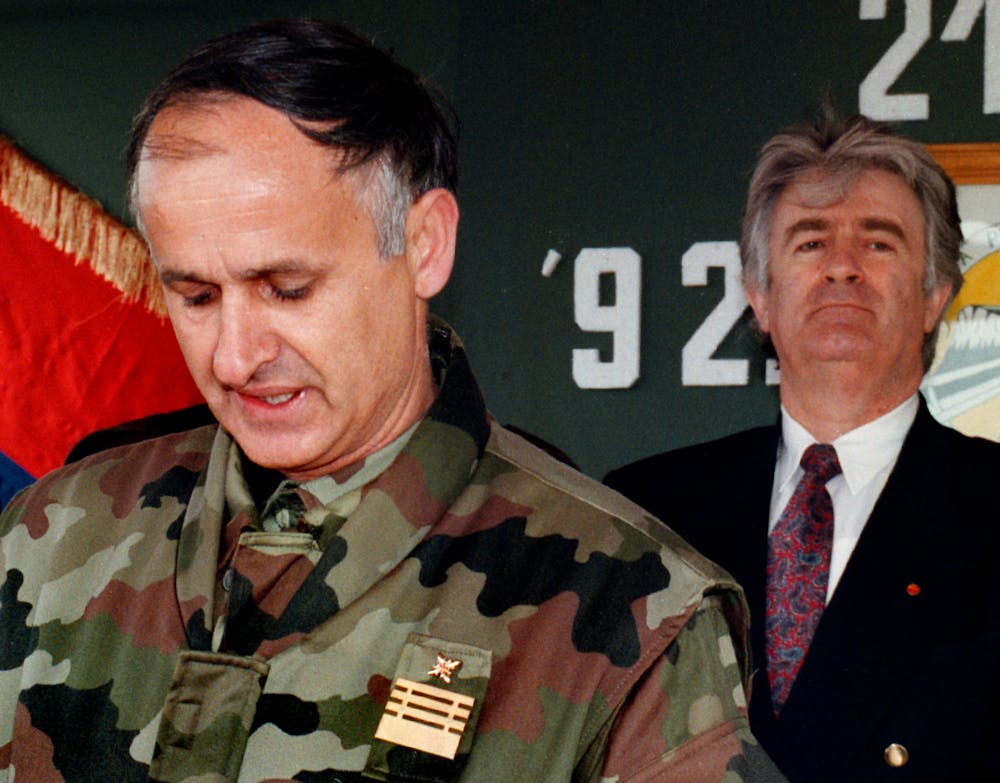 Bosnian Serb Army Commander Radislav Krstic (left) and former Bosnian Serb leader, Radovan Karadzic.
AAP
Bosnian Serb Army Commander Radislav Krstic (left) and former Bosnian Serb leader, Radovan Karadzic.
AAP
Personal damage triggered
Jess’ conflicted feelings of guilt mirror the painful feelings resulting from her mother’s emotional neglect, which she believes is “somehow” her own fault. We learn she holds affection for her father, “the only person […] who had loved her in a straightforward way”, but not her mother.
She rarely communicates with her sister. She is divorced from Ian, a barrister. And she has a son named Daniel, now 30, who lives in Australia, for whom she feels nostalgic, almost adoring affection.
On one level, the narrative is a finely crafted examination of Jess’ attempts to comprehend her own damaged psychology, triggered by the witnesses’ accounts.
She is certainly complex: nervous about her appearance, her age and being responsible for her allergies. She is almost embarrassingly self-conscious, feeling “the foundation shiny on her face”. She knows her body is constantly “prepared for catastrophe”. Yet, listening to the witnesses, Jess judges her own discomfort and suffering to be small by comparison – and therefore, she concludes, she is not entitled to it.
She thought that she had experienced sadness in her life, but compared to these people, her sadness felt small. Her wounds were neat punctures, they were barely even scratches.
 Gretchen Shirm.
Shirm is skilled at drawing her readers into the physical and psychological worlds of her protagonists. Her beautiful sentences are precise and enticing; she uses sensory detail to allow us to perceive the exact way Jess winds the teabag around her little finger, or pauses to reflect on the unfurling leaves in the bottom of a teacup “like cinders swirling in the liquid”.
I was drawn, almost dream-like, into the rhythms of Jess’ daily commute to the tribunal hearing and its environs, riding in on the tram or bicycle. I enjoyed seeing the cities of The Hague and Amsterdam through new eyes, with Jess’ sense of awakening.
I appreciated her liberating perceptions of the beauty of the trees above the canals, or the crookedness of the houses, the silent grandeur of Rembrandt’s Night Watch at the Rijksmuseum and the incongruous clash of sentiment in Van Gogh’s The Potato Eaters. It is as if Jess has not experienced awe in her life until now.
Some of these experiences are shared with Gus, who works on the security screening station at the tribunal building. Gus invites Jess to dinner and she accepts, surprising even herself. The promise of a genuine friendship contrasts starkly with the barrenness and emotional void that characterises her relationships with her ex-husband, mother and sister. The dry brown of sugar cane country could not be more distant.
 But the proceedings of the trial complicate their romance; Jess experiences a form of survivor guilt, wondering if she is “entitled to feel the way she felt now, sitting there with Gus enjoying her food”. She shies from sexual intimacy. (“The problem was that she didn’t really like the feeling of desire, because desire to her felt very much like need.”)
Guilt and withdrawal from intimacy are, sadly, common consequences of childhood abuse. Shame often prevents adult survivors from speaking out. Jess and her sister excuse their mother for her treatment of them because she “never hit” them. In this, they minimise the abuse, and carry the risk of it being normalised and forgotten: erased.
Chilling parallels in the present
The perpetrators of genocide use erasure to alienate, degrade and dehumanise a person – erasing them as humans. As the trial progresses, Jess feels “something deeper than sadness”, describing “a sort of horror, which was almost like a void”.
During the trial, she befriends one of the witnesses, Merjem, whose brother-in-law was killed by the Serbs. Eventually, Jess visits her in Sarajevo. She tries to understand, through Merjem’s retelling of her sister’s experience in Srebrenica, how such atrocities could ever take place.
The way the Serbian soldiers looked at her, in their eyes, her sister had said, there seemed to be centuries of anger. It seemed ancient, to go back […] hundreds and hundreds of years […] this was what had made it possible to do such inhumane things.
The truth, too, is erased.
Because if a person could, just like that, say something had not happened when it had happened, it had happened to so many people on a scale that involved a whole country, then they were living in a separate world to the one that had existed before. One that had split off from the previous reality.
The parallels in the present world are so chilling: the pretence that there is not a war happening, that one country hasn’t invaded another, that acts of genocide and mass erasure are not still occurring.
But the proceedings of the trial complicate their romance; Jess experiences a form of survivor guilt, wondering if she is “entitled to feel the way she felt now, sitting there with Gus enjoying her food”. She shies from sexual intimacy. (“The problem was that she didn’t really like the feeling of desire, because desire to her felt very much like need.”)
Guilt and withdrawal from intimacy are, sadly, common consequences of childhood abuse. Shame often prevents adult survivors from speaking out. Jess and her sister excuse their mother for her treatment of them because she “never hit” them. In this, they minimise the abuse, and carry the risk of it being normalised and forgotten: erased.
Chilling parallels in the present
The perpetrators of genocide use erasure to alienate, degrade and dehumanise a person – erasing them as humans. As the trial progresses, Jess feels “something deeper than sadness”, describing “a sort of horror, which was almost like a void”.
During the trial, she befriends one of the witnesses, Merjem, whose brother-in-law was killed by the Serbs. Eventually, Jess visits her in Sarajevo. She tries to understand, through Merjem’s retelling of her sister’s experience in Srebrenica, how such atrocities could ever take place.
The way the Serbian soldiers looked at her, in their eyes, her sister had said, there seemed to be centuries of anger. It seemed ancient, to go back […] hundreds and hundreds of years […] this was what had made it possible to do such inhumane things.
The truth, too, is erased.
Because if a person could, just like that, say something had not happened when it had happened, it had happened to so many people on a scale that involved a whole country, then they were living in a separate world to the one that had existed before. One that had split off from the previous reality.
The parallels in the present world are so chilling: the pretence that there is not a war happening, that one country hasn’t invaded another, that acts of genocide and mass erasure are not still occurring.
 Women from Srebrenica show pictures of massacre victims during a demonstration.
Fehim Denir/AAP
Importance of testimony
The power of words, and the importance of giving testimony are also strong motifs. No words seem adequate to express the horror shared by Jess’ coworkers. And yet, “there were words, because the witnesses kept finding new ways to speak”. Words and stories matter and must not be forgotten, Shirm reminds us – though there are costs. Merjem, overwhelmed, leaves the tribunal early, fleeing back to Sarajevo.
Jess describes the words of the witnesses merging and becoming “a part of her”. There is even, almost, a merging of her distress about the tribunal outcome with her personal situation. People’s suffering can become part of another person – another generation, even.
Jess moves through a kind of “out of body” world. “Derealisation” might be the apt psychiatric term: it can result from trauma, even vicariously experienced trauma. This is emphasised in a brief section where the point-of-view shifts briefly to second person (“you”), as if Jess is seeing herself from above or out of herself.
There is a certain indeterminacy and open-endedness about this novel; an off-staging, even, of outcomes such as the tribunal determination. When reading the bare testimonies of the witnesses, typed in plain Courier font, I was in the same way invited to fill in the gaps. I was asked to imagine, almost at a slant, the true horror of what must have occurred.
Shirm manipulates these distancing, indirect and negative-space techniques to great effect, provoking intense responses.
Women from Srebrenica show pictures of massacre victims during a demonstration.
Fehim Denir/AAP
Importance of testimony
The power of words, and the importance of giving testimony are also strong motifs. No words seem adequate to express the horror shared by Jess’ coworkers. And yet, “there were words, because the witnesses kept finding new ways to speak”. Words and stories matter and must not be forgotten, Shirm reminds us – though there are costs. Merjem, overwhelmed, leaves the tribunal early, fleeing back to Sarajevo.
Jess describes the words of the witnesses merging and becoming “a part of her”. There is even, almost, a merging of her distress about the tribunal outcome with her personal situation. People’s suffering can become part of another person – another generation, even.
Jess moves through a kind of “out of body” world. “Derealisation” might be the apt psychiatric term: it can result from trauma, even vicariously experienced trauma. This is emphasised in a brief section where the point-of-view shifts briefly to second person (“you”), as if Jess is seeing herself from above or out of herself.
There is a certain indeterminacy and open-endedness about this novel; an off-staging, even, of outcomes such as the tribunal determination. When reading the bare testimonies of the witnesses, typed in plain Courier font, I was in the same way invited to fill in the gaps. I was asked to imagine, almost at a slant, the true horror of what must have occurred.
Shirm manipulates these distancing, indirect and negative-space techniques to great effect, provoking intense responses.
 Refugees from the besieged Muslim enclave of Srebrenica arrive on a United Nations convoy.
Michel Euler/AAP
At times I found Jess’ passivity frustrating. For example, she refuses her ex’s offer of money (to which she is entitled) when he sells his share in his barrister chambers. Yet, such choices underline Jess’ lack of agency – which might be the point.
Towards the end of the novel, I remained curious about Jess’ ambivalence towards K. Had she come to some kind of cathartic understanding of herself and her own relationships? One insight did not leave me guessing. She is upset by one of the young witnesses, who said he would “forgive the perpetrators, the people who actually did these things, because they were misled”.
She wonders: is it possible to acquiesce to violence? Or is passivity “violence in its own way”?
It is as if Jess toys with but ultimately rejects the justness of forgiveness in such circumstances. In parallel, there is an almost-forgiveness in the relationship with her mother – which, because I didn’t quite agree with her acquiescence, almost jarred.
At the same time, her slow-dawning insight underlined for me one of the more powerful takeaways of the novel: to stand by and allow violence to occur is as reprehensible as to “aid and abet”.
A sobering message for our times.
Authors: Jane Turner Goldsmith, PhD Creative Writing, School of Humanities, University of Adelaide
Refugees from the besieged Muslim enclave of Srebrenica arrive on a United Nations convoy.
Michel Euler/AAP
At times I found Jess’ passivity frustrating. For example, she refuses her ex’s offer of money (to which she is entitled) when he sells his share in his barrister chambers. Yet, such choices underline Jess’ lack of agency – which might be the point.
Towards the end of the novel, I remained curious about Jess’ ambivalence towards K. Had she come to some kind of cathartic understanding of herself and her own relationships? One insight did not leave me guessing. She is upset by one of the young witnesses, who said he would “forgive the perpetrators, the people who actually did these things, because they were misled”.
She wonders: is it possible to acquiesce to violence? Or is passivity “violence in its own way”?
It is as if Jess toys with but ultimately rejects the justness of forgiveness in such circumstances. In parallel, there is an almost-forgiveness in the relationship with her mother – which, because I didn’t quite agree with her acquiescence, almost jarred.
At the same time, her slow-dawning insight underlined for me one of the more powerful takeaways of the novel: to stand by and allow violence to occur is as reprehensible as to “aid and abet”.
A sobering message for our times.
Authors: Jane Turner Goldsmith, PhD Creative Writing, School of Humanities, University of Adelaide


 Daily Bulletin


