

Friday essay: the recovery of cuneiform, the world's oldest known writing
- Written by: Louise Pryke, Lecturer, Languages and Literature of Ancient Israel, Macquarie University
It is a little-known piece of history that Saddam Hussein was a great fan of ancient Mesopotamian literature. His enthusiasm for epics written in cuneiform – the world’s oldest known form of writing – can be seen in his own efforts at writing political romance novels and poetry. Hussein’s first novel, Zabibah and the King, blended the Epic of Gilgamesh with the 1001 Nights, and was adapted into a television series and a musical.
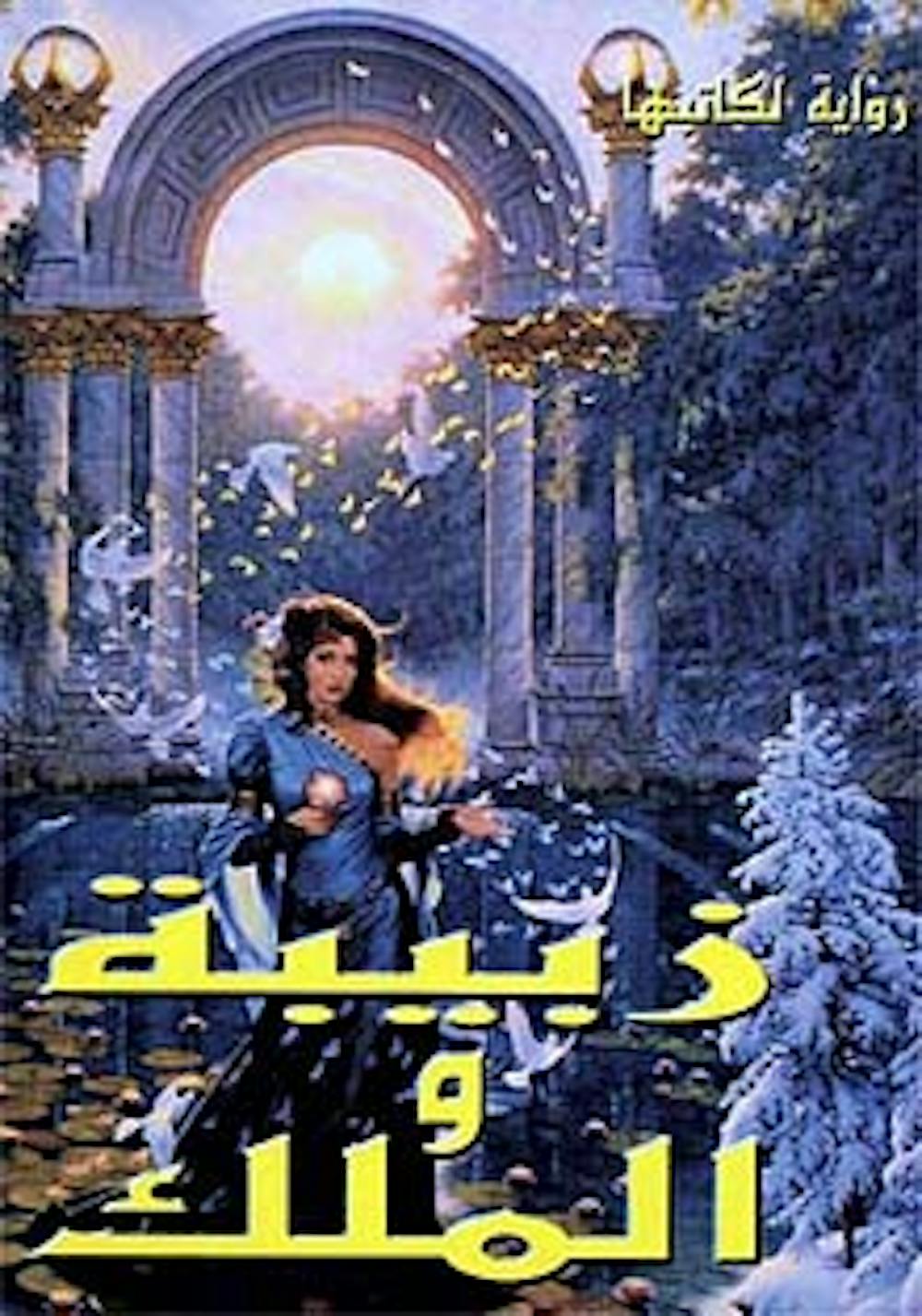 Zabibah and the King, 2000, by Saddam Hussein.
Wikimedia, CC BY-SA
Zabibah and the King, 2000, by Saddam Hussein.
Wikimedia, CC BY-SA
Indeed, the Iraqi dictator was said to be so immersed in his novel-writing that he left much of the military strategising to his sons leading up to the 2003 war. He continued writing in prison, using a card table as a writing desk. This example from the modern genre of “dictator literature” provides an unusual insight into the diverse reception of cuneiform literature in the modern day.
The decipherment of cuneiform in the late 18th century, a tale of academic virtuosity and daring, revealed a “forgotten age” and challenged the traditional, biblical view of history. One scholar was even put on trial for heresy for the wonders he uncovered in the translated script.
For over 3,000 years, cuneiform was the primary language of communication throughout the Ancient Near East (roughly corresponding to the Middle East today) and into parts of the Mediterranean. The dominance of the cuneiform writing style in antiquity has led scholars to refer to it as “the script of the first half of the known history of the world”. Yet it disappeared from use and understanding by 400 CE, and the processes and causes of the script’s vanishing act remain somewhat enigmatic.
Cuneiform is composed of wedge-shaped characters and was written on clay tablets (often likened to marks made by a chicken scratching in the mud). Unlike other ancient writing media, such as the papyri or leather scrolls used in Ancient Greece and Rome, cuneiform tablets survive in great abundance. Hundreds of thousands of tablets have been recovered from ruined Mesopotamian cities.
The discoveries yielded from the recovery of cuneiform writing continue to unfold in unexpected and exciting ways. In August this year, mathematicians at an Australian university made international headlines with their discovery involving a 3,700-year-old clay tablet containing a trigonometric table. The researchers said the cuneiform table reveals a sophisticated understanding of trigonometry — in some ways more advanced than in modern-day mathematics!
Lost in translation
It is difficult to overstate the influence of cuneiform literature in the ancient world. Many languages throughout a vast geographical span over thousands of years were written in cuneiform, including Sumerian, Hittite, Hurrian and Akkadian. Among these, Akkadian (an early cognate of Hebrew and Arabic) became the lingua franca of the Near East, including Egypt, during the Late Bronze Age.
Cuneiform was used to preserve the official royal correspondences between leaders of empires, but also simple transactions and record-keeping that were part of daily life. Over time, the skill of writing moved outside the main institutions of cities, such as temples and scribal schools, into the hands of citizens, as well as into private homes.
Despite its dominance in antiquity, the use of cuneiform ceased entirely at some point between the first and third centuries CE. The great empires of the Ancient Near East experienced a long decline over many centuries, which ultimately resulted in the loss of Egyptian hieroglyphs and cuneiform as written languages.
Cuneiform’s sphere of influence shrank after the sixth century BCE, before vanishing entirely. The disappearance of cuneiform accompanied, and likely facilitated, the loss of Mesopotamian cultural traditions from the ancient and modern worlds.
There are several schools of thought surrounding the disappearance of cuneiform, including competition with alphabetic languages (where letters correspond to sounds) such as Aramaic and Greek, and the decline of writing traditions. However, the process of the transition from cuneiform to alphabet is yet to be clearly understood.
Deciphering the code
The resurrection of cuneiform writing systems was described by legendary Sumerologist Samuel Noah Kramer as an “eloquent and magnificent achievement of 19th century scholarship and humanism”.
In the 15th century, cuneiform inscriptions were observed in Persepolis (in modern-day Iran). The script’s patterned dashes were not immediately recognised as writing. The name “cuneiform” (a Latin-based word meaning “wedge-shaped”) was given to the undeciphered writings by Oxford professor Thomas Hyde in 1700.
Hyde viewed the cuneiform markings as decorative rather than conveying language — a widely held view in academic circles of the 18th century. Despite some efforts to popularise the name “arrow writing”, “cuneiform” gained general acceptance. Yet cuneiform remained cryptic, and its ancient masterpieces buried and inscrutable.
The modern-day decipherment of cuneiform owes a great debt to the rulers of the Persian Achaemenid dynasty, who reigned in what is modern-day Iran in the first millennium BCE. These rulers made cuneiform inscriptions recording their achievements.
The most important of these inscriptions for the decipherment of cuneiform was the Behistun inscription, which recorded the same message in three languages: Persian, Elamite and Akkadian. This trilingual inscription was carved into the face of a cliff in Behistun in what is now western Iran.
 The Behistun inscription, high above the ground in Iran.
KendallKDown/Wikimedia, CC BY-SA
The Behistun inscription, high above the ground in Iran.
KendallKDown/Wikimedia, CC BY-SA
Detailing the successes of King Darius I of Persia, the Behistun inscription was inscribed on rock some 100 metres off the ground around 520 BCE. In 1835, Henry Creswicke Rawlinson was training troops of the Shah of Iran when he encountered the inscription. In order to reach the writings and transcribe them, Rawlinson needed to dangle from the cliffs, or to stand on the very top rung of a long ladder. From these precarious positions, he copied as much of the inscription as possible.
A “Kurdish boy”, whose name seems to be lost to history, assisted the daring endeavour. The boy was said to have used pegs dug into the rock wall as anchors to swing across the cliffs and reach the most inaccessible parts of the writing. Returning home, Rawlinson began working to unlock the secret of the lost script, perhaps with his pet lion cub by his side.
Of the three languages, the Old Persian was the first to be decoded by Rawlinson. Scholars working on deciphering the script gained a sense of the chronological placement of the inscription and recognised some repeated signs, thereby gleaning something of the content and structure of the writings.
The presence of king lists in the Behistun inscription, which could be compared with lists in Herodotus’ Histories, provided a point of reference for deciphering the signs. Other Greek historians, and the Bible, were also consulted in the process. Through the contributions of a number of scholars in the first half of the 19th century, cuneiform slowly began to reveal its secrets.
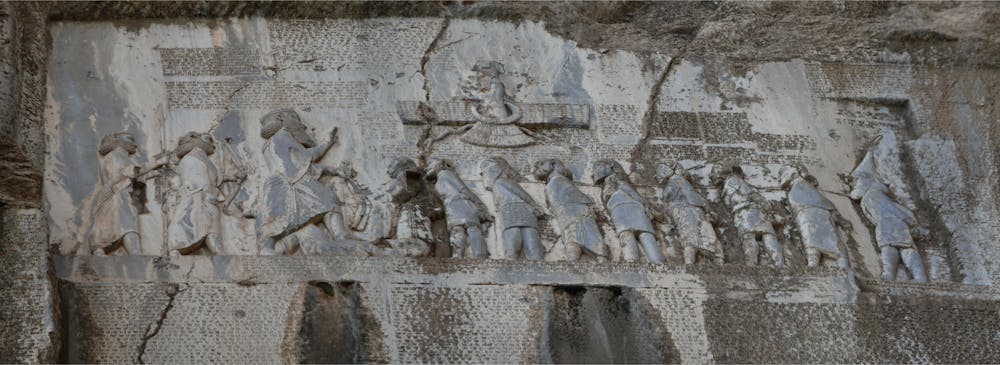 The Behistun inscription in western Iran was key to unlocking cuneiform – and the intellectual riches inside it.
dynamosquito/Flickr, CC BY-SA
The Behistun inscription in western Iran was key to unlocking cuneiform – and the intellectual riches inside it.
dynamosquito/Flickr, CC BY-SA
The significance of the Behistun inscription in the translation of cuneiform is often likened to the importance of the Rosetta Stone for deciphering Egyptian hieroglyphs. In recent years, the inscription has been the focus of restorative efforts, after sustaining various types of damage — notably when Allied troops used the inscription for target practice during World War II. It is now a UNESCO World Heritage site.
Cuneiform controversy
As the deciphering went on, divisions developed in the academic community over whether efforts to unravel cuneiform had proven successful. Part of the controversy stemmed from the extreme intricacy of the writing system. Cuneiform languages are made up of a collection of signs, and the meaning of these signs shows a great deal of variety.
In the Akkadian language, for example, a cuneiform sign may have a phonetic value — but not always the same phonetic value — or it may be a logogram, symbolising a word (such as “temple”), or a determinative sign, such as for a place or an occupation. This gives the translation of cuneiform a puzzle-like quality. The translator must select the value of the sign that appears best suited to the context.
Some scholars probably had sensible reasons for questioning the deciphering of cuneiform. Others held the inaccurate view that ancient Assyrians would have lacked the capacity to comprehend such a difficult writing system. To resolve the controversy, the British scientist W.H. Fox Talbot suggested a kind of cuneiform competition.
The British Royal Asiatic Society held the contest in 1857. Four scholars – Fox Talbot, Rawlinson and a Dr Hincks and a Dr Oppert – made unique translations of a single, previously unseen, cuneiform inscription. Each scholar then sent their translation in strict confidence to the society for comparison. After opening the sealed letters and examining the four translations, the society decided that the similarities between them were sufficiently compelling to declare cuneiform deciphered.
The rediscovery of cuneiform literature was not without further controversy. Fierce debates were conducted in eloquent handwritten letters over who had contributed to the discovery and decipherment of texts, and who deserved credit for the achievement.
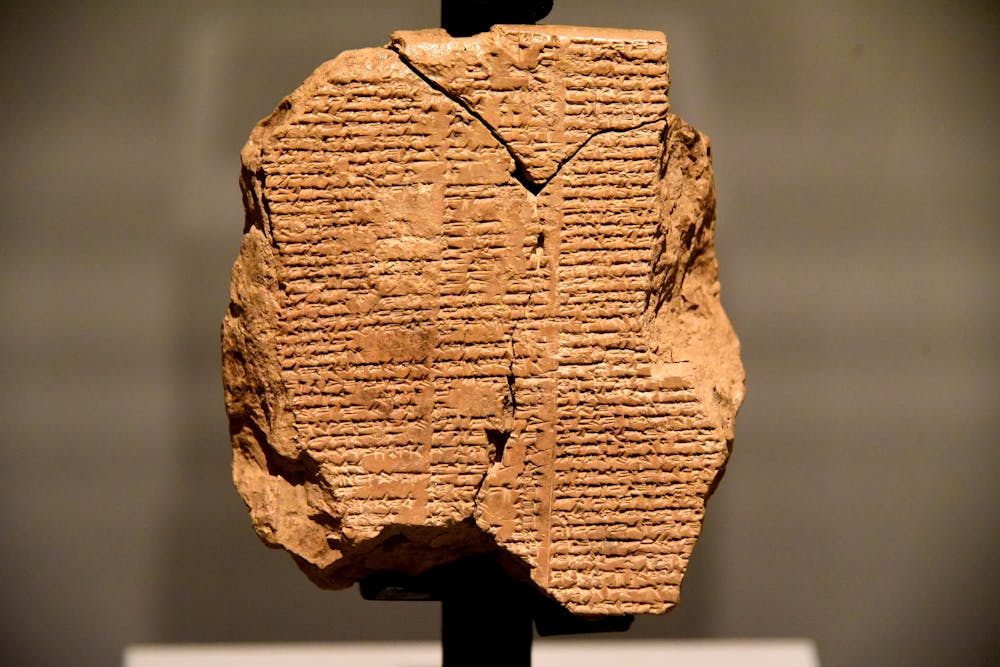 A recently discovered clay tablet telling part of the Epic of Gilgamesh in cuneiform.
Osama Shukir Muhammed Amin FRCP(Glasg)/Wikimedia, CC BY-SA
A recently discovered clay tablet telling part of the Epic of Gilgamesh in cuneiform.
Osama Shukir Muhammed Amin FRCP(Glasg)/Wikimedia, CC BY-SA
As well as this, the content of the literature caused friction in the academic communities of the 19th century. Prior to the rediscovery of cuneiform, the most prominent source for the Ancient Near East was the Hebrew Bible. The ability of cuneiform literature to provide a new perspective on the rich history of Egypt and Mesopotamia was embraced by many, but viewed with suspicion by others. For some, the translation of the long-forgotten writings raised the possibility of conflict between cuneiform sources and biblical literature.
Perhaps one of the most overt examples of these tensions in scholarly circles can be seen in the career of Nathaniel Schmidt from Colgate University. Schmidt was tried for heresy in 1895, due to the view that many of his translations of cuneiform appeared contrary to biblical traditions. He was dismissed from his position at Colgate in 1896. Following his dismissal, the eminent scholar was recruited by Cornell University (his controversial departure from Cornell made his appointment something of a “bargain”), where he taught Hebrew, Arabic, Aramaic, Coptic, Syriac and many other ancient languages.
From cuneiform to the stars
The recovery of cuneiform has provided access to an embarrassment of textual riches, including hundreds of thousands of legal and economic records, magico-medical texts, omens and prophecies, wisdom literature and lullabies.
Masterpieces of ancient literature, such as the Gilgamesh Epic, Ishtar’s Descent to the Underworld and Enuma Elish, have found new audiences in the present day. One can now even find cuneiform cookies.
Cuneiform has also aided scientific mysteries. Babylonian records of a solar eclipse, written in cuneiform, have helped astronomers figure out how much Earth’s rotation has slowed.
The decipherment of the cuneiform script has reopened a timeless dialogue beyond ancient and modern civilisations, providing continued opportunities to better understand the world around us, and beyond.
Note: This essay contains details from the article “Comparative Translations”, in the Journal of the Royal Asiatic Society 18, 1861. My grateful thanks to the Royal Asiatic Society for generously allowing access to their collection.
Authors: Louise Pryke, Lecturer, Languages and Literature of Ancient Israel, Macquarie University


 Daily Bulletin


