

Explainer: how does sunscreen work, what is SPF and can I still tan with it on?
- Written by: Terry Slevin, Adjunct Professor, School of Psychology, Curtin University; Education and Research Director, Cancer Council WA; Chair, Occupational and Environmental Cancer Committee, Cancer Council Australia
Sunscreen use not only reduces the risk of skin cancer and sunburn, it also reduces the ageing effect of the sun.
But whenever summer rolls around, it’s easy to forget the basics – like, how should I apply sunscreen? How long should I wait after applying it to go in the sun, and how long can I stay in the sun with it on? And how does it work anyway?
How does sunscreen work ?
There are two main parts to all sunscreens. The active ingredient and the emulsion.
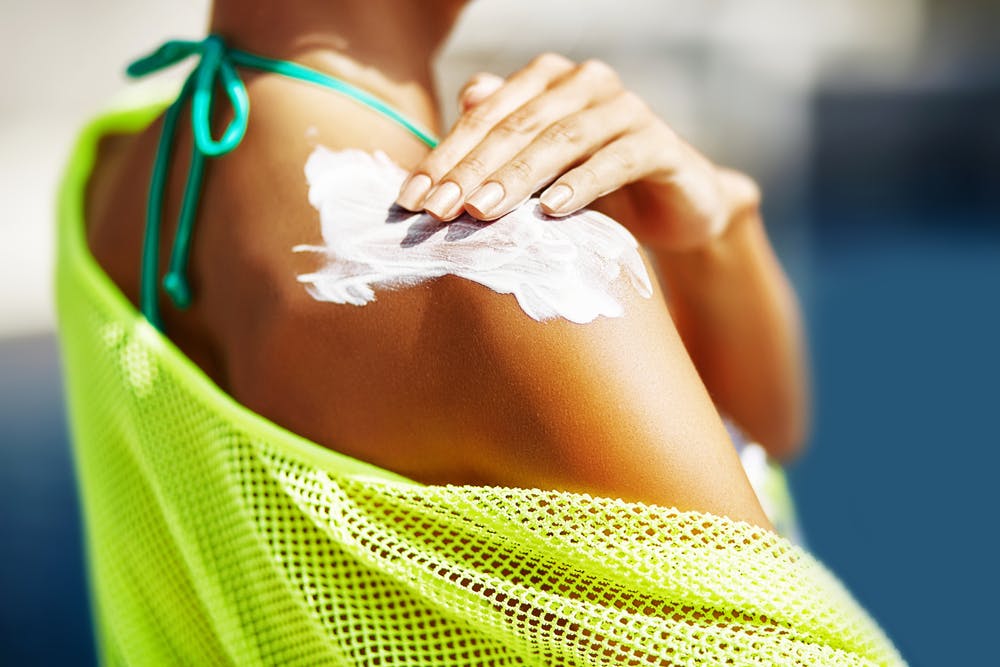 Sunscreens either absorb UV radiation or reflect it. from shuttersrock.com
The active ingredient does the sun protection work. These come in two categories: UV absorbers and UV reflectors.
UV absorbers are chemicals that absorb UV radiation and convert it to a very low level of heat. So low most don’t notice it, but a small proportion of people do report sunscreens make them feel uncomfortably warm.
UV absorber chemicals are also called “organic”, because they contain carbon atoms, a basis for all organic matter.
Some absorb the UVB part of the spectrum, which is known to cause sunburn and contribute to skin cancer risk. Others absorb the UVA part of the spectrum. Recent research suggests the longer UVA wavelengths not only penetrate to deeper layers of the skin but contribute to skin cancer through compromising immune response to DNA damage.
For that reason, sunscreen labelled “broad spectrum” is recommended as it offers the best protection.
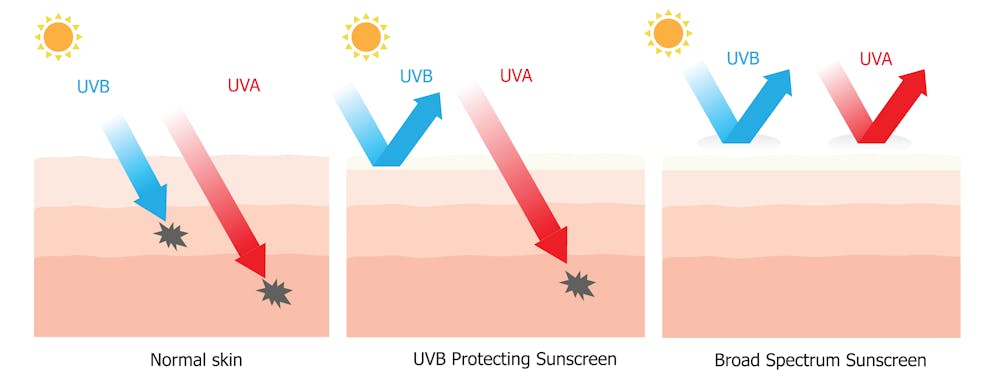 Broad action sunscreen is recommended. from shutterstock.com
UV “reflectors” are mostly made up of metals, like zinc oxide and titanium dioxide, that scatter UV radiation. The tiny flakes of metal act like mirrors to reflect the UV away from the skin.
There is normally more than one and often up to six or more active ingredients in most sunscreens.
The emulsion – the lotion, milk, cream, oil, foam or gel – is what carries the active ingredient. It is usually made up of some combination of oil and water, plus other goodies. These are important as they preserve the product so it lasts on the shelf or in your cupboard. They also help with water resistance, influence how the sunscreen feels and smells, and how well it binds to the skin.
What does SPF mean and how is it measured?
Sunscreen provides a screen, not a block. Think of a fly-screen door: air gets though but flies don’t. In the same way, the sun lotion or potion of your choice allows some small amount of UV radiation onto your skin.
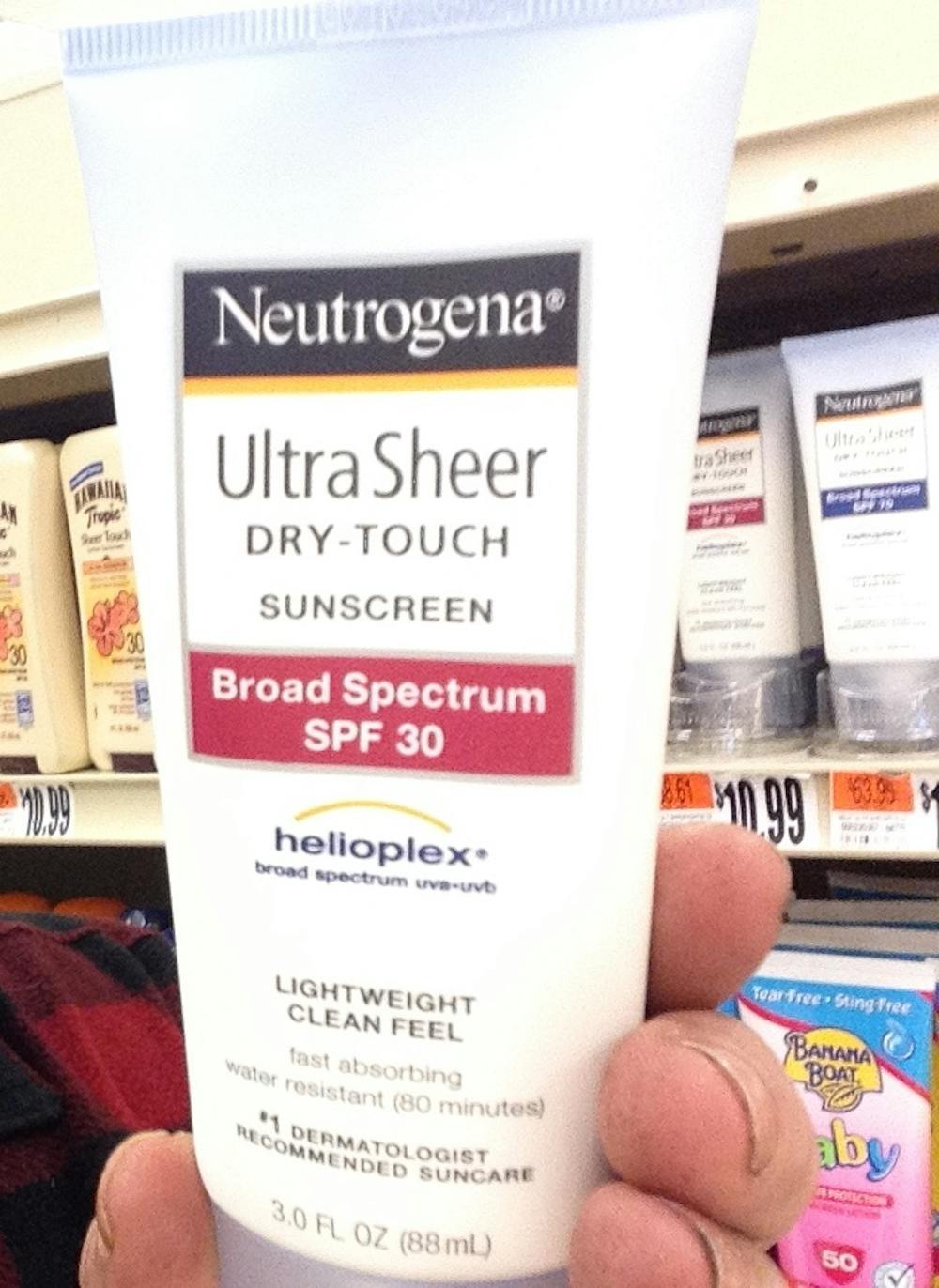 A sunscreen with SPF 30 isn’t much lower in protection than SPF 50. Mike Mozart/Flickr, CC BY
SPF stands for sun protection factor. It’s the measure of how much UV gets through the screen. The higher the number, the less UV passes through.
An SPF of 30 allows one-thirtieth or 3.3% of UV to reach your skin. This means it filters 96.7% of UV. With an SPF of 50, 98% is filtered and one-fiftieth or 2% gets through.
So while the difference between SPF 30 and SPF 50 sounds like a lot – it is a pretty modest (1.3%) - difference in protection.
Put another way, if your unprotected skin would take ten minutes to show signs of burning, then properly applying SPF 30 sunscreen would slow the rate of burning to the point where it would take 30 times longer, or 300 minutes in total. SPF 15 would take 150 minutes, while SPF 50, 500 minutes.
But this is perfect world stuff. If you extend your stay in the sun for 500 minutes (over eight hours!) only relying on sunscreen, you will very likely still burn!
Read more: What happens to your skin when you get sunburnt?
When and how do I put it on?
At a microscopic level, the skin is a series of peaks and troughs. Layering on sunscreen around 20 minutes before going into the sun allows the product to flow into the troughs and bind properly to the skin.
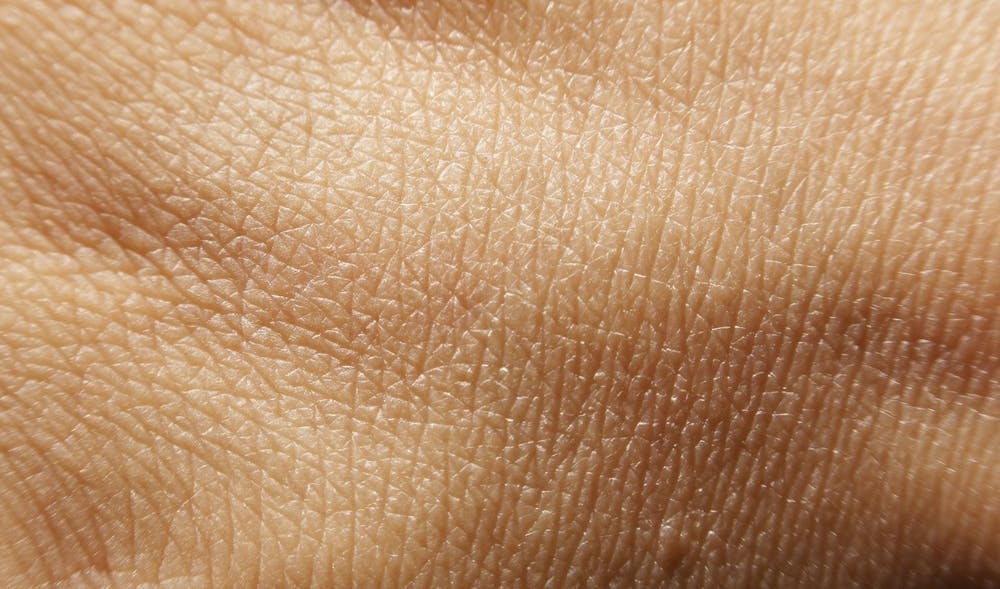 The skin is a series of peaks and troughs. from shutterstock.com
Many sunscreens recommend reapplying every two hours. But another way to look at it is like painting a wall of your house. The first coat gets a reasonable coverage, but a reapplication 20-30 minutes after being in the sun – after the first coat has “dried” – gets you much more reliable coverage. And this will cover the bits you may have missed, or covered too thinly, on first pass.
Also, use it generously. Most people use too little (between a quarter and three-quarters) of the amount of sunscreen necessary to achieve the sun protection claimed on the label. A teaspoon per limb is a good rule of thumb. Add another teaspoon for your face, front and back. This comes to seven teaspoons (35ml) in all if you are at the beach in board shorts or a bikini.
 You need to apply around seven teaspoons of sunscreen in all if you’re at the beach in a bikini. Photo by rawpixel.com on Unsplash, CC BY
Layer it on and spread it around. Reapply every two hours or more often if you are active (sweating, towelling off, skin making physical contact with anything that might rub it off), even if the bottle claims four-hour water resistance. And a good idea is to check if the lotion hasn’t passed its use-by date.
Use other things to protect your skin too. Hats, shade, clothing and even staying indoors at the highest UV periods. The closer to solar noon, usually between midday and 12.30pm, the higher the UV.
Read more: Will I damage my eyes if I don’t wear sunglasses?
The World Health Organisation recommends protecting skin from the sun when the UV Index is 3 or above. The Bureau of Meteorology reports on the UV Index around Australia and the SunSmart App allows you to get live readings on your smartphone.
How long can I stay in the sun with sunscreen on?
It’s wise to stay in the sun no longer than is necessary to do your planned activity. Staying out longer just because you have the sunscreen “suit of armour” (which it is not) is a bad idea.
Even following all the best advice, the normal daily activity – wiping water from your eyes, scratching an itch, cuddling the kids, brushing against a tree or your best buddy – will remove sunscreen and diminish its performance. And remember it is screening, not blocking the sun.
And will you still get a tan if you put on sunscreen properly? Well, no. If sunscreen is properly applied to do its job of reducing UV radiation exposure, it prevents the biological process of tanning.
Authors: Terry Slevin, Adjunct Professor, School of Psychology, Curtin University; Education and Research Director, Cancer Council WA; Chair, Occupational and Environmental Cancer Committee, Cancer Council Australia


 Daily Bulletin


