

The skin is a very important (and our largest) organ: what does it do?
- Written by: Cara McDonald, Consultant Dermatologist, St Vincent's Hospital Melbourne
This article is part of our series about skin: why we have it, what it does, and what can go wrong.
Our skin is a big deal – literally. It’s the largest organ in the body and one of the most complicated. It has many roles in the maintenance of life and health, but also has many potential problems, with more than 3,000 possible skin disorders.
Not only does the skin hold everything in, it also plays a crucial role in providing an airtight, watertight and flexible barrier between the outside world and the highly regulated systems within the body. It also helps with temperature regulation, immune defence, vitamin production, and sensation.
The skin is unique in many ways, but no other organ demands so much attention and concern in both states of disease and health. There is a huge focus on skin health, with fierce competition to have glowing, clearer, healthier, younger and fresher skin. And this focus can cause secondary problems with self-esteem and mental health.
So, what exactly is our skin meant to do and how does it impact our life?
The structure of the skin
The skin is divided into three layers known as the epidermis, dermis and subcutis. These layers are well defined but together they allow the skin to function effectively.
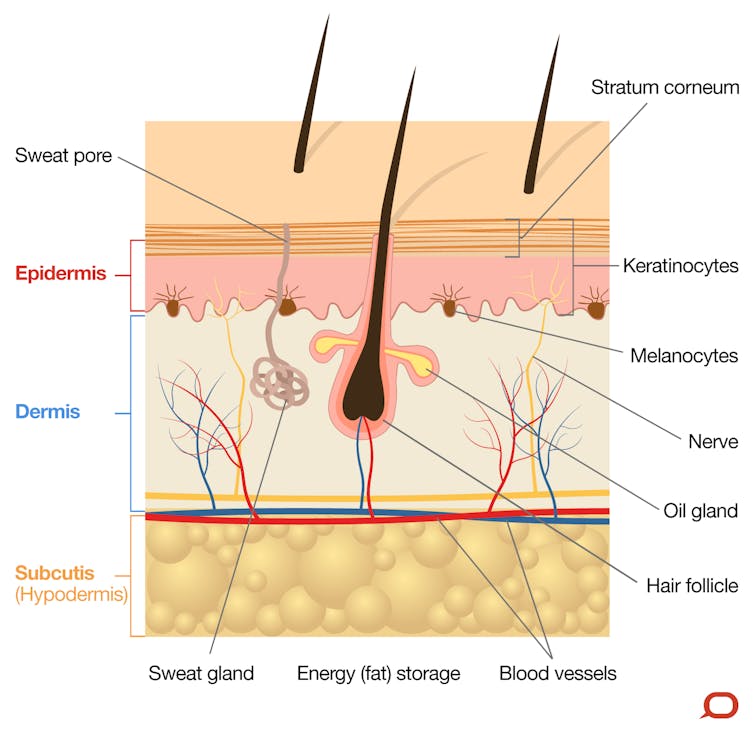 The epidermis is the outermost, cellular layer of the skin which varies in thickness depending on the body site. On average it’s less than half a millimetre thick. The epidermis resembles a “brick wall” of cells known as keratinocytes, which are bound tightly together and act to prevent free movement of moisture, pathogens and chemicals into or out of the body.
Keratinocytes replicate from the basal layer and work their way up to the outer surface (known as the stratum corneum) over a period of about 28 days. Once they reach the surface the tight bonds between them break apart and they are shed.
Other than keratinocytes, pigment-producing cells known as melanocytes and immune cells known as Langerhans cells also exist within the epidermis. Melanocytes inhabit the basement membrane, at the base of the epidermis and produce a pigment known as melanin both innately (giving the skin its natural colour), and in response to ultraviolet light (UV) exposure (giving the skin a sun tan).
The melanin is a brown pigment that is taken up into the overlying keratinocytes. This pigment will then absorb UV light (from the sun) when it hits the skin, thereby protecting the basal calls underneath from UV damage.
The epidermal cells also develop hair follicles, sweat glands and sebaceous (oil) glands which extend down into the layer below known as the dermis. The small ducts from each of these glands open onto the skin surface. Sweat and sebum (oil) provide an antibacterial and protective barrier on the skin.
The dermis lies beneath the epidermis and is 20-30 times thicker. It’s made up of a dense layer of fibrous (collagen) and elastic (elastin) tissue. The dermis gives the skin its integrity, strength and elasticity; and houses blood vessels, glands and hair follicles, as well as nerves and their receptors.
Beneath the dermis lies the subcutis (also known as the hypodermis), a specialised layer of adipose (fat) and fibrous tissue. The thickness of this layer varies dramatically depending on the site and a person’s body shape and weight. It cushions the body from external trauma, insulates from the cold and stores energy (fat).
The epidermis is the outermost, cellular layer of the skin which varies in thickness depending on the body site. On average it’s less than half a millimetre thick. The epidermis resembles a “brick wall” of cells known as keratinocytes, which are bound tightly together and act to prevent free movement of moisture, pathogens and chemicals into or out of the body.
Keratinocytes replicate from the basal layer and work their way up to the outer surface (known as the stratum corneum) over a period of about 28 days. Once they reach the surface the tight bonds between them break apart and they are shed.
Other than keratinocytes, pigment-producing cells known as melanocytes and immune cells known as Langerhans cells also exist within the epidermis. Melanocytes inhabit the basement membrane, at the base of the epidermis and produce a pigment known as melanin both innately (giving the skin its natural colour), and in response to ultraviolet light (UV) exposure (giving the skin a sun tan).
The melanin is a brown pigment that is taken up into the overlying keratinocytes. This pigment will then absorb UV light (from the sun) when it hits the skin, thereby protecting the basal calls underneath from UV damage.
The epidermal cells also develop hair follicles, sweat glands and sebaceous (oil) glands which extend down into the layer below known as the dermis. The small ducts from each of these glands open onto the skin surface. Sweat and sebum (oil) provide an antibacterial and protective barrier on the skin.
The dermis lies beneath the epidermis and is 20-30 times thicker. It’s made up of a dense layer of fibrous (collagen) and elastic (elastin) tissue. The dermis gives the skin its integrity, strength and elasticity; and houses blood vessels, glands and hair follicles, as well as nerves and their receptors.
Beneath the dermis lies the subcutis (also known as the hypodermis), a specialised layer of adipose (fat) and fibrous tissue. The thickness of this layer varies dramatically depending on the site and a person’s body shape and weight. It cushions the body from external trauma, insulates from the cold and stores energy (fat).
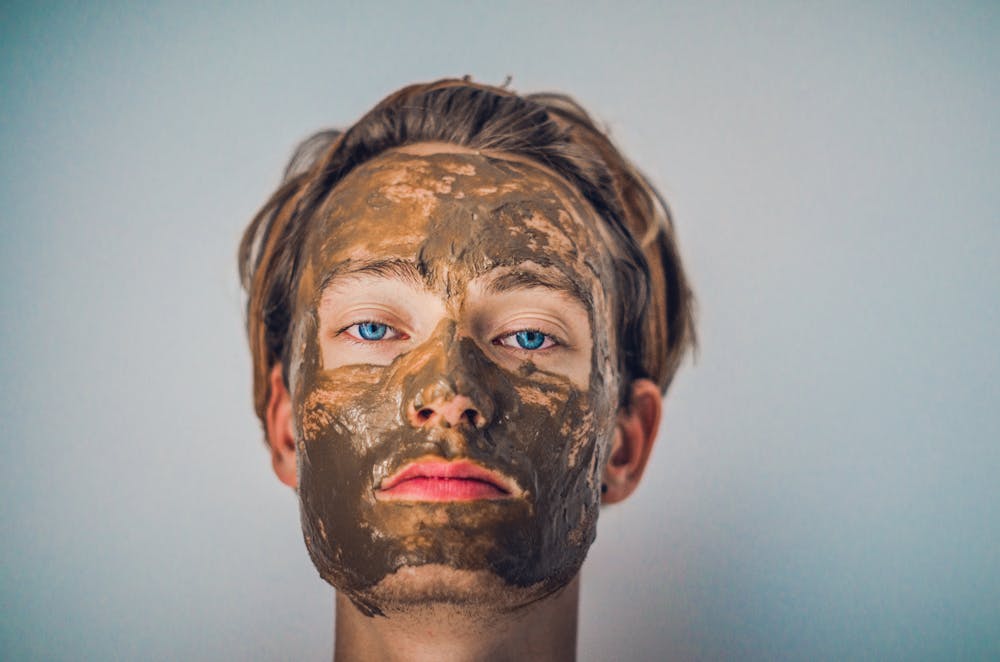 We pay more attention to the health of our skin than perhaps any other organ.
Unsplash/Isabelle Winter
The function of the skin
The extraordinary array of functions performed by healthy skin is still coming to light. The basic day-to-day functions include:
Working as a barrier – protecting against water loss as well as physical and chemical injury, and bugs
Helping us fight off bugs, allergens, toxins and carcinogens via the parts of our immune system that exist in our skin
Regulating our temperature by dilating and constricting our blood vessels near the skin surface, controlling the transfer of heat out of the body. Temperature is also regulated by evaporative cooling due to sweat production and by the insulating effect of erect hairs on the skin surface. Heat loss is also affected by the insulating layer of subcutaneous fat
Protecting us from UV radiation by producing melanin
Giving us the sense of touch _ providing interaction with physical surroundings, allowing all fine and gross motor activities and allowing pleasurable and sexual stimulation
The production of Vitamin D, which helps prevent many diseases including osteoporosis, cancer, heart disease, obesity and neurological diseases
Wound healing
Beauty and physical attraction – the quality and condition of the skin greatly contributes to the perception of health, wellness, youth and beauty.
What is normal skin and how can you optimise it?
Normal healthy skin has many important roles and thus should be treated with care and respect. Many people only start focusing on the skin once there is an abnormality or at least a perceived problem.
Common concerns include dryness, sensitivity, oiliness, congestion, wrinkles, sun damage and signs of ageing. Although these states are all within the spectrum of normal functional skin, they may be considered problematic if severe or undesirable.
We pay more attention to the health of our skin than perhaps any other organ.
Unsplash/Isabelle Winter
The function of the skin
The extraordinary array of functions performed by healthy skin is still coming to light. The basic day-to-day functions include:
Working as a barrier – protecting against water loss as well as physical and chemical injury, and bugs
Helping us fight off bugs, allergens, toxins and carcinogens via the parts of our immune system that exist in our skin
Regulating our temperature by dilating and constricting our blood vessels near the skin surface, controlling the transfer of heat out of the body. Temperature is also regulated by evaporative cooling due to sweat production and by the insulating effect of erect hairs on the skin surface. Heat loss is also affected by the insulating layer of subcutaneous fat
Protecting us from UV radiation by producing melanin
Giving us the sense of touch _ providing interaction with physical surroundings, allowing all fine and gross motor activities and allowing pleasurable and sexual stimulation
The production of Vitamin D, which helps prevent many diseases including osteoporosis, cancer, heart disease, obesity and neurological diseases
Wound healing
Beauty and physical attraction – the quality and condition of the skin greatly contributes to the perception of health, wellness, youth and beauty.
What is normal skin and how can you optimise it?
Normal healthy skin has many important roles and thus should be treated with care and respect. Many people only start focusing on the skin once there is an abnormality or at least a perceived problem.
Common concerns include dryness, sensitivity, oiliness, congestion, wrinkles, sun damage and signs of ageing. Although these states are all within the spectrum of normal functional skin, they may be considered problematic if severe or undesirable.
 You only get one skin. Don’t do this to it.
Unsplash/Maciej Serafinowicz
Normal, healthy skin that is not exposed to excessive physical or environmental insults may not require any specific care or protection, but for those who want to optimise or improve their skin, some basic steps can make a big difference.
The key to skin care is consistency and routine, and it can take time to appreciate the changes. A basic regime of daily protection from excessive UV radiation, protection from excessive irritation and drying (by avoiding drying soaps, excess water or irritating chemicals) and aiding of the skin’s barrier properties (using a moisturising protective layer) will result in noticeable improvement in almost all skin.
Switching and changing products and routines is usually counterproductive and will prevent you from seeing expected improvement in time. It’s worth looking after your skin, as you’ll wear it every day for the rest of your life.
You only get one skin. Don’t do this to it.
Unsplash/Maciej Serafinowicz
Normal, healthy skin that is not exposed to excessive physical or environmental insults may not require any specific care or protection, but for those who want to optimise or improve their skin, some basic steps can make a big difference.
The key to skin care is consistency and routine, and it can take time to appreciate the changes. A basic regime of daily protection from excessive UV radiation, protection from excessive irritation and drying (by avoiding drying soaps, excess water or irritating chemicals) and aiding of the skin’s barrier properties (using a moisturising protective layer) will result in noticeable improvement in almost all skin.
Switching and changing products and routines is usually counterproductive and will prevent you from seeing expected improvement in time. It’s worth looking after your skin, as you’ll wear it every day for the rest of your life.
Authors: Cara McDonald, Consultant Dermatologist, St Vincent's Hospital Melbourne
Read more http://theconversation.com/the-skin-is-a-very-important-and-our-largest-organ-what-does-it-do-91515
-organ-what-does-it-do&media=https://www.dailybulletin.com.au/https://images.theconversation.com/files/210434/original/file-20180314-113475-ei3p4v.jpg?ixlib=rb-1.1.0&q=45&auto=format&w=754&fit=clip&description=The%20skin%20is%20a%20very%20important%20(and%20our%20largest)%20organ:%20what%20does%20it%20do? "Pin It")

 Daily Bulletin


