

As humans change the world, predators seize the chance to succeed
- Written by: Bill Bateman, Senior Lecturer, Curtin University
If you have ever been to a nature reserve in Africa, you may have been lucky enough to see predators on a kill – maybe something spectacular like lions on a giraffe. The chances are you got to see that because the predators killed the prey right on the road, where you could get up close in your car or safari vehicle.
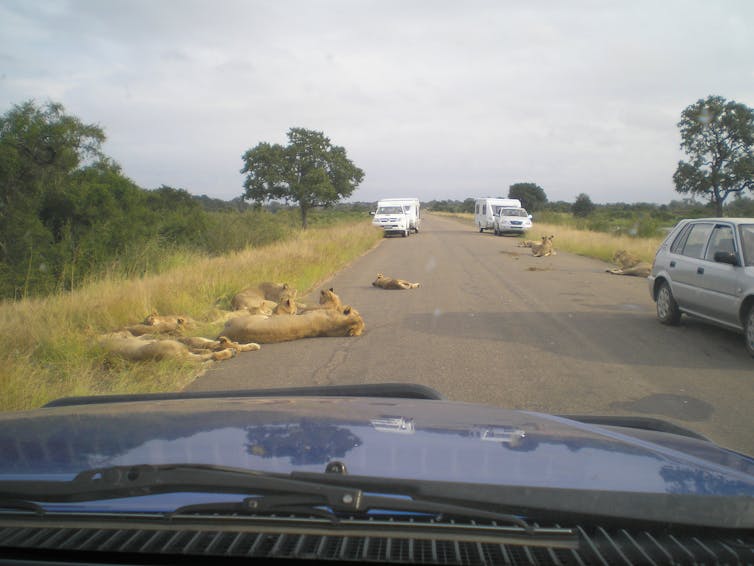 Lions gathered on a road in a South African National Park.
Bill Bateman
Lions gathered on a road in a South African National Park.
Bill Bateman
But what if this was not just luck? What if lions had greater hunting success along a road because their prey slip on the tarmac, stumble and fall, thus becoming a meal? The road – a human intrusion in a natural world – could be increasing the predators’ hunting success.
Road kill.This intriguing idea led us to wonder if there were other examples in which human structures or environments might benefit predators – a group of animals that would otherwise appear to want as little to do with humans and their world as possible.
Read more: You scratch my back... the beneficial (and not so beneficial) relationships between organisms
Ecosystems are dynamic, which means that new ones can arise when species occur in combinations and numbers that have not happened before. While we often (rightly) have a very negative view of our impact on the natural world, sometimes organisms can surprise us by taking advantage of what we do and creating a successful space for themselves in a human world.
Once we started looking, we found other examples of predators exploiting these niches. We found four ways, with much overlap, that predators take advantage of human habitats to improve their hunting success.
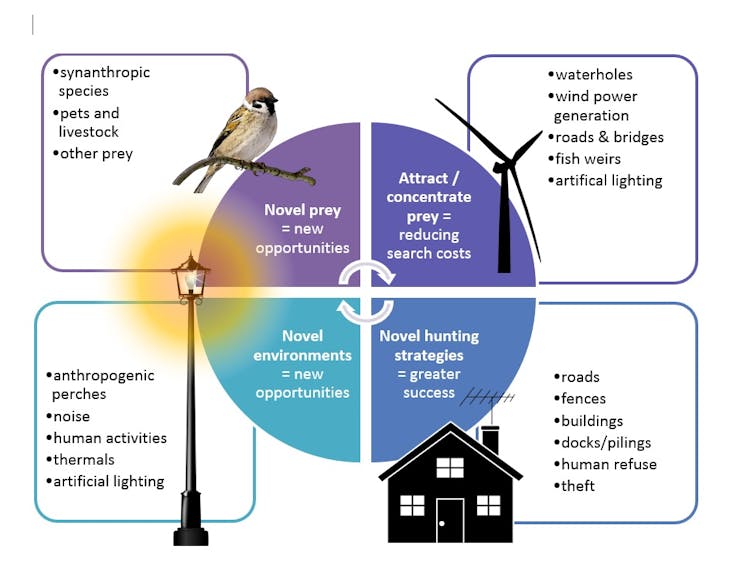 A world of opportunities.
First, certain animal species follow human settlements and can provide a completely new food source for predators. Rodents (rats and mice) and invasive birds (such as sparrows or starlings) exploit resources around towns. Pets and livestock are also commonly taken by predators such as bears, wolves, foxes and dingoes.
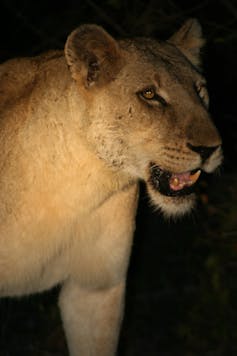 Lions have learned to use cowbells to locate livestock, and may have increased hunting success using gravel and tarmac roads to chase prey.
Trish Fleming
Lions have learned to use cowbells to locate livestock, and may have increased hunting success using gravel and tarmac roads to chase prey.
Trish Fleming
Second, potential prey species often gather around artificial resources, reducing commute times for predators and increasing their hunting success. For example, European kestrels ambush populations of bats and swifts as they leave their roosts in building ventilation. Two species of sea lion have learned to travel 100km up the Columbia River in the United States to hunt masses of migrating salmon that gather at fish ladders (structures that help fish go over or around dams or other barriers when migrating upriver to spawn) over the Bonneville Dam. Brown bears, meanwhile, hunt at fish weirs, trapping congregations of fish against these to prevent their escape.
Third, structures we build or things we do can make prey species more vulnerable. African wild dogs take down larger prey when they chase them into fences, and dingoes exploit roadkill along major highways. Horse-eye jack fish ambush prey around dock pilings that interrupt the synchronised escape behaviour of the fish schools. Peregrine falcons in New York city hunt at night as they have more success catching pigeons that are bedazzled by skyscraper lights. Lions have learned to use cowbells to locate livestock. Here in Australia wedge-tailed eagles follow harvesters on farms to catch animals flushed out by the machinery.
Finally, some predators also use resources that we provide as tools to aid their hunting. Some birds use human refuse to lure fish to their doom and many raptors use lampposts and aerials as perches, increasing their hunting success. Larger species such as cheetah and leopards similarly exploit our presence to hunt more successfully.
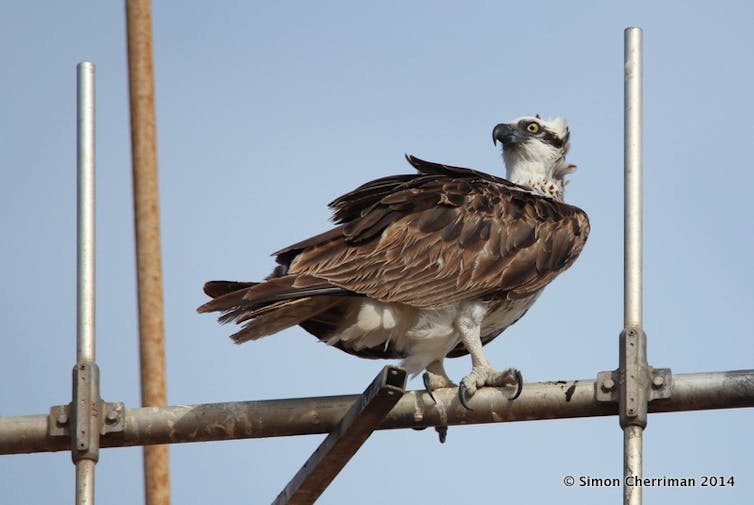 Osprey on aerial.
Only a few studies have tried to quantify the benefits of human environments for predators, identifying how they experience increased hunting success, reduced energy expenditure, or increased reproductive output. Such benefits can ultimately lead to increased population sizes, as has happened with the New York kestrel population and Chicago’s coyotes.
We predict that some predators are likely to become more abundant in our lives, which could have both positive and negative implications. For example, they are important biocontrol agents and do a great job of suppressing rodent populations. However, interactions with large predators can be dangerous for humans.
Letting humans do the hard work.Predators can be vital for maintaining a balanced ecosystem. However, predator species can have a huge effect on their environment, even when there are only a few of them about. Predator species can easily become invasive animals, as we have seen with the introduction of cats into Australia or brown tree snakes onto the island of Guam.
Read more: The Hunt: a natural history series that challenges us to side with the predators
These predators have had devastating consequences for whole ecosystems, and our actions may be unwittingly increasing their advantages over prey species, as has been made evident by ravens using human-built perches to predate heavily on desert tortoises. Similarly, animals using road underpasses are more vulnerable to introduced red foxes as the foxes - clever animals - soon learn to wait at the underpass exit for a meal delivery.
Our presence and the way we alter our environment can therefore thwart conservation of threatened species, despite our best attempts. We need to carefully consider how we influence our environment, and be on the lookout for instances where predators are making use of novel niches to exploit prey species. Even the smallest changes we make can affect a whole landscape, and can make prey animals more vulnerable.
Authors: Bill Bateman, Senior Lecturer, Curtin University
Read more http://theconversation.com/as-humans-change-the-world-predators-seize-the-chance-to-succeed-93645


 Daily Bulletin


