

More than a habit? When to worry about nail biting, skin picking and other body-focused repetitive behaviours
- Written by: Imogen Rehm, Lecturer (Early Career Development Fellow) / Psychologist, RMIT University
Nail-biting, nose-picking, mouth-chewing, skin-picking, hair-pulling – we all do some of them, some of the time. Some normal grooming behaviours help maintain good hygiene (such as picking at a dirty finger nail) and appearance (plucking that pesky grey hair). But when do these normal behaviours become bothersome habits? And when do these habits become psychological disorders?
Habits are stable, repetitive behaviours that occur automatically, without much thought. They’re stable in that, once established, they can be difficult to break. Body-focused repetitive behaviours, like those described earlier, are quite common. In one study, up to 24% of US college students reported performing some body-focused repetitive behaviours at least five times a day.
But a follow-up study reported much lower prevalence rates of 1-6%. This was because students were asked to consider if the consequences of their habit had ever required medical attention (for infections, for example) or interfered with daily functioning. This is when mental health professionals begin to see habitual body-focused repetitive behaviours as something more serious.
Read more: Pulling out your hair in frustration? What you need to know about trichotillomania
Consequences
Two specific body-focused repetitive behaviours are classified as psychological disorders by the American Psychiatric Association: hair-pulling disorder (trichotillomania), and skin-picking disorder.
These conditions can be extremely difficult to control. Baldness, painful skin infections, and scarring are common. Body-focused repetitive behaviours can also severely impact self-esteem, body image, health, relationships, and daily functioning.
Sign up for the newsletter
 Sign up to Thrive, a weekly dose of evidence to help you live well.
A recent Australian study reported that people with clinical levels of body-focused repetitive behaviours are two to four times more likely to experience other mental health difficulties such as depression and anxiety.
The researchers expected that people with repetitive nail-biting and mouth-chewing (biting the inside of your cheek or mouth) would report better mental health than those with skin-picking and hair-pulling; this was not the case. Instead, all body-focused repetitive behaviours were related to poorer mental health and quality of life.
The causal nature of these relationships is difficult to establish. However, these behaviours typically develop during childhood or adolescence, and some studies suggest the onset of depression is due to distress caused by severe body-focused repetitive behaviours.
Read more:
Unusual conditions: what is Rapunzel syndrome and why do some people eat hair?
Sign up to Thrive, a weekly dose of evidence to help you live well.
A recent Australian study reported that people with clinical levels of body-focused repetitive behaviours are two to four times more likely to experience other mental health difficulties such as depression and anxiety.
The researchers expected that people with repetitive nail-biting and mouth-chewing (biting the inside of your cheek or mouth) would report better mental health than those with skin-picking and hair-pulling; this was not the case. Instead, all body-focused repetitive behaviours were related to poorer mental health and quality of life.
The causal nature of these relationships is difficult to establish. However, these behaviours typically develop during childhood or adolescence, and some studies suggest the onset of depression is due to distress caused by severe body-focused repetitive behaviours.
Read more:
Unusual conditions: what is Rapunzel syndrome and why do some people eat hair?
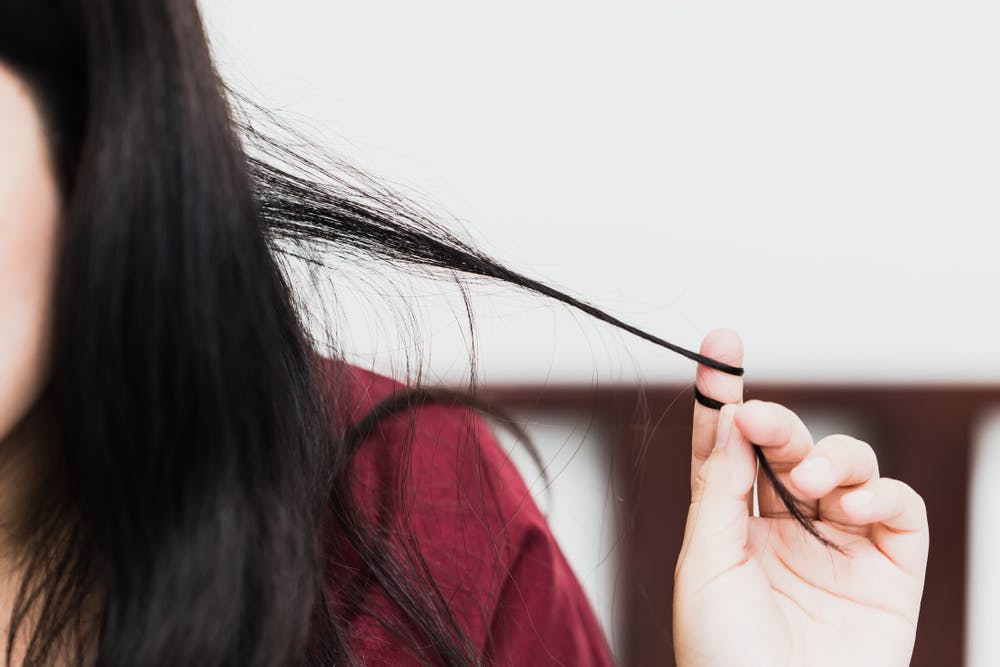 Hair-pulling and skin picking are listed in the manual of mental disorders.
from www.shutterstock.com
Causes
Body-focused repetitive behaviours are considered to be related to obsessive compulsive disorder (OCD). Like body-focused repetitive behaviours, people with OCD struggle to control compulsive behaviours like checking, cleaning, hand-washing, counting, and ordering objects.
For both conditions, people often report a build-up of tension and anxiety that’s relieved by performing their repetitive behaviour. For OCD, compulsions are typically driven by intrusive, upsetting, and irrational obsessive thoughts. But body-focused repetitive behaviours are not prompted by obsessions, demonstrating an important difference between the two conditions.
The exact causes of body-focused repetitive behaviours are unknown. A study investigating skin-picking in over 2,500 UK twins reported that genetic factors accounted for 40% of the variance in symptoms in twin-pairs.
While this and similar studies indicate strong heritability in these behaviours, no specific causal genes have been identified. Research in mice shows manipulating a gene called “SAPAP3” can cause them to repetitively groom their fur, resulting in baldness and open sores.
Human variants of SAPAP3 genes have been linked to some, but not all, cases of OCD and body-focused repetitive behaviours. These genes are involved in glutamate production, which plays a major role in facilitating brain cell communication.
N-acetyl cysteine (an amino acid that regulates glutamate in brain areas related to compulsive behaviours) has shown mixed results for reducing hair-pulling and skin-picking urges. Neurobiological research into body-focused repetitive behaviours is complex and replication studies are needed.
A range of psychological factors influences the severity of the behaviour. People with body-focused repetitive behaviours often struggle to cope with emotions such as anxiety, frustration, sadness, and boredom.
They report that touching, rubbing or biting skin, nails, and hair prompts a relaxing, trance-like state, which distracts from negative emotions. When bored, body-focused repetitive behaviours can help people feel like they’re doing something active, especially those with perfectionistic personality traits.
Our research has begun to explore how sensitivity to physical sensations might lead to body-focused repetitive behaviours. This area of research is emerging, but a recent study found people with these behaviours are more sensitive to, and bothered by, sensations associated with stress and tension.
This means that, similar to how body-focused repetitive behaviours aid distraction from negative emotions, they might also help regulate unpleasant sensations felt in the body.
Read more:
When stuff gets in the way of life: hoarding and the DSM-5
Relief
Habit-reversal therapy is practical, skills-based, and can reduce body-focused repetitive behaviours severity. The acronym “SCAMP” helps mental health professionals tailor their treatment strategies to the many, highly individual factors that can make body-focused repetitive behaviours difficult – but not impossible – to break:
Sensory: creative sensory activities using sight, sound, touch, smell and taste can help to achieve pleasurable sensations like those provided by body-focused repetitive behaviours, or cope with unpleasant sensations that these behaviours otherwise relieve. Similar to how popping bubblewrap can be satisfying, using fidget toys can offer tactile stimulation to keep hands busy when faced with urges to pick or pull.
Cognitive: notice how your inner self-talk influences these behaviours. Thoughts related to body-focused repetitive behaviours are often self-critical or permission-giving, like “I’ll just pull this one hair and then I’ll stop!” Challenging the reality or helpfulness of these thoughts is a useful technique.
Affect: learning new and flexible ways of responding to emotions is key in treating body-focused repetitive behaviours. For example, using brief relaxation strategies to manage momentary stress, anxiety or urges. Doing enjoyable activities can also help to boost mood and provide rewards for making behavioural changes.
Motor: a key strategy of habit-reversal therapy is competing response. It’s harder to pick or pull when engaging in discrete activities physically incompatible with body-focused repetitive behaviours, like fist-clenching, gripping an object, or crossing your arms for one minute.
Place: picking or pulling commonly happens in the bathroom, bedroom, while driving, or at the computer. Over time, such situations become associated with body-focused repetitive behaviours, automatically prompting them to start. Changing your routines and doing things that make it more effortful to do your body-focused repetitive behaviours in these situations can help to break learned habits.
Many individuals in recovery from body-focused repetitive behaviours report that their urges remain, but lessen over time. This is why it’s important to learn diverse strategies to cope with the urges and choose to participate in valued activities, relationships, and hobbies in spite of one’s body-focused repetitive behaviours.
More information can be found at TLC Foundation for Body-Focused Repetitive Behaviors and support groups are available through ARCVic.
Hair-pulling and skin picking are listed in the manual of mental disorders.
from www.shutterstock.com
Causes
Body-focused repetitive behaviours are considered to be related to obsessive compulsive disorder (OCD). Like body-focused repetitive behaviours, people with OCD struggle to control compulsive behaviours like checking, cleaning, hand-washing, counting, and ordering objects.
For both conditions, people often report a build-up of tension and anxiety that’s relieved by performing their repetitive behaviour. For OCD, compulsions are typically driven by intrusive, upsetting, and irrational obsessive thoughts. But body-focused repetitive behaviours are not prompted by obsessions, demonstrating an important difference between the two conditions.
The exact causes of body-focused repetitive behaviours are unknown. A study investigating skin-picking in over 2,500 UK twins reported that genetic factors accounted for 40% of the variance in symptoms in twin-pairs.
While this and similar studies indicate strong heritability in these behaviours, no specific causal genes have been identified. Research in mice shows manipulating a gene called “SAPAP3” can cause them to repetitively groom their fur, resulting in baldness and open sores.
Human variants of SAPAP3 genes have been linked to some, but not all, cases of OCD and body-focused repetitive behaviours. These genes are involved in glutamate production, which plays a major role in facilitating brain cell communication.
N-acetyl cysteine (an amino acid that regulates glutamate in brain areas related to compulsive behaviours) has shown mixed results for reducing hair-pulling and skin-picking urges. Neurobiological research into body-focused repetitive behaviours is complex and replication studies are needed.
A range of psychological factors influences the severity of the behaviour. People with body-focused repetitive behaviours often struggle to cope with emotions such as anxiety, frustration, sadness, and boredom.
They report that touching, rubbing or biting skin, nails, and hair prompts a relaxing, trance-like state, which distracts from negative emotions. When bored, body-focused repetitive behaviours can help people feel like they’re doing something active, especially those with perfectionistic personality traits.
Our research has begun to explore how sensitivity to physical sensations might lead to body-focused repetitive behaviours. This area of research is emerging, but a recent study found people with these behaviours are more sensitive to, and bothered by, sensations associated with stress and tension.
This means that, similar to how body-focused repetitive behaviours aid distraction from negative emotions, they might also help regulate unpleasant sensations felt in the body.
Read more:
When stuff gets in the way of life: hoarding and the DSM-5
Relief
Habit-reversal therapy is practical, skills-based, and can reduce body-focused repetitive behaviours severity. The acronym “SCAMP” helps mental health professionals tailor their treatment strategies to the many, highly individual factors that can make body-focused repetitive behaviours difficult – but not impossible – to break:
Sensory: creative sensory activities using sight, sound, touch, smell and taste can help to achieve pleasurable sensations like those provided by body-focused repetitive behaviours, or cope with unpleasant sensations that these behaviours otherwise relieve. Similar to how popping bubblewrap can be satisfying, using fidget toys can offer tactile stimulation to keep hands busy when faced with urges to pick or pull.
Cognitive: notice how your inner self-talk influences these behaviours. Thoughts related to body-focused repetitive behaviours are often self-critical or permission-giving, like “I’ll just pull this one hair and then I’ll stop!” Challenging the reality or helpfulness of these thoughts is a useful technique.
Affect: learning new and flexible ways of responding to emotions is key in treating body-focused repetitive behaviours. For example, using brief relaxation strategies to manage momentary stress, anxiety or urges. Doing enjoyable activities can also help to boost mood and provide rewards for making behavioural changes.
Motor: a key strategy of habit-reversal therapy is competing response. It’s harder to pick or pull when engaging in discrete activities physically incompatible with body-focused repetitive behaviours, like fist-clenching, gripping an object, or crossing your arms for one minute.
Place: picking or pulling commonly happens in the bathroom, bedroom, while driving, or at the computer. Over time, such situations become associated with body-focused repetitive behaviours, automatically prompting them to start. Changing your routines and doing things that make it more effortful to do your body-focused repetitive behaviours in these situations can help to break learned habits.
Many individuals in recovery from body-focused repetitive behaviours report that their urges remain, but lessen over time. This is why it’s important to learn diverse strategies to cope with the urges and choose to participate in valued activities, relationships, and hobbies in spite of one’s body-focused repetitive behaviours.
More information can be found at TLC Foundation for Body-Focused Repetitive Behaviors and support groups are available through ARCVic.
Authors: Imogen Rehm, Lecturer (Early Career Development Fellow) / Psychologist, RMIT University


 Daily Bulletin


