

Curious Kids: how is water made?
- Written by: Emma Kathryn White, PhD Candidate, Infrastructure Engineering, University of Melbourne
Curious Kids is a series for children. Send your question to curiouskids@theconversation.edu.au. You might also like the podcast Imagine This, a co-production between ABC KIDS listen and The Conversation, based on Curious Kids.
How is water made? – Clara, age 8, Canberra.
Hi Clara. That’s a really great question. If we could make large quantities of water cheaply, cleanly and safely, it would solve a lot of the world’s problems. Unfortunately, it is not that easy.
Read more: Curious Kids: where do clouds come from and why do they have different shapes?
What is water and where did it come from?
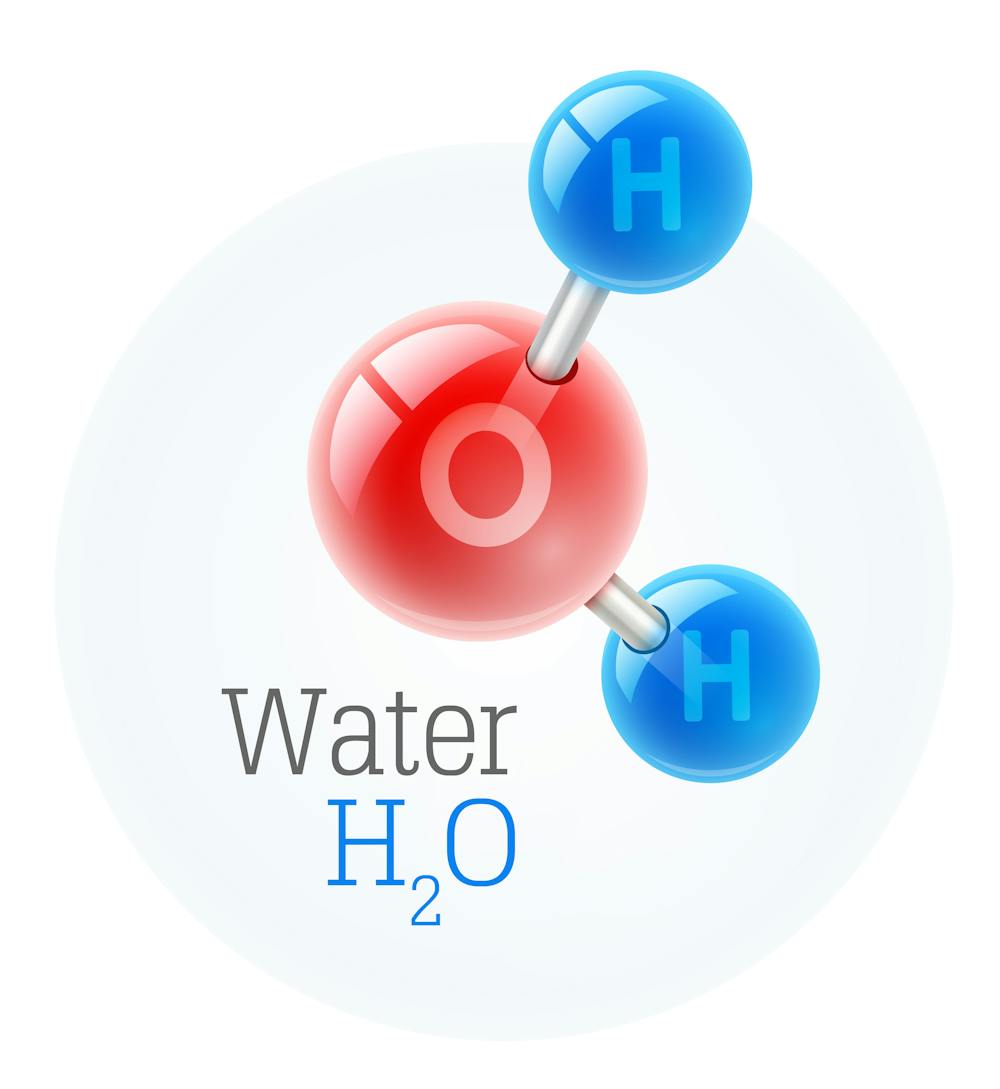 Water is made of two hydrogen atoms bonded to an oxygen atom.
Shutterstock
Water is made of two hydrogen atoms bonded to an oxygen atom.
Shutterstock
You’ve probably heard of atoms, the tiniest building blocks of all matter in the Universe. We are all made of atoms stuck together (or, as scientists would say, “bonded”). Atoms bonded together form molecules.
A molecule of pure water is made of two hydrogen atoms bonded to an oxygen atom. As explained in a previous Curious Kids article, scientists think the water on Earth may have come from melting of water-rich minerals during formation of the planet and icy comets that, billions of years ago, smashed into Earth and melted.
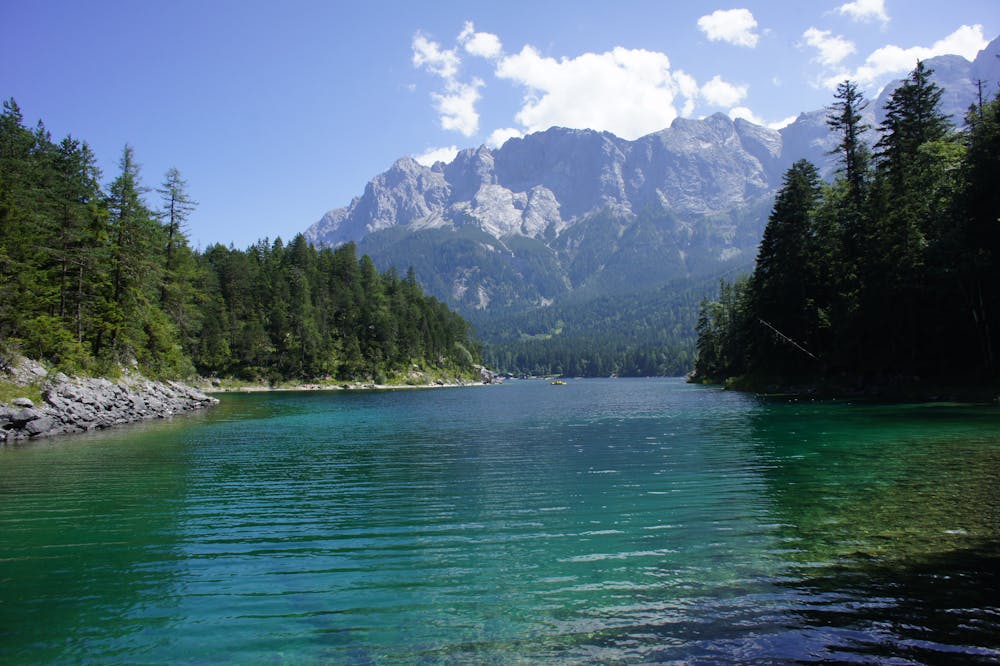 Scientists believe water may have come to us from rocks melting during formation of the Earth and icy comets.
Flickr/barnyz Follow, CC BY
Scientists believe water may have come to us from rocks melting during formation of the Earth and icy comets.
Flickr/barnyz Follow, CC BY
Why can’t we just make more?
While making small volumes of pure water in a lab is possible, it’s not practical to “make” large volumes of water by mixing hydrogen and oxygen together. The reaction is expensive, releases lots of energy, and can cause really massive explosions.
While the total volume of water on Earth stays about the same, water continually changes location and state. That means sometimes it is a liquid (like the water we drink), a solid (ice) or a gas (water vapour such as steam).
Scientists call this process of change the hydrologic (water) cycle, which is where water constantly moves around the world by cycling between the air, the ground and the ocean.
Round and round
The cycle begins when water is evaporated from the ocean (or lakes, rivers and wetlands) and enters the atmosphere (the air all around us) as water vapour (gas).
As warm, water-rich air rises, it cools down and can hold less water.
As a result, clouds form. Eventually, the water vapour changes back to liquid water and falls to Earth as rain. Rain that’s not immediately evaporated back into the atmosphere, either flows into the ocean as runoff or, is absorbed into the earth and becomes groundwater - water stored underground in the tiny spaces within rocks
Plants can suck up groundwater with their roots, and push water out through tiny holes in their leaves (this is called transpiration).
Groundwater flows slowly through the earth to the ocean and the cycle begins again.
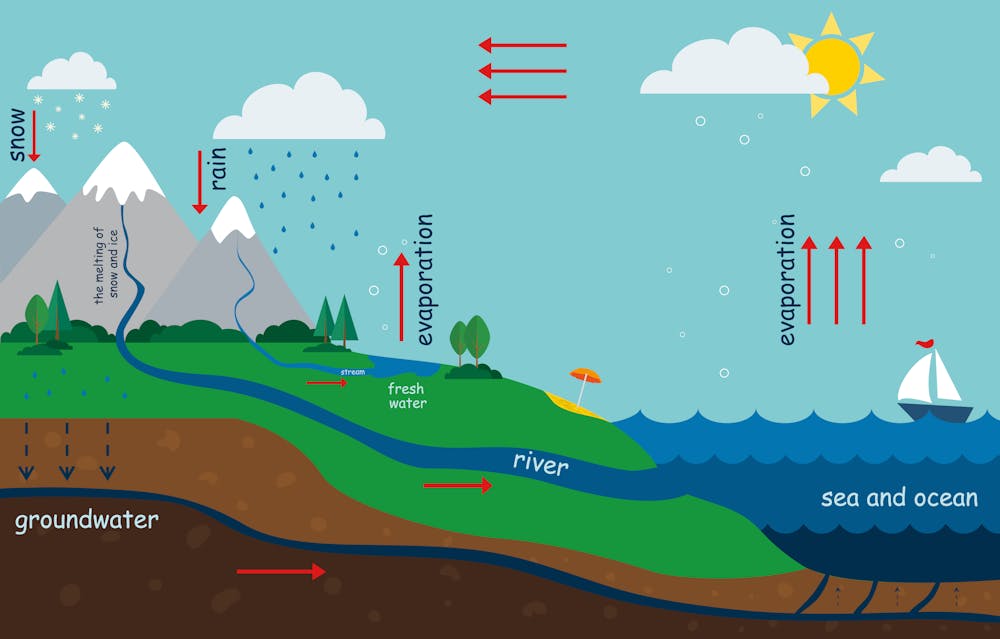 This is the water cycle.
Shutterstock
This is the water cycle.
Shutterstock
The hydrologic cycle is sensitive to changes in temperature and pressure, for example if it is hot and windy, more evaporation occurs. Therefore, climate change impacts the hydrologic cycle. Regions that were once wet can become dry (and vice-versa) because clouds drop their rain into the ocean instead of upon the land where it can be collected and used.
Two tiny drops of drinking water
We drink fresh water, but most water on Earth is salty. And the vast majority of available freshwater on Earth is actually hidden underground as groundwater.
In fact, if you imagine all the water on Earth could fit into a one litre milk carton, it would all be ocean water except for only two tablespoons of fresh water.
Of the two tablespoons of freshwater, slightly less than three quarters would be frozen solid into ice and most of the rest would be groundwater.
The freshwater we see and use in rivers, swamps and lakes would only amount to less than two drops of the water in the world.
Therefore, protecting large freshwater sources like groundwater is very important because removing salt from ocean water can cost lots of money and energy.
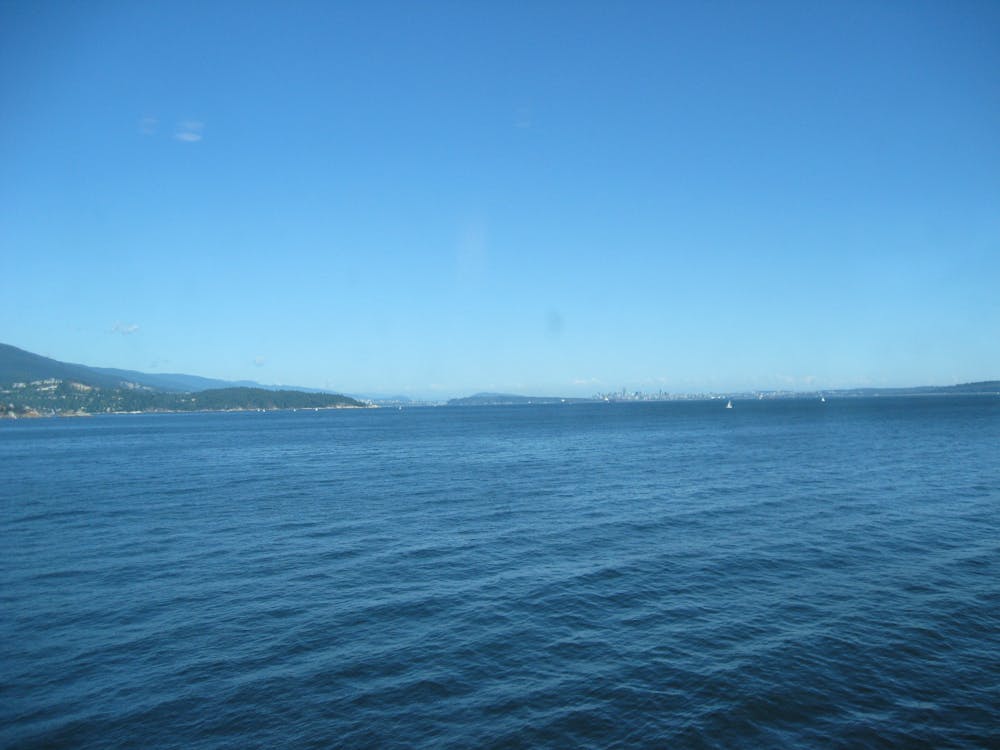 Most water is salty and is found in the ocean.
Flickr/beana_cheese, CC BY
Most water is salty and is found in the ocean.
Flickr/beana_cheese, CC BY
The atmosphere, Earth and ocean are interconnected and things we do in one place can affect the quality of water in other places.
Chemicals poured down the sink or pumped into the atmosphere can eventually end up in the groundwater, which means less available fresh water for us to use.
Although we can’t “make” more water, we can make the best of the water we have by conserving and protecting it.
Read more: Curious Kids: How was the ocean formed? Where did all the water come from?
Hello, curious kids! Have you got a question you’d like an expert to answer? Ask an adult to send your question to us. You can:
* Email your question to curiouskids@theconversation.edu.au * Tell us on Twitter by tagging @ConversationEDU with the hashtag #curiouskids, or * Tell us on Facebook
 CC BY-ND
Please tell us your name, age and which city you live in. You can send an audio recording of your question too, if you want. Send as many questions as you like! We won’t be able to answer every question but we will do our best.
CC BY-ND
Please tell us your name, age and which city you live in. You can send an audio recording of your question too, if you want. Send as many questions as you like! We won’t be able to answer every question but we will do our best.
Authors: Emma Kathryn White, PhD Candidate, Infrastructure Engineering, University of Melbourne
Read more http://theconversation.com/curious-kids-how-is-water-made-109434


 Daily Bulletin


